 뒤로
뒤로Chapter 1: Biology and Evolution – Themes, Organization, and Scientific Inquiry
스터디 가이드 - 스마트 노트
 자료에 맞춘 맞춤형 노트, 핵심 정의, 예시, 맥락을 확장해 제공합니다.
Biology and Evolution
What Does It Mean to Study Life?
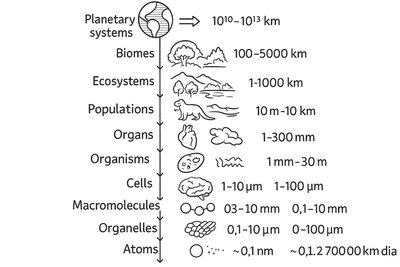
Biology is the scientific study of life, encompassing philosophical questions about what life is, how it arises, how it functions, and whether its nature can be manipulated. The scope of biology ranges from subcellular structures to planet-wide systems, with specialized branches such as Molecular Biology, Botany, Zoology, and interdisciplinary fields like Biochemistry.
Key Point: Life is examined at multiple scales, from molecules to ecosystems.
Key Point: Branches of biology focus on specific types of life or phenomena.
Example: Molecular biology studies the molecules that make life possible.
Characteristics of Life
Living organisms are identified by the processes they perform, including order, energy processing, growth and development, regulation, reproduction, response to the environment, and evolutionary adaptation.
Key Point: Life is defined by its activities and processes.
Key Point: Evolutionary adaptation is a fundamental characteristic of life.
Unifying Themes of Biology
1. Organization
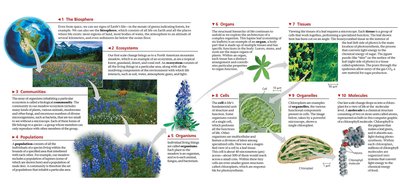
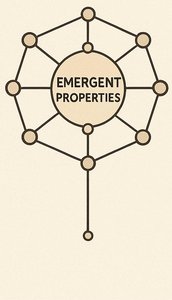
Biological organization refers to the hierarchy of structural levels in living systems, from atoms to planetary systems. Reductionism simplifies complex systems for study, while emergent properties arise from interactions among system components. Systems biology analyzes these interactions to understand emergent properties.
Key Point: Structure and function are closely related in biology.
Key Point: Emergent properties are new characteristics that arise at higher levels of organization.
Example: Studying DNA structure helps explain inheritance.
The Cell: Basic Unit of Structure and Function
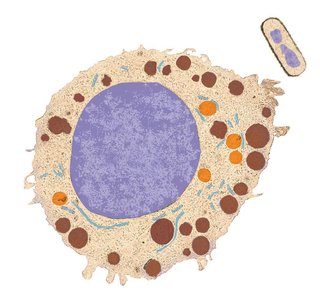
The cell is the lowest level of organization capable of performing all activities required for life. Cells are enclosed by membranes that regulate material exchange. Eukaryotic cells have membrane-enclosed organelles, including a nucleus, while prokaryotic cells lack these structures.
Key Point: All living organisms are composed of cells.
Key Point: Eukaryotic cells are more complex than prokaryotic cells.
2. Information: Genetic Expression and Transmission
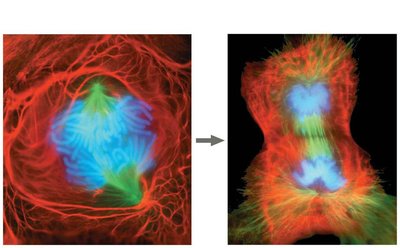
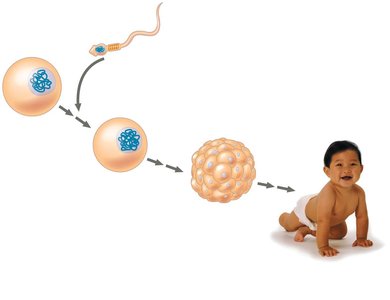
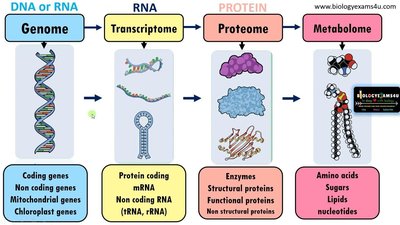
Life’s processes involve the expression and transmission of genetic information. Chromosomes contain DNA, which encodes genes—the units of inheritance. Genes direct the synthesis of proteins, which perform cellular functions.
Key Point: DNA is the genetic material found in all living cells.
Key Point: Genes are segments of DNA that encode proteins.
Example: Offspring inherit traits from both parents via DNA.
Structure of DNA
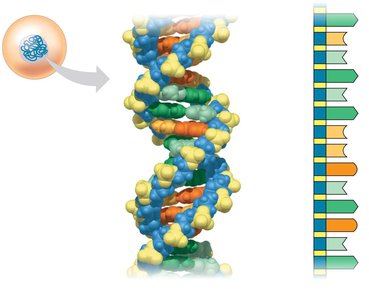
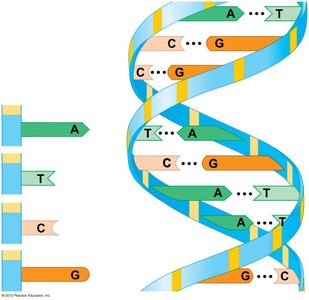
Each DNA molecule consists of two long chains arranged in a double helix, composed of four types of nucleotides: adenine (A), guanine (G), cytosine (C), and thymine (T).
Key Point: DNA’s double helix structure enables replication and gene expression.
Key Point: Nucleotides pair specifically: A with T, and C with G.
Gene Expression
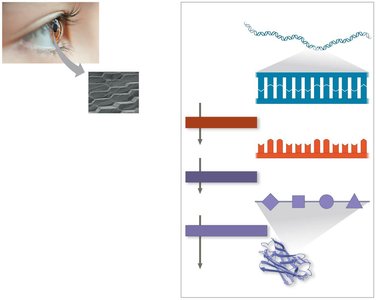
Gene expression is the process by which information from a gene is used to synthesize a functional product, typically a protein. This involves transcription (DNA to mRNA) and translation (mRNA to protein).
Key Point: Most body parts express similar genes, but at different levels.
Key Point: The complete set of genes in a species is called its genome.
3. Transfer and Transformation of Energy and Matter
Life depends on the transfer and transformation of energy and matter. Energy flows through ecosystems, primarily from sunlight, while matter cycles among organisms and the environment.
Key Point: Producers (plants) convert light energy to chemical energy.
Key Point: Consumers obtain energy by eating other organisms.
Key Point: Decomposers recycle chemicals back to the environment.
4. Interactions Within Organisms
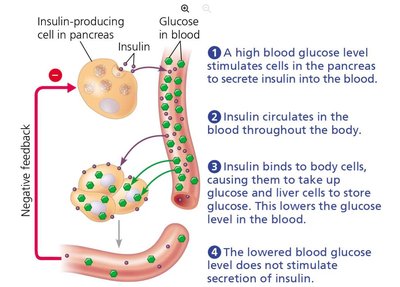
Interactions among organs, tissues, cells, and molecules are essential for organismal function. Feedback mechanisms regulate biological processes, often maintaining homeostasis—a stable internal environment.
Key Point: Feedback can be negative (reducing change) or positive (amplifying change).
Example: Insulin regulates blood glucose levels via negative feedback.
5. Evolution
Evolution is the process by which species accumulate differences from their ancestors and adapt to different environments over time. It explains both the diversity and unity of life.
Key Point: Evolutionary adaptation results from natural selection.
Key Point: Life is classified into three domains: Bacteria, Archaea, and Eukarya.
Unity and Diversity of Life
Despite the diversity of life, all organisms share a common genetic language (DNA). Differences in DNA sequence and gene usage account for the diversity observed among species.
Key Point: Unity in DNA underlies the diversity of life forms.
Key Point: Genes are present in all life and serve as blueprints for proteins.
Charles Darwin and Natural Selection
Charles Darwin proposed that natural selection is the mechanism of evolution. Individuals with traits best suited to their environment are more likely to survive and reproduce, leading to the propagation of beneficial traits.
Key Point: Natural selection drives adaptation and speciation.
Key Point: Darwin’s theory explains both unity and diversity in life.
Example: Populations with varied traits undergo selection, increasing the frequency of advantageous traits.
Biology as a Science
The Scientific Method and Inquiry
Science is a systematic approach to understanding the natural world, driven by inquiry. The scientific method involves proposing hypotheses, conducting experiments, and building theories based on evidence.
Key Point: Hypotheses are testable explanations for observations.
Key Point: Theories are broader, evidence-supported explanations.
Case Study: Investigating Coat Coloration in Mouse Populations
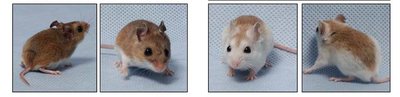
Scientific inquiry can be illustrated by experiments investigating whether camouflage affects predation rates in mouse populations. Controlled experiments compare an experimental group (non-camouflaged mice) with a control group (camouflaged mice), using independent and dependent variables.
Key Point: Controls are essential for ruling out confounding factors.
Example: Camouflaged mice serve as a control to test the effect of coat coloration on predation.
Summary Table: Levels of Biological Organization
Level | Description |
|---|---|
Atoms | Smallest units of matter |
Organelles | Specialized structures within cells |
Cells | Basic unit of life |
Organisms | Individual living entities |
Populations | Groups of organisms of the same species |
Ecosystems | Communities and their environment |
Biomes | Large ecological areas with distinct climates |
Planetary systems | Global scale systems |
Key Equations
DNA Base Pairing:
Gene Expression:
Additional info:
Emergent properties are not predictable from the properties of individual components.
Homeostasis is maintained by feedback mechanisms, often involving hormones.
Darwin’s theory of natural selection is foundational to modern biology.
