 뒤로
뒤로Chapter 1: Biology – Exploring Life (Big Ideas and Foundations)
스터디 가이드 - 스마트 노트
 자료에 맞춘 맞춤형 노트, 핵심 정의, 예시, 맥락을 확장해 제공합니다.
Biology: Exploring Life
Introduction to Biology
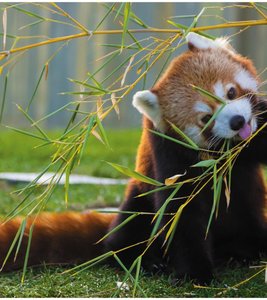
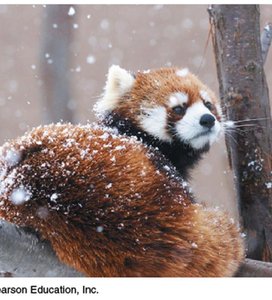
Biology is the scientific study of life, encompassing the diversity, complexity, and unity of living organisms. It seeks to answer fundamental questions about what life is, how it functions, and how it evolves over time. Organisms such as the red panda (Ailurus fulgens) illustrate the adaptations and diversity found in nature.
Properties of Life
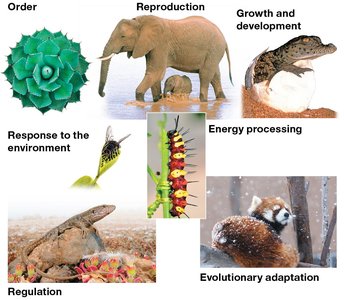
All living things share a set of common properties that distinguish them from nonliving matter. These properties are essential for the maintenance, survival, and evolution of life.
Order: Living organisms exhibit highly ordered structures, from the molecular to the organismal level.
Reproduction: Organisms reproduce their own kind, ensuring the continuity of species.
Growth and Development: Organisms grow and develop according to inherited genetic instructions.
Energy Processing: Living things obtain and use energy to power their activities and maintain internal order.
Regulation: Organisms regulate their internal environment to maintain homeostasis.
Response to the Environment: Organisms detect and respond to environmental stimuli.
Evolutionary Adaptation: Populations evolve over generations through adaptations that enhance survival and reproduction.
Order
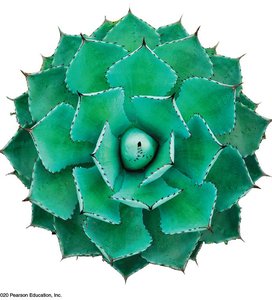
Order refers to the complex, organized structure of living things, such as the geometric arrangement of leaves in a succulent plant.
Reproduction
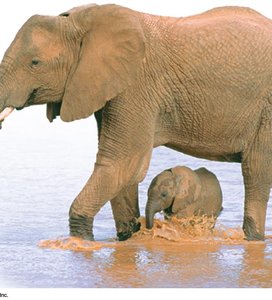
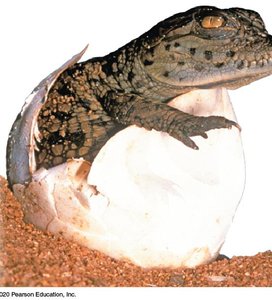
Reproduction ensures the survival of species by producing new individuals. It also perpetuates genetic information across generations.
Growth and Development
Growth and development are controlled by genetic information, allowing organisms to mature and maintain species continuity.
Response to the Environment
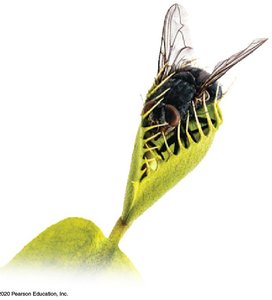
Organisms interact with their environment and respond to stimuli, which is crucial for survival and adaptation.
Energy Processing
Organisms transform energy from their environment into forms usable for growth, maintenance, and reproduction.
Regulation
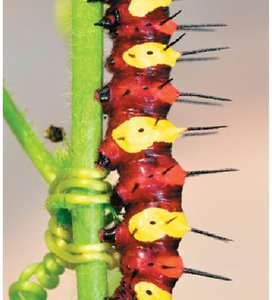
Homeostasis is the maintenance of a stable internal environment, essential for optimal function and survival.
Evolutionary Adaptation
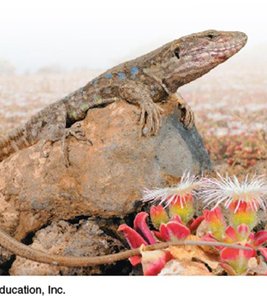
Species undergo modifications over time, driven by natural selection acting on heritable traits that affect reproductive success.
The Cell: The Structural and Functional Unit of Life
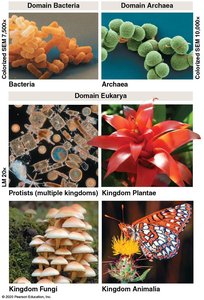
The cell is the basic unit of structure and function in all living organisms. Cells can be prokaryotic (lacking a nucleus, as in Bacteria and Archaea) or eukaryotic (with a nucleus, as in protists, plants, fungi, and animals).
Levels of Biological Organization
Hierarchy of Life
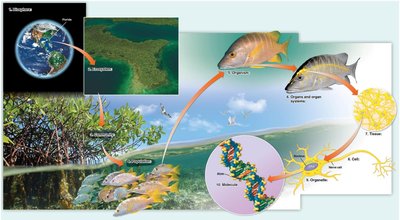
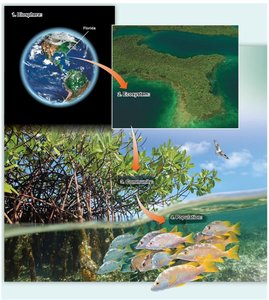
Biologists study life across a hierarchy of structural levels, from atoms and molecules to the entire biosphere. At each level, new emergent properties arise from the interactions among components.
Biosphere
Ecosystem
Community
Population
Organism
Organ System
Organ
Tissue
Cell
Organelle
Molecule
Atom
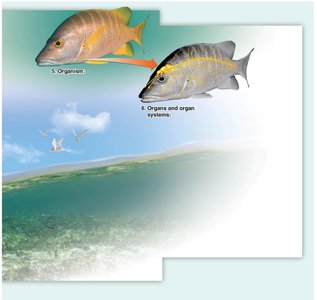
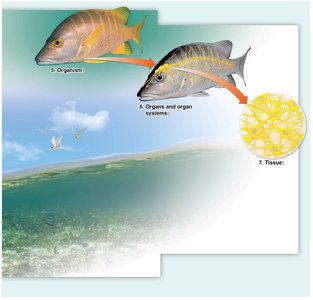
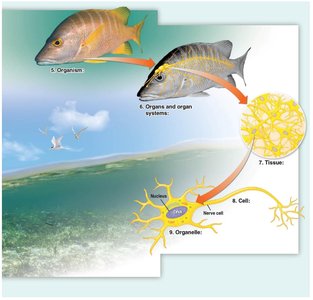
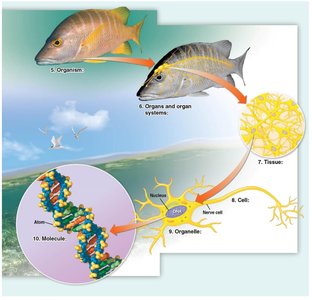
Emergent Properties
Emergent properties are novel characteristics that arise at each level of organization, resulting from the arrangement and interactions of parts as complexity increases.
The Process of Science
What Is Science?
Science is an evidence-based approach to understanding the natural world. It involves making observations, forming hypotheses, making predictions, conducting experiments, and analyzing data. A scientific theory is a broad explanation supported by a large body of evidence.
The Scientific Method
The scientific method is a systematic process for investigating questions and testing hypotheses. It includes:
Observation
Question
Hypothesis
Prediction
Experiment
Analysis
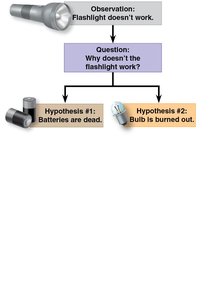
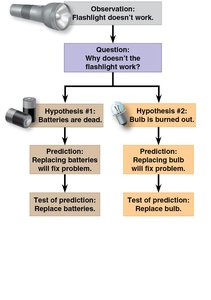
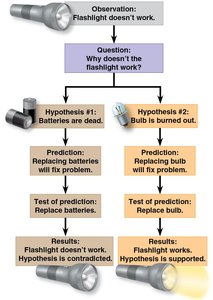
Controlled Experiments
Controlled experiments manipulate one variable (independent variable) and measure its effect on another (dependent variable), comparing experimental and control groups. This design allows scientists to isolate the effects of a single factor.
Example Table: Camouflage Experiment Results
Habitat | Number of Attacks on Camouflaged Models | Number of Attacks on Noncamouflaged Models | % Attacks on Noncamouflaged Models |
|---|---|---|---|
Beach (light habitat) | 2 | 5 | 71% |
Inland (dark habitat) | 5 | 16 | 76% |
Additional info: This table demonstrates that noncamouflaged models are attacked more frequently, supporting the hypothesis that camouflage provides a selective advantage.
Testing Hypotheses with Observational Data
Scientists can also test hypotheses using observational data, such as DNA sequence comparisons to determine evolutionary relationships (e.g., the classification of red pandas).
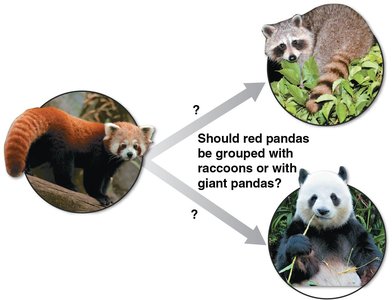
The Nature of Scientific Inquiry
The process of science is repetitive, nonlinear, and collaborative, involving exploration, feedback from the scientific community, and societal benefits.
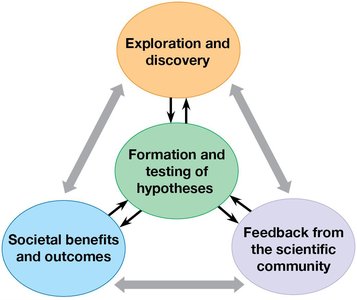
Science, Technology, and Society
Science aims to understand natural phenomena, while technology applies scientific knowledge for practical purposes. Both fields are interdependent, with advances in one often driving progress in the other.
Five Unifying Themes in Biology
Theme 1: Evolution
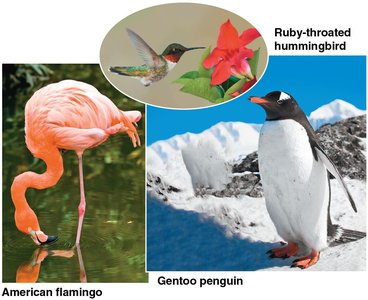
Evolution is the central theme of biology, explaining both the unity and diversity of life. Charles Darwin's theory of evolution by natural selection describes how species change over time and adapt to their environments.
Theme 2: Information Flow
Life depends on the flow of information, primarily through DNA, which encodes genetic instructions for the structure and function of organisms. Information from the environment also regulates biological processes and gene expression.
Theme 3: Structure and Function
There is a close relationship between structure and function at all levels of biological organization. For example, the shape of a protein determines its role, and the structure of nerve cells enables them to transmit signals efficiently.
Theme 4: Transfer and Transformation of Energy and Matter
All living systems require energy and matter, which are transferred and transformed through ecosystems. Matter cycles between the environment and organisms, while energy flows through food webs.
Theme 5: Interactions Within and Between Systems
Biological systems are interconnected, with emergent properties arising from interactions among their parts. Systems biology seeks to model and understand these complex interactions.
Summary Table: Three Domains of Life
Domain | Cell Type | Examples |
|---|---|---|
Bacteria | Prokaryotic | Bacteria |
Archaea | Prokaryotic | Archaea |
Eukarya | Eukaryotic | Protists, Fungi, Plants, Animals |
Key Concepts to Master
Seven properties common to all life
Three domains of life and their characteristics
Levels of biological organization and emergent properties
Scientific method and controlled experiments
Relationship between science, technology, and society
Five unifying themes in biology
