 뒤로
뒤로Chapter 1: Biology – Exploring Life (Campbell Biology Concepts & Connections, Tenth Edition)
스터디 가이드 - 스마트 노트
 자료에 맞춘 맞춤형 노트, 핵심 정의, 예시, 맥락을 확장해 제공합니다.
Biology: Exploring Life
Introduction to Biology
Biology is the scientific study of life, encompassing a vast array of living organisms and their interactions with the environment. The field seeks to understand the fundamental principles that govern life, from molecular processes to ecosystem dynamics.
Definition: Biology is the study of living organisms, their structure, function, growth, origin, evolution, and distribution.
Scope: Includes molecular biology, cellular biology, genetics, ecology, evolution, and physiology.
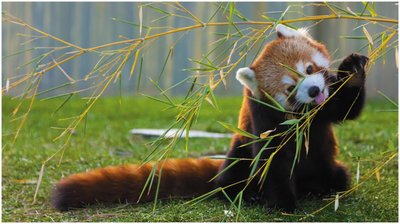
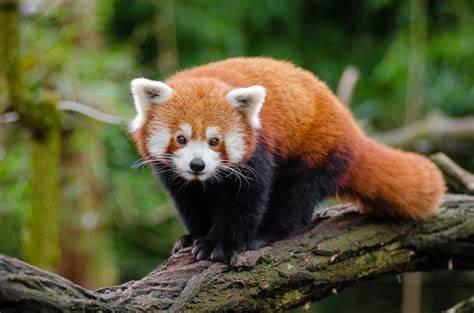
Example: The adaptation of the red panda (Ailurus fulgens) to mountainous forests demonstrates biological principles such as camouflage, balance, and specialized feeding adaptations.
Big Ideas in Biology
Biology is unified by several core themes that provide a framework for understanding life’s complexity.
Cellular Basis of Life: All living things are composed of cells.
Information and Heredity: Genetic information is passed from one generation to the next.
Matter and Energy: Life requires the transformation and transfer of energy and matter.
Growth, Development, and Reproduction: Organisms grow, develop, and reproduce.
Homeostasis: Regulation of internal conditions to maintain stability.
Evolution: Change in populations over time.
Structure and Function: Biological structures are adapted to their functions.
Unity and Diversity of Life: All life shares common features, yet is diverse.
Interdependence in Nature: Organisms interact with each other and their environment.
Science as a Way of Knowing: Scientific inquiry is used to understand the natural world.
Characteristics of Life
Properties of Life (RAREHOG)
Living organisms share seven fundamental properties, often summarized by the acronym RAREHOG:
Order: Organized structure, such as cells and tissues.
Reproduction: Ability to produce offspring.
Growth and Development: Increase in size and change in form, directed by DNA.
Energy Processing: Acquisition and use of energy for metabolic processes.
Regulation (Homeostasis): Maintenance of stable internal conditions.
Response to the Environment: Reacting to external stimuli.
Evolutionary Adaptation: Change over generations to enhance survival.
Why Are Viruses Not Considered Alive?
Viruses lack several key properties of life, such as independent reproduction and cellular organization. They require a host cell to replicate and do not carry out metabolic processes on their own.
Key Point: Viruses are not alive because they do not exhibit all RAREHOG characteristics independently.
Biological Organization and Emergent Properties
Levels of Biological Organization
Biologists study life at multiple levels, from molecules to the biosphere. Each level exhibits emergent properties that arise from the arrangement and interaction of parts.
Molecule: Smallest unit of a chemical compound.
Cell: Basic unit of life.
Tissue: Group of cells with a common function.
Organ: Structure composed of tissues working together.
Organism: Individual living entity.
Population: Group of organisms of the same species.
Community: All populations in a given area.
Ecosystem: Community plus its physical environment.
Biosphere: All life on Earth.
Emergent Properties
Emergent properties are new characteristics that arise at each level of organization due to the interaction of components.
Example: A neuron’s ability to transmit signals is an emergent property of its structure and molecular components.
Three Domains of Life
Classification of Life
Taxonomists classify organisms into three domains based on cell structure and genetic differences:
Domain Bacteria: Prokaryotic, unicellular organisms.
Domain Archaea: Prokaryotic, often found in extreme environments.
Domain Eukarya: Eukaryotic organisms, including protists, fungi, plants, and animals.
Domain | Cell Type | Examples |
|---|---|---|
Bacteria | Prokaryotic | Escherichia coli |
Archaea | Prokaryotic | Halophiles, thermophiles |
Eukarya | Eukaryotic | Plants, animals, fungi, protists |

The Process of Science
Scientific Method and Inquiry
Science is an evidence-based process for understanding the natural world. The scientific method involves observation, hypothesis formation, prediction, experimentation, and data analysis.
Observation: Gathering information about phenomena.
Hypothesis: Tentative explanation that can be tested.
Prediction: Statement of expected outcome.
Experiment: Testing the hypothesis by manipulating variables.
Analysis: Interpreting data to draw conclusions.
Scientific Theory: Broad explanation supported by extensive evidence.
Scientific Law: Immutable phenomenon observed universally (e.g., gravity).
Controlled Experiments
Controlled experiments compare an experimental group with a control group to isolate the effect of a single variable.
Independent Variable: The factor manipulated by researchers.
Dependent Variable: The outcome measured in response to the independent variable.
Example: Francesco Redi’s experiment on maggots and meat tested whether flies were necessary for maggot development.
Habitat | Attacks on Camouflaged Models | Attacks on Noncamouflaged Models | % Attacks on Noncamouflaged Models |
|---|---|---|---|
Beach (light habitat) | 2 | 5 | 71% |
Inland (dark habitat) | 5 | 16 | 76% |
Observational Studies
Hypotheses can also be tested using observational data, such as DNA sequence comparisons to determine evolutionary relationships.
Example: DNA analysis led to the reclassification of red pandas into their own family.
Scientific Thinking: Repetitive, Nonlinear, and Collaborative
The process of science is not strictly linear; it involves exploration, feedback, and societal impacts. Collaboration and repetition are essential for scientific progress.
Exploration and Discovery: Initial observations and questions.
Analysis and Feedback: Peer review and community input.
Societal Benefits: Application of scientific knowledge to solve problems.
Unifying Themes in Biology
Evolution: The Core Theme of Biology
Evolution explains both the unity and diversity of life. Charles Darwin’s theory of natural selection describes how species change over time due to unequal reproductive success.
Natural Selection: Individuals with advantageous traits are more likely to survive and reproduce.
Artificial Selection: Humans selectively breed organisms for desired traits.
Example: Selective breeding in agriculture and livestock.
Information Flow
Life depends on the transmission and use of information, primarily through DNA, which directs cellular activities and heredity.
DNA: Blueprint for proteins and cellular functions.
Gene Expression: Regulation of genes in response to internal and external signals.
Structure and Function
Biological structures are adapted to their functions at every level, from molecules to organisms.
Example: Hemoglobin’s structure enables oxygen transport; nerve cell extensions facilitate impulse transmission.
Energy and Matter
Energy flows through ecosystems, entering as sunlight, converted to chemical energy by producers, transferred to consumers, and lost as heat. Matter cycles through the ecosystem.
Producers: Convert sunlight to chemical energy (photosynthesis).
Consumers: Obtain energy by eating other organisms.
Decomposers: Recycle nutrients back to the environment.
Interactions Within and Between Systems
Emergent properties arise from interactions among system components. Systems biology models these interactions to understand complex biological phenomena.
Example: Proper assembly of bicycle parts enables function, illustrating emergent properties.
Summary Table: Properties of Life (RAREHOG)
Property | Description |
|---|---|
Order | Organized structure |
Reproduction | Ability to produce offspring |
Growth & Development | Increase in size and change in form |
Energy Processing | Acquisition and use of energy |
Regulation | Maintenance of internal stability |
Response to Environment | Reacting to stimuli |
Evolutionary Adaptation | Change over generations |
Conclusion
Biology is a dynamic and integrative science that explores the fundamental principles of life. Understanding the properties of life, levels of organization, scientific methodology, and unifying themes provides a foundation for further study in the biological sciences.
