 뒤로
뒤로Chapter 1: Biology – Exploring Life (Campbell Biology Concepts & Connections, Tenth Edition)
스터디 가이드 - 스마트 노트
 자료에 맞춘 맞춤형 노트, 핵심 정의, 예시, 맥락을 확장해 제공합니다.
Biology: Exploring Life
Introduction to Biology
Biology is the scientific study of life, encompassing a vast array of living organisms and their interactions with the environment. The field seeks to understand the fundamental characteristics that define life and the processes that sustain it.
Definition: Biology is the study of living organisms, their structure, function, growth, origin, evolution, and distribution.
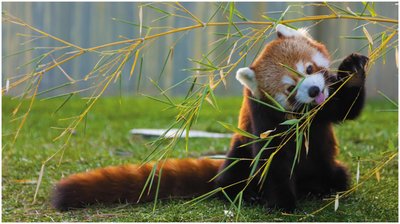
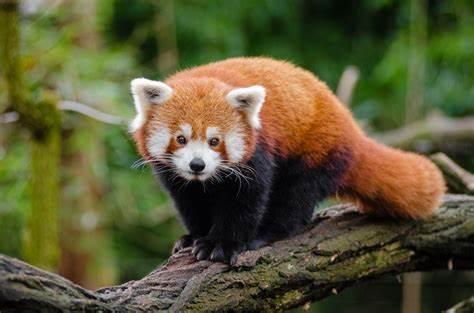
Example: The red panda (Ailurus fulgens) is well adapted for life in mountainous forests, with camouflage, a bushy tail for warmth and balance, and a specialized wrist bone for grasping bamboo.
Big Ideas in Biology
Biology is organized around several big ideas that unify the study of life:
Cellular Basis of Life
Information and Heredity
Matter and Energy
Growth, Development, and Reproduction
Homeostasis
Evolution
Structure and Function
Unity and Diversity of Life
Interdependence in Nature
Science as a Way of Knowing
Characteristics of Life
Properties of Life (RAREHOG)
All living things share seven fundamental properties, often remembered by the acronym RAREHOG:
Order: Living things exhibit complex organization.
Reproduction: Organisms reproduce their own kind.
Growth and Development: Organisms grow and develop, guided by DNA.
Energy Processing: Organisms obtain and use energy for life’s activities.
Regulation (Homeostasis): Organisms regulate their internal environment.
Response to the Environment: Organisms respond to environmental stimuli.
Evolutionary Adaptation: Populations evolve over time, adapting to their environment.
Why Are Viruses Not Considered Alive?
Viruses lack cellular structure and cannot reproduce independently; they require a host cell.
They do not exhibit all seven properties of life.
Biological Organization and Emergent Properties
Levels of Biological Organization
Biologists study life at multiple levels, from molecules to the biosphere. Each level exhibits emergent properties that arise from the arrangement and interaction of parts.
Molecule → Organelle → Cell → Tissue → Organ → Organ System → Organism → Population → Community → Ecosystem → Biosphere
Emergent Properties: New characteristics arise at each level due to interactions among components.
Classification of Life
Three Domains of Life
Taxonomists classify life into three domains based on cell structure and genetic evidence:
Domain Bacteria: Prokaryotic, unicellular organisms.
Domain Archaea: Prokaryotic, often found in extreme environments.
Domain Eukarya: Eukaryotic organisms, including protists, fungi, plants, and animals.
Domain | Cell Type | Examples |
|---|---|---|
Bacteria | Prokaryotic | Escherichia coli |
Archaea | Prokaryotic | Halophiles, Thermophiles |
Eukarya | Eukaryotic | Plants, Animals, Fungi, Protists |

The Process of Science
Scientific Method and Hypothesis Testing
Science is an evidence-based process for understanding the natural world. The scientific method involves:
Observation: Gathering information about phenomena.
Hypothesis: A tentative explanation that can be tested.
Prediction: What will happen if the hypothesis is correct.
Experiment: Testing the hypothesis by manipulating variables.
Analysis: Interpreting data to support or refute the hypothesis.
Controlled Experiments
Controlled experiments compare an experimental group with a control group to isolate the effect of a single variable.
Independent Variable: The factor manipulated by researchers.
Dependent Variable: The factor measured as the outcome.
Example: Francesco Redi’s experiment on maggots and meat.
Types of Data
Quantitative Data: Numerical measurements.
Qualitative Data: Descriptive observations.
Scientific Theories and Laws
Scientific Theory: A well-tested explanation for a range of phenomena, supported by evidence (e.g., theory of evolution).
Scientific Law: Immutable phenomena that occur everywhere in the universe (e.g., gravity).
Unifying Themes in Biology
Evolution
Evolution is the central theme of biology, explaining both the unity and diversity of life. Charles Darwin synthesized the theory of evolution by natural selection.
Natural Selection: Individuals with advantageous traits are more likely to survive and reproduce, leading to adaptation.
Artificial Selection: Humans selectively breed organisms for desired traits.
Information Flow
Life depends on the transmission and use of information, primarily through DNA, which programs cellular activities and heredity.
Structure and Function
Biological structures are closely related to their functions at all levels, from molecules to organisms.
Example: Hemoglobin’s structure enables oxygen transport; nerve cell extensions facilitate impulse transmission.
Energy and Matter
Energy flows through ecosystems, entering as sunlight, converted to chemical energy by producers, passed to consumers, and exiting as heat. Matter cycles through ecosystems.
Interactions Within and Between Systems
Emergent properties arise from interactions among system components. Systems biology models these interactions to understand complex biological systems.
Summary Table: Properties of Life (RAREHOG)
Property | Description | Example |
|---|---|---|
Order | Complex organization | Plant structure |
Reproduction | Produce offspring | Elephants |
Growth & Development | Increase in size, change over time | Lizard hatching |
Energy Processing | Use energy for activities | Caterpillar eating |
Regulation | Maintain internal balance | Lizard basking |
Response to Environment | React to stimuli | Bee responding to flower |
Evolutionary Adaptation | Adapt to environment | Red panda in snow |
Conclusion
Biology is a dynamic, evidence-based science that explores the diversity and unity of life, the processes that sustain living organisms, and the interactions within and between biological systems. Understanding these foundational concepts is essential for further study in the biological sciences.
