뒤로
뒤로Chapter 1: Evolution, the Themes of Biology, and Scientific Inquiry - Study Notes
스터디 가이드 - 스마트 노트
 자료에 맞춘 맞춤형 노트, 핵심 정의, 예시, 맥락을 확장해 제공합니다.
Evolution, the Themes of Biology, and Scientific Inquiry
What is Biology?
Biology is the scientific study of life, encompassing the structure, function, growth, origin, evolution, and distribution of living organisms. The term 'biophilia' describes humanity's innate attraction to life and living systems, as noted by E.O. Wilson.
Definition: Biology is a human endeavor driven by curiosity and the desire to understand life in all its forms.
Why Study Biology?
Career opportunities in medicine, research, environmental science, and biotechnology
Curiosity about the natural world
Technological relevance, including advances in genetics, medicine, and ecology

Characteristics of Life
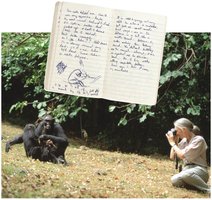
Living organisms share a set of fundamental characteristics that distinguish them from non-living matter. These traits are essential for the maintenance and perpetuation of life.
Order: Organisms exhibit complex organization and structure.
Energy Processing: Living things obtain and use energy for growth and maintenance.
Growth and Development: Organisms increase in size and undergo changes over time.
Regulation: Homeostasis maintains internal stability.
Reproduction: Organisms produce offspring, ensuring continuity of life.
Response to the Environment: Living things react to stimuli in their surroundings.
Evolutionary Adaptation: Populations evolve over generations, adapting to their environment.
Themes of Biology: Cells and Heredity
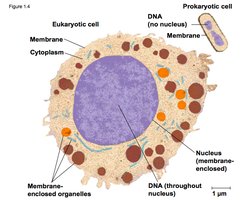
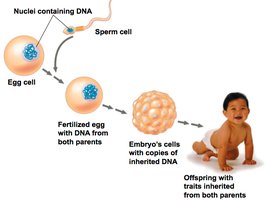
Cells are the basic units of life, and heredity is the transmission of genetic information from one generation to the next. These themes are central to understanding biological processes.
Cell Theory: All living organisms are composed of cells, which are the fundamental units of structure and function.
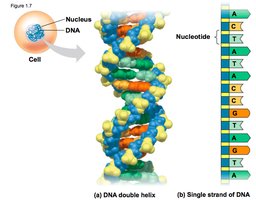
Heredity: Genetic information is passed from parents to offspring via DNA.
Levels of Biological Organization
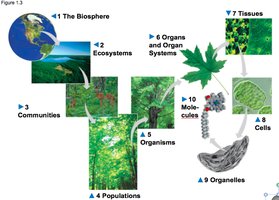
Biological systems are organized into a hierarchy, from the simplest to the most complex levels. Each level has emergent properties not found in the preceding one.
Molecule: Smallest chemical units (e.g., DNA, proteins)
Organelle: Specialized structures within cells (e.g., mitochondria)
Cell: Basic unit of life
Tissue: Groups of similar cells performing a function
Organ: Structures composed of tissues (e.g., heart, leaf)
Organ System: Groups of organs working together (e.g., circulatory system)
Organism: Individual living entity
Population: Group of organisms of the same species
Community: Multiple populations interacting
Ecosystem: Communities and their physical environment
Biosphere: All ecosystems on Earth
Emergent Properties and Regulation
Emergent properties arise when components interact to form new, complex functions. Regulation ensures stability and proper functioning within biological systems.
Emergent Properties: New characteristics that appear at each level of organization due to interactions among components.
Regulation: Mechanisms such as feedback loops maintain homeostasis.
Energy and Life, Structure and Function
Energy is essential for life, enabling growth, reproduction, and maintenance. The structure of biological molecules and organisms is closely related to their function.
Energy Processing: Organisms capture, store, and use energy (e.g., photosynthesis, cellular respiration).
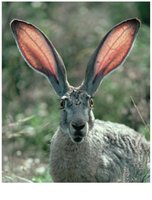
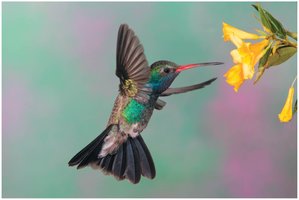
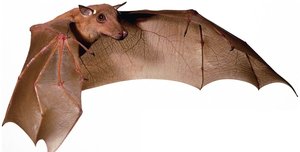
Structure and Function: The shape and arrangement of biological structures determine their roles (e.g., bat wings for flight, hummingbird metabolism).
Unity and Diversity, Evolution
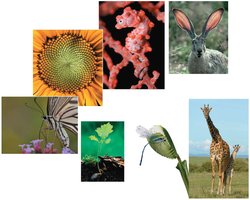
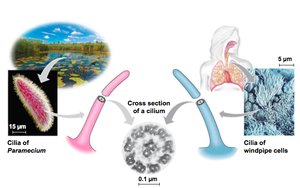
Biological diversity is unified by common features, such as cellular architecture and genetic code. Evolution explains both the unity and diversity of life.
Unity: All life shares fundamental characteristics (e.g., DNA, cell structure).
Diversity: Life forms vary widely in structure, function, and adaptation.
Evolution: Descent with modification leads to adaptation and speciation.
The Unifying Theory of Biology: Evolution
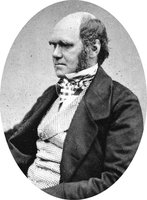
Evolution, as described by Charles Darwin, is the central theory that accounts for the unity and diversity of life. Natural selection is the mechanism by which advantageous traits are preserved.
Natural Selection: The environment favors the survival and reproduction of individuals with beneficial traits.
Descent with Modification: Over generations, populations change, leading to new adaptations.
Scientific Inquiry; Science, Technology and Society
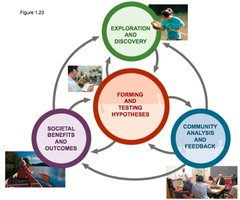
Scientific inquiry is the process of investigating the natural world through observation, experimentation, and reasoning. Science and technology impact society in numerous ways.
Scientific Method: Steps include observation, hypothesis formation, experimentation, analysis, and conclusion.
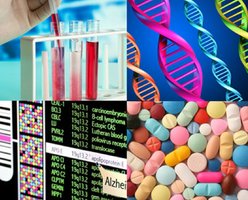
Science and Technology: Advances in biology lead to new technologies and societal benefits.
The Three Domains of Life
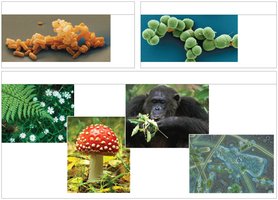
All living organisms are classified into three domains: Bacteria, Archaea, and Eukarya. These domains share common features but differ in cellular structure and genetic makeup.
Domain Bacteria: Prokaryotic cells, diverse metabolic pathways, found in many environments.
Domain Archaea: Prokaryotic cells, unique membrane lipids, often found in extreme environments.
Domain Eukarya: Eukaryotic cells with membrane-bound organelles; includes Kingdom Animalia, Plantae, Fungi, and Protists.
Domain | Cell Type | Key Features |
|---|---|---|
Bacteria | Prokaryotic | No nucleus, diverse metabolism |
Archaea | Prokaryotic | No nucleus, unique membrane lipids, extremophiles |
Eukarya | Eukaryotic | Nucleus, membrane-bound organelles |
Objectives for Chapter 1
After studying this chapter, students should be able to:
List characteristics that distinguish living organisms from non-living objects
List the levels of chemical/biological organization from simple to complex, and provide examples
Explain the basic steps of the scientific process
Describe the major themes of biology
Compare and contrast the three domains of life: Bacteria, Archaea, and Eukarya