 뒤로
뒤로Chapter 1: Evolution, the Themes of Biology, and Scientific Inquiry – Study Notes
스터디 가이드 - 스마트 노트
 자료에 맞춘 맞춤형 노트, 핵심 정의, 예시, 맥락을 확장해 제공합니다.
Chapter 1: Evolution, the Themes of Biology, and Scientific Inquiry
Introduction to Biology
Biology is the scientific study of life, encompassing a vast scope from molecules to the biosphere. Life is recognized by a set of characteristics and processes that distinguish living organisms from nonliving matter.
Biology: The study of living organisms and their interactions with one another and their environments.
Life is characterized by order, evolutionary adaptation, regulation, energy processing, growth and development, response to the environment, and reproduction.
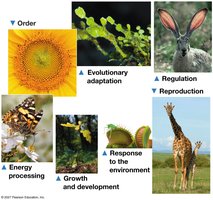
Unifying Themes in Biology
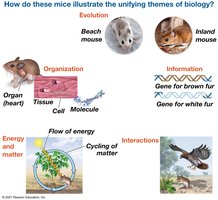
There are five unifying themes that organize the study of biology:
Organization: Life is structured in a hierarchical manner, from molecules to the biosphere.
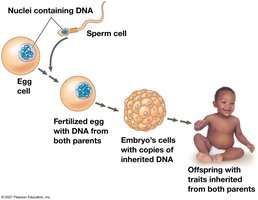
Information: Genetic information is stored and transmitted in DNA.
Energy and Matter: Life requires the transfer and transformation of energy and matter.
Interactions: Living systems interact at all levels of organization.
Evolution: The core theme that explains both the unity and diversity of life.
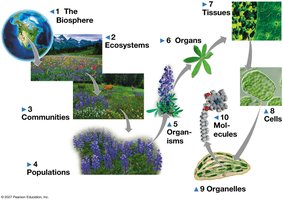
Levels of Biological Organization
Life can be studied at different levels, each with emergent properties that arise from the arrangement and interaction of parts:
Biosphere → Ecosystems → Communities → Populations → Organisms → Organs → Tissues → Cells → Organelles → Molecules
Emergent properties: New properties that arise with each step upward in the hierarchy of life, due to the arrangement and interactions of parts.
Reductionism: Reducing complex systems to simpler components for study.
Systems biology: Analysis of the interactions among the parts of a biological system.
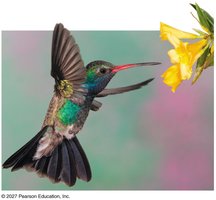
Structure and Function
At every level of the biological hierarchy, there is a correlation between structure and function. Understanding the structure of a biological component provides insight into its function, and vice versa.
The Cell: Basic Unit of Life
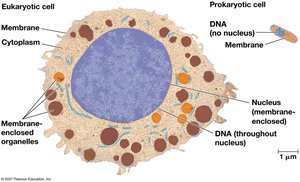
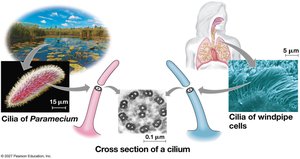
The cell is the smallest unit of organization that can perform all activities required for life. There are two main types of cells:
Prokaryotic cells: Simpler, smaller, no nucleus or membrane-bound organelles (e.g., bacteria, archaea).
Eukaryotic cells: Larger, contain a nucleus and membrane-bound organelles (e.g., plants, animals, fungi, protists).
Genetic Information and Gene Expression
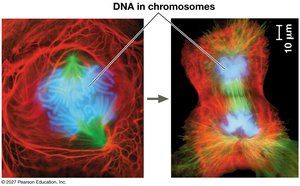
Genetic information is stored in DNA, which is organized into chromosomes. Genes are units of inheritance that encode instructions for building proteins, which carry out most cellular functions.
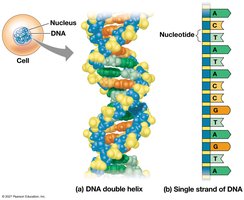
DNA (deoxyribonucleic acid): Composed of two long chains in a double helix, made up of four nucleotides (A, T, C, G).
Gene expression: The process by which information from a gene is used to synthesize a functional gene product (usually a protein).
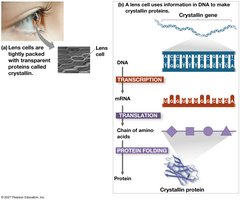
Genomics and Proteomics
Genomics is the study of whole sets of genes and their interactions, while proteomics is the study of the entire set of proteins expressed by a cell, tissue, or organism. These fields rely on high-throughput technology and bioinformatics.
Energy and Matter in Living Systems
Life requires the transfer and transformation of energy and matter. Energy flows through ecosystems, usually entering as sunlight and exiting as heat, while chemicals cycle within ecosystems.
Producers: Organisms (like plants) that convert sunlight into chemical energy.
Consumers: Organisms that feed on other organisms or their remains.
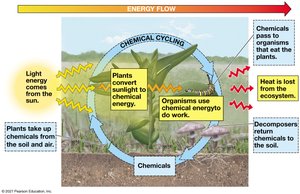
Regulation and Feedback Mechanisms
Biological processes are regulated by feedback mechanisms:
Negative feedback: The response reduces the initial stimulus (e.g., regulation of blood glucose).
Positive feedback: The response amplifies the initial stimulus.
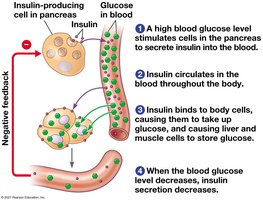
Interactions in Biological Systems
Interactions occur at all levels, from molecules within cells to organisms within ecosystems. These interactions are essential for the smooth functioning of biological systems.
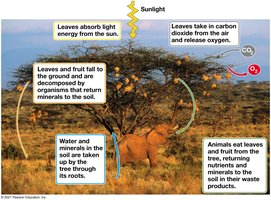
Evolution: The Core Theme of Biology
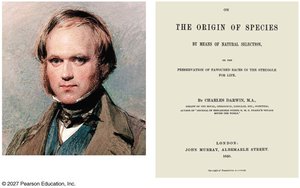
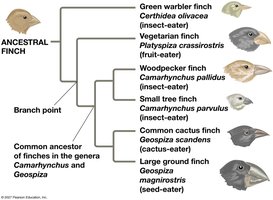
Evolution explains both the unity and diversity of life. All living organisms are modified descendants of common ancestors. The process of evolution is supported by extensive evidence from many scientific fields.
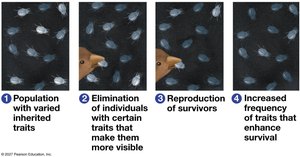
Natural selection: The process by which organisms with advantageous traits survive and reproduce more successfully, leading to adaptation.
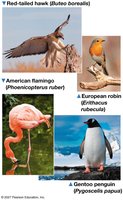
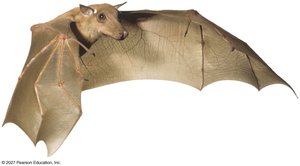
Adaptation: Inherited characteristics that enhance an organism's ability to survive and reproduce in a particular environment.
Classifying Life: Domains and Kingdoms
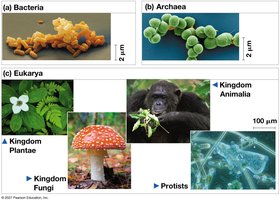
Life is classified into three domains:
Bacteria: Prokaryotic, unicellular organisms.
Archaea: Prokaryotic, often found in extreme environments.
Eukarya: Eukaryotic organisms, including protists, plants, fungi, and animals.
The Process of Science: Scientific Inquiry
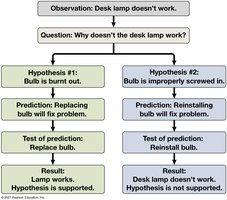
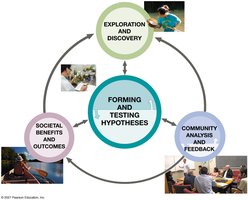
Science is a way of knowing, based on inquiry. The scientific method involves making observations, forming hypotheses, and testing them through experiments.
Hypothesis: A testable explanation for an observation.
Experiment: A scientific test carried out under controlled conditions.
Data: Recorded observations, which can be qualitative or quantitative.
Inductive reasoning: Deriving generalizations from specific observations.
Deductive reasoning: Making specific predictions from general premises.

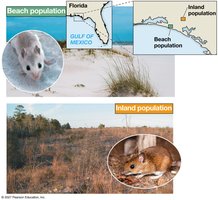
Case Study: Investigating Coat Coloration in Mouse Populations
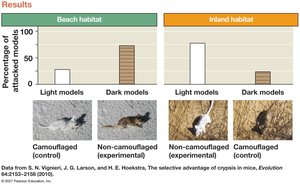
Scientists tested the hypothesis that coat coloration in beach and inland mice is an adaptation to avoid predation. They used model mice with different colorations and measured predation rates in different habitats.
Independent variable: Mouse coloration (camouflaged vs. non-camouflaged).
Dependent variable: Predation rate (percentage of attacked models).
Control group: Camouflaged models.
Experimental group: Non-camouflaged models.
Theories in Science
A scientific theory is broader in scope than a hypothesis, generates new hypotheses, and is supported by a large body of evidence.
Science, Technology, and Society
Science aims to understand natural phenomena, while technology applies scientific knowledge for practical purposes. Both are interdependent and can have profound effects on society, raising ethical, political, and cultural issues.

The Value of Diverse Viewpoints in Science
Science benefits from a diversity of backgrounds and viewpoints, which fosters innovation and robust scientific interchange.
Summary Tables
Theme | Description |
|---|---|
Organization | Hierarchy from molecules to biosphere |
Information | Genetic information in DNA |
Energy and Matter | Transfer and transformation in living systems |
Interactions | Regulation and feedback at all levels |
Evolution | Descent with modification, unity and diversity of life |
Domain | Characteristics |
|---|---|
Bacteria | Prokaryotic, unicellular |
Archaea | Prokaryotic, often extremophiles |
Eukarya | Eukaryotic, includes protists, plants, fungi, animals |
Additional info: These notes provide a comprehensive overview of the foundational concepts in biology, focusing on evolution, the organization of life, genetic information, energy flow, scientific inquiry, and the relationship between science and society. They are suitable for introductory college-level biology students preparing for exams or seeking a structured summary of Chapter 1.
