 뒤로
뒤로Chapter 1: Evolution, the Themes of Biology, and Scientific Inquiry – Study Notes
스터디 가이드 - 스마트 노트
 자료에 맞춘 맞춤형 노트, 핵심 정의, 예시, 맥락을 확장해 제공합니다.
Introduction to Biology
The Scope and Themes of Biology
Biology is the scientific study of life, encompassing a vast range of topics from molecules to the entire biosphere. Life is recognized by a set of characteristics and processes that living things perform. The study of biology reveals several unifying themes that connect all living organisms.
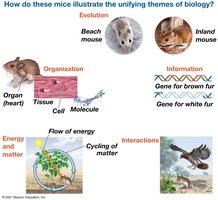
Organization: Life is structured in a hierarchical manner, from molecules to the biosphere.
Information: Genetic information is stored and transmitted in DNA.
Energy and Matter: Life requires the transfer and transformation of energy and matter.
Interactions: Living systems interact at all levels of organization.
Evolution: The core theme that explains both the unity and diversity of life.
Properties of Life
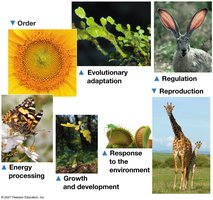
Living organisms share several key properties that distinguish them from nonliving matter:
Order: Highly ordered structure is a hallmark of life.
Evolutionary adaptation: Populations evolve over generations.
Regulation: Organisms regulate their internal environment.
Reproduction: Living things reproduce their own kind.
Response to the environment: Organisms respond to environmental stimuli.
Growth and development: Inherited information controls growth and development.
Energy processing: Organisms obtain and use energy to power activities.
Organization: Levels of Biological Organization
Hierarchical Structure of Life
Life can be studied at different levels, each with emergent properties that arise from the arrangement and interaction of parts within a system. The main levels are:
The Biosphere
Ecosystems
Communities
Populations
Organisms
Organs and Organ Systems
Tissues
Cells
Organelles
Molecules
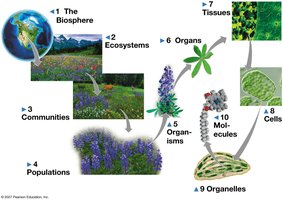
Emergent properties arise at each level due to the arrangement and interactions of parts as complexity increases. For example, a functioning bicycle only works when all parts are correctly assembled.
Structure and Function
There is a close relationship between structure and function at all levels of biological organization. Understanding the structure of a biological component provides insight into its function, and vice versa.
The Cell: The Basic Unit of Life
Cell Theory and Types of Cells
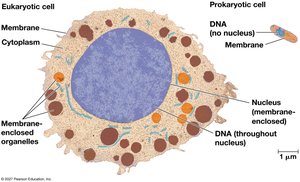
The cell is the smallest unit of organization that can perform all activities required for life. According to cell theory, all living organisms are composed of cells. Cells are classified as either:
Prokaryotic cells: Simpler, smaller, lack a nucleus and membrane-bound organelles (e.g., Bacteria and Archaea).
Eukaryotic cells: Larger, contain a nucleus and membrane-bound organelles (e.g., plants, animals, fungi, protists).
Genetic Information: DNA and Gene Expression
DNA: The Genetic Material
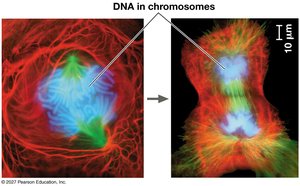
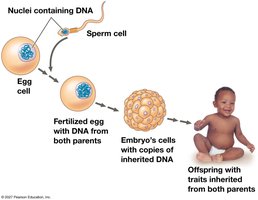
Within cells, chromosomes contain DNA (deoxyribonucleic acid), which stores genetic information. Each chromosome consists of one long DNA molecule with many genes, the units of inheritance. DNA directs the development and functioning of all living organisms.
Molecular Structure of DNA
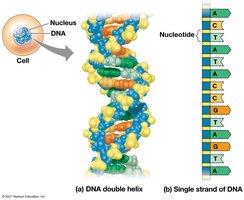
DNA is composed of two long chains forming a double helix. Each chain is made up of four types of nucleotides: adenine (A), guanine (G), cytosine (C), and thymine (T).
Gene Expression
Gene expression is the process by which information from a gene is used to synthesize a functional product, usually a protein. The process involves two main steps:
Transcription: DNA is transcribed into messenger RNA (mRNA).
Translation: mRNA is translated into a chain of amino acids, forming a protein.
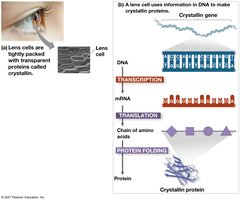
Energy and Matter: Life’s Requirements
Energy Flow and Chemical Cycling
All living organisms require energy to carry out life’s activities. Energy flows through ecosystems, usually entering as sunlight and exiting as heat. Matter cycles within ecosystems, being used and recycled by organisms.
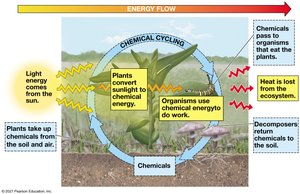
Regulation and Feedback Mechanisms
Feedback Regulation
Biological processes are often regulated by feedback mechanisms. The most common is negative feedback, where the accumulation of an end product slows the process that produces it. Positive feedback amplifies a process or increases its output.
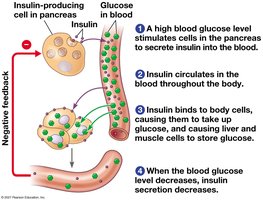
Evolution: The Core Theme of Biology
Unity and Diversity of Life
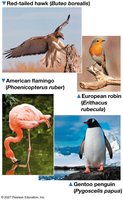
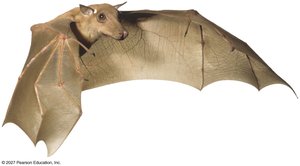
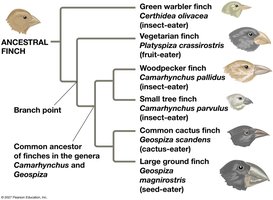
Evolution explains both the similarities (unity) and differences (diversity) among living organisms. All life shares a common genetic language (DNA), and evolutionary processes have led to the adaptation and diversification of species over time.
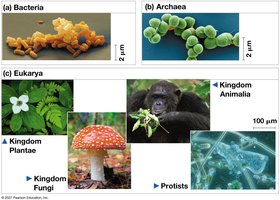
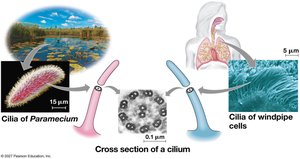
Classification of Life
Organisms are classified into three domains:
Bacteria: Prokaryotic, unicellular organisms.
Archaea: Prokaryotic, often found in extreme environments.
Eukarya: Eukaryotic organisms, including plants, fungi, animals, and protists.
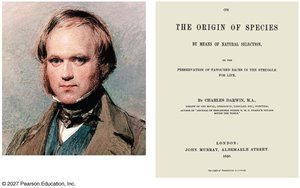
Charles Darwin and Natural Selection
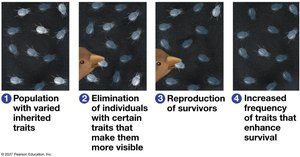
Charles Darwin’s theory of natural selection explains how evolution leads to adaptation. Key observations include:
Individuals in a population vary in their traits, many of which are heritable.
More offspring are produced than survive, leading to competition.
Individuals with advantageous traits are more likely to survive and reproduce.
Scientific Inquiry and the Process of Science
The Scientific Method
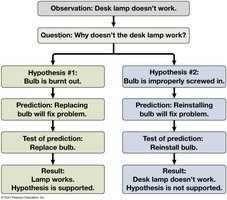
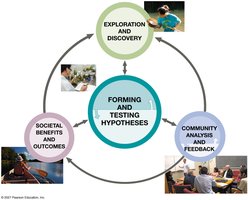
Science is a way of knowing, based on inquiry and evidence. The scientific method involves making observations, forming hypotheses, and testing them through experiments.
Hypothesis: A testable explanation for an observation.
Experiment: A controlled test to support or refute a hypothesis.
Data: Recorded observations, either qualitative or quantitative.
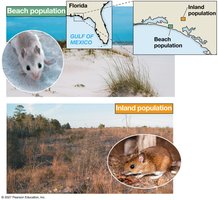
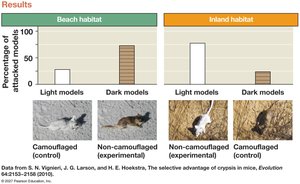
Case Study: Mouse Coat Coloration
Scientific inquiry can be illustrated by investigating the adaptive significance of mouse coat coloration. Researchers hypothesized that coat color matching the environment reduces predation. Experiments using model mice supported this hypothesis.
Variables and Controls
In experiments, the independent variable is manipulated, while the dependent variable is measured. Control groups are used for comparison to ensure that results are due to the variable being tested.
Theories in Science
A scientific theory is broader than a hypothesis, generates new hypotheses, and is supported by a large body of evidence.
Science, Technology, and Society
Interdependence of Science and Technology
Science seeks to understand natural phenomena, while technology applies scientific knowledge for practical purposes. Advances in one often drive progress in the other, but ethical, political, and cultural considerations must be taken into account.

Diversity and Collaboration in Science
Science benefits from diverse viewpoints and collaboration. Peer review and repeatability are essential for scientific progress.
Summary Tables
Comparison of Prokaryotic and Eukaryotic Cells
Feature | Prokaryotic Cell | Eukaryotic Cell |
|---|---|---|
Nucleus | Absent | Present |
Membrane-bound organelles | Absent | Present |
Size | Smaller | Larger |
Examples | Bacteria, Archaea | Plants, Animals, Fungi, Protists |
Three Domains of Life
Domain | Cell Type | Examples |
|---|---|---|
Bacteria | Prokaryotic | Escherichia coli |
Archaea | Prokaryotic | Halophiles, Thermophiles |
Eukarya | Eukaryotic | Plants, Animals, Fungi, Protists |
Key Steps in the Scientific Method
Step | Description |
|---|---|
Observation | Gathering information about phenomena |
Question | Formulating a question based on observations |
Hypothesis | Proposing a testable explanation |
Prediction | Stating expected results if hypothesis is correct |
Experiment | Testing the prediction under controlled conditions |
Analysis | Interpreting data and drawing conclusions |
