뒤로
뒤로Chapter 1: Evolution, the Themes of Biology, and Scientific Inquiry
스터디 가이드 - 스마트 노트
 자료에 맞춘 맞춤형 노트, 핵심 정의, 예시, 맥락을 확장해 제공합니다.
Biology: The Science of How Life Works
Introduction to Biology
Biology is the scientific study of life and living organisms. It seeks to understand the structure, function, growth, origin, evolution, and distribution of living things. The discipline is unified by several core themes, including the organization of life, the flow of energy, and the process of evolution.
The Characteristics of Living Organisms
Defining Life
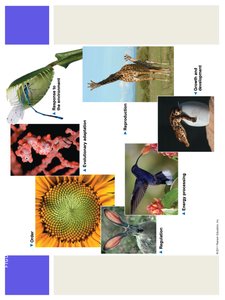
Organization: Living things are highly organized, from the molecular to the organismal level.
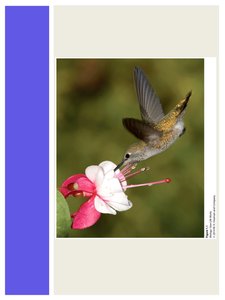
Acquire materials and energy: Organisms need external materials and energy sources to maintain their organization and carry out life activities.
Reproduce: Living things produce offspring, passing genetic information to the next generation.
Respond to stimuli: Organisms detect and react to changes in their environment.
Are homeostatic: They maintain a relatively constant internal environment.
Grow and develop: Organisms increase in size and undergo changes throughout their life cycle.
Have the capacity to adapt: Populations of organisms evolve over time in response to their environment.
Acquiring Materials and Energy
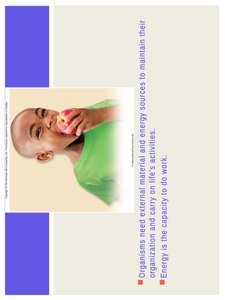
Organisms require materials and energy to maintain their organization and carry out life processes.
Energy is defined as the capacity to do work.
Reproduction
Genes are units of information within an individual's DNA.
Reproduction is the process by which an organism makes more of itself.
DNA, which directs cellular functions, is duplicated prior to an organism reproducing.
Response to Stimuli
Organisms respond to external stimuli by moving toward or away from the stimuli.
Movement is often directed toward avoiding injury, acquiring food, or mating.
Homeostasis
Homeostasis is the maintenance of a relatively constant internal environment.
For example, human body temperature fluctuates only slightly throughout the day.
Growth and Development
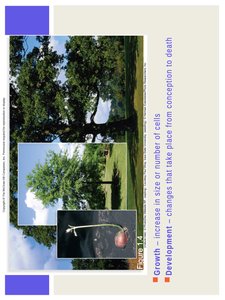
Growth is an increase in size or number of cells.
Development refers to all the changes that take place from conception to death.
Adaptation and Evolution
Over nearly 4 billion years, life on Earth has constantly changed.
Some individuals of a species may be better fit in a new environment.
Adaptations are features that make individual organisms better suited to their environment.
Individuals better adapted to their environment tend to produce more offspring.
Natural selection is the differential reproductive success of adapted individuals.
Evolution is the change in frequency of traits in populations and species over time.
Levels of Biological Organization
Hierarchy of Life
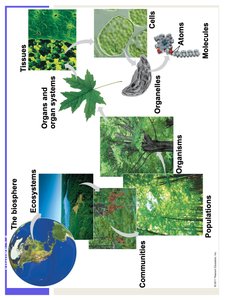
Life can be studied at different levels, from molecules to the entire living planet. The study of life can be divided into different levels of biological organization:
Atoms → Molecules → Organelles → Cells → Tissues → Organs → Organ Systems → Organisms → Populations → Communities → Ecosystems → Biosphere
The Cell: The Basic Unit of Life
Essential Features of a Cell
It can store and transmit information.
It has a plasma membrane.
It can harness energy from the environment.
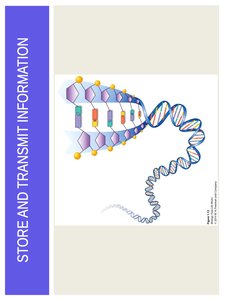
Storing and Transmitting Information
Genetic information is stored in DNA and transmitted to offspring during reproduction.
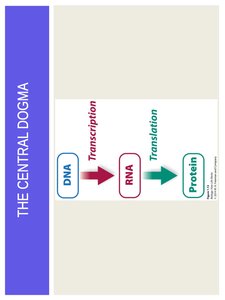
The Central Dogma of Molecular Biology
Information flows from DNA to RNA to Protein.
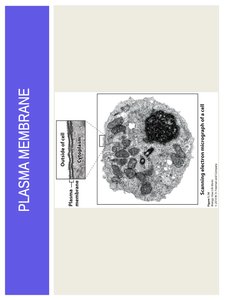
The Plasma Membrane
The plasma membrane separates the cell from its environment and regulates the movement of substances in and out of the cell.
Harnessing Energy
Cells obtain energy from two main sources: the sun (photosynthesis) and chemical compounds (cellular respiration).
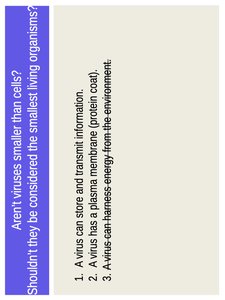
Viruses and the Definition of Life
Viruses can store and transmit information and have a protein coat, but they cannot harness energy from the environment independently. Therefore, they are not considered living organisms.
The Tree of Life
Major Domains of Life
All life is classified into three domains: Bacteria, Archaea, and Eukarya.
The tree of life illustrates the evolutionary relationships among these domains.
Scientific Inquiry and the Scientific Method
The Scientific Method
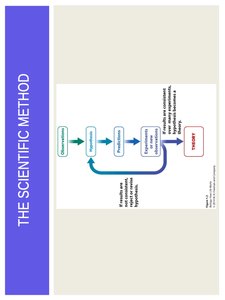
The scientific method is a systematic approach to understanding the natural world through observation, hypothesis formation, experimentation, and analysis.
Example of the Scientific Method
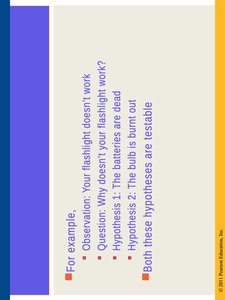
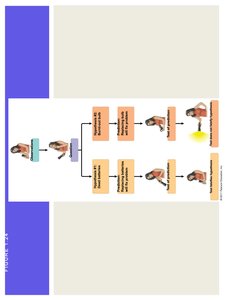
Observation: Your flashlight doesn't work.
Question: Why doesn't your flashlight work?
Hypothesis 1: The batteries are dead.
Hypothesis 2: The bulb is burnt out.
Both hypotheses are testable.
Historical Experiments: Spontaneous Generation
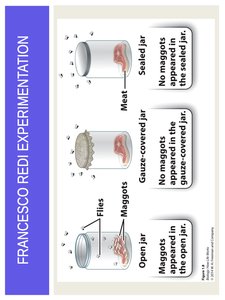
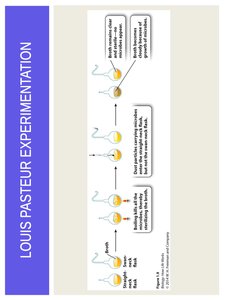
Francesco Redi and Louis Pasteur conducted experiments that disproved the idea of spontaneous generation, showing that life arises from pre-existing life.
Steps in the Scientific Method
Observation
Scientists are curious about nature and use their senses and instruments to make observations.
Hypothesis
Inductive reasoning is used to combine isolated facts into a cohesive whole.
A hypothesis is a tentative explanation for a natural event and should be testable.
Experiment/Further Observations
Scientists use deductive reasoning to test hypotheses.
Experiments should be well-designed, specific, and include a control.
Models may be used to represent actual subjects.
Data
Data are the results of an experiment, often displayed as tables or graphs.
Statistical analysis is used to determine if results are due to chance.
Conclusion
A conclusion is the analysis of data to determine if the hypothesis is supported or not.
Conclusions may lead to new hypotheses or experiments.
Scientific Theory
A scientific theory is a concept that joins together well-supported and related hypotheses.
Theories are supported by a broad range of observations, experiments, and data.
Examples: cell theory, gene theory, ecosystem theory, and evolution.
The theory of evolution is the unifying concept of biology.
Controlled Study
Experiments in controlled studies have two types of groups:
Group | Description |
|---|---|
Control Group | Receives no treatment |
Experimental Group | Receives treatment |
Variable | Description |
|---|---|
Response Variable (Dependent Variable) | Result or change that occurs due to the experimental variable |
Experimental Variable (Independent Variable) | Factor of the experiment being tested |