 뒤로
뒤로Chapter 1: Evolution, the Themes of Biology, and Scientific Inquiry – Study Notes
스터디 가이드 - 스마트 노트
 자료에 맞춘 맞춤형 노트, 핵심 정의, 예시, 맥락을 확장해 제공합니다.
Chapter 1: Evolution, the Themes of Biology, and Scientific Inquiry
Learning Objectives
Understand the scientific process in both discovery science and hypothesis-based science.
Formulate hypotheses based on observations.
Identify dependent and independent variables in experiments.
Design experiments with appropriate controls.
Distinguish among hypothesis, theory, and law.
Unifying Themes of Biology
Overview of the Five Unifying Themes
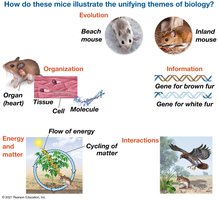
Biology is the scientific study of life. Five unifying themes help organize biological knowledge:
Organization
Information
Energy and Matter
Interactions
Evolution
Properties of Life
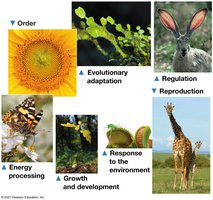
All living things share certain properties that distinguish them from nonliving matter:
Order
Evolutionary adaptation
Regulation
Reproduction
Energy processing
Growth and development
Response to the environment
Levels of Biological Organization
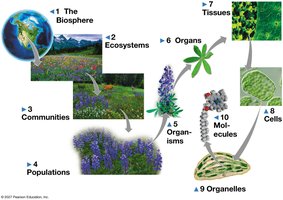
Biological systems are organized into a hierarchy, from the biosphere to molecules:
The Biosphere
Ecosystems
Communities
Populations
Organisms
Organs and Organ Systems
Tissues
Cells
Organelles
Molecules
Emergent Properties and Reductionism
Emergent properties arise from the arrangement and interaction of parts within a system. Reductionism is the approach of reducing complex systems to simpler components. Systems biology complements reductionism by studying interactions among system components.
The Cell: Basic Unit of Structure and Function
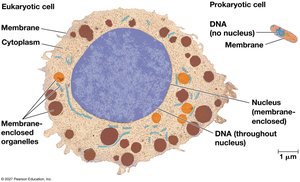
The cell is the smallest unit of life that can perform all activities required for life. According to the cell theory, all living organisms are made of cells. There are two main types of cells:
Eukaryotic cells: Have membrane-enclosed organelles, including a nucleus.
Prokaryotic cells: Simpler, smaller, and lack a nucleus and other membrane-bound organelles.
DNA: The Genetic Material
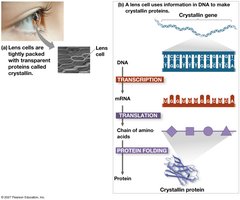
Within cells, chromosomes contain genetic material in the form of DNA (deoxyribonucleic acid). Each chromosome contains one long DNA molecule with many genes, which are units of inheritance. Genes encode information for building molecules and direct organismal development.
Gene Expression
Gene expression is the process by which information from a gene is used to synthesize a functional product, usually a protein. The flow of genetic information is:
DNA is transcribed into RNA.
RNA is translated into protein.
Genomics and Proteomics
Genomics is the study of whole sets of genes (genomes) in one or more species. Proteomics is the study of whole sets of proteins (proteomes) and their properties. These fields rely on high-throughput technology, bioinformatics, and interdisciplinary research teams.
Theme: Life Requires the Transfer and Transformation of Energy and Matter
Energy Flow and Chemical Cycling
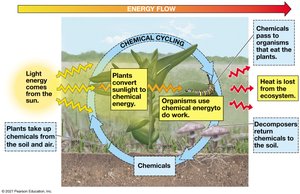
Life depends on the input of energy, primarily from the sun, and the transformation of energy from one form to another. Plants (producers) convert sunlight to chemical energy, which is then passed to consumers. Energy flows through an ecosystem, while chemicals cycle within it.
Feedback Regulation
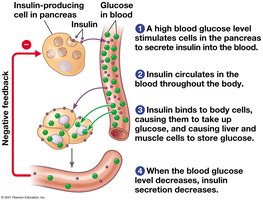
Biological processes are often regulated by feedback mechanisms. Negative feedback reduces the initial stimulus, while positive feedback amplifies it. Feedback regulation helps maintain homeostasis in living organisms.
Interactions Within Organisms and Their Environments
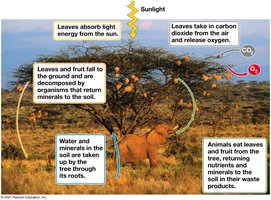
Organisms interact with each other and with their physical environment. These interactions can affect the functioning and survival of organisms and contribute to the cycling of matter and flow of energy in ecosystems.
Evolution: The Core Theme of Biology
Unity and Diversity of Life
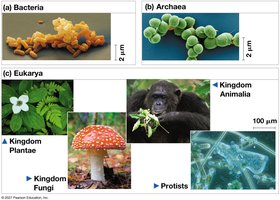
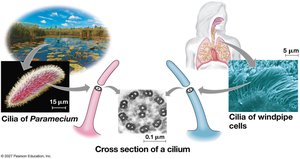
Evolution explains both the unity and diversity of life. All organisms share a common genetic language (DNA), and similarities in structure and function reflect shared ancestry. Diversity arises from evolutionary changes over time.
Charles Darwin and Natural Selection
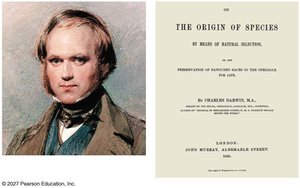
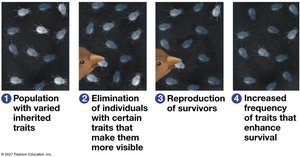
Charles Darwin proposed that species are descended from common ancestors and that natural selection is the mechanism of evolution. Natural selection leads to adaptation and the diversity of life forms.
The Tree of Life
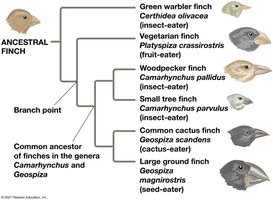
Evolutionary relationships among species are often depicted as tree-like diagrams, showing common ancestry and divergence. For example, the finches of the Galápagos Islands evolved from a common ancestor through adaptive radiation.
Scientific Inquiry: Forming and Testing Hypotheses
The Scientific Process
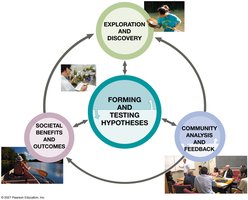
Science is a way of knowing about the natural world. The scientific process involves making observations, forming hypotheses, and testing them through experiments or further observations. Data can be qualitative or quantitative.
Forming and Testing Hypotheses
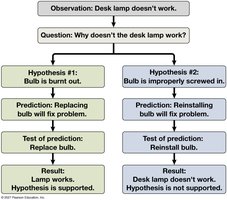
A hypothesis is a testable explanation for an observation. Experiments are designed to test hypotheses under controlled conditions. Variables in experiments include:
Independent variable: The factor manipulated by the researcher.
Dependent variable: The factor measured in response to changes in the independent variable.
Inductive and Deductive Reasoning
Inductive reasoning involves making generalizations from specific observations. Deductive reasoning uses general premises to make specific predictions. Both are important in scientific inquiry.
Limits of Science
Scientific hypotheses must be testable and falsifiable. Questions involving the supernatural or religious beliefs are outside the scope of science.
The Flexibility of the Scientific Process
The scientific method is an idealized process, but real scientific inquiry is often more flexible, involving backtracking and creative problem-solving.
Theories in Science
In science, a theory is broader in scope than a hypothesis, generates new hypotheses, and is supported by a large body of evidence.
Science, Technology, and Society
Science seeks to understand natural phenomena, while technology applies scientific knowledge for practical purposes. Both are interdependent and influence society.
The Value of Diverse Viewpoints
Science benefits from a diversity of backgrounds and perspectives, which fosters innovation and robust scientific progress.
