 뒤로
뒤로Chapter 2: The Chemical Basis of Life – Study Notes
스터디 가이드 - 스마트 노트
 자료에 맞춘 맞춤형 노트, 핵심 정의, 예시, 맥락을 확장해 제공합니다.
Chapter 2: The Chemical Basis of Life
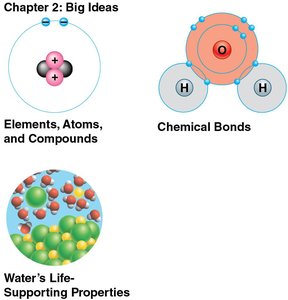
Big Ideas of Chapter 2
This chapter explores the fundamental chemical principles that underpin biological processes, focusing on elements, atoms, compounds, chemical bonds, and the life-supporting properties of water. Understanding these concepts is essential for grasping how living organisms function at the molecular level.
Elements, Atoms, and Compounds
Composition of Living Organisms
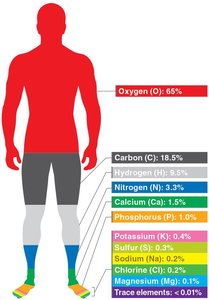
Living organisms are composed of matter, which consists of chemical elements. Most biological matter is made up of a small number of elements, with four (oxygen, carbon, hydrogen, and nitrogen) accounting for about 96% of the weight of most living organisms.
Element: A substance that cannot be broken down into other substances by chemical means.
Atom: The smallest unit of matter that retains the properties of an element.
Compound: A substance consisting of two or more different elements in a fixed ratio.
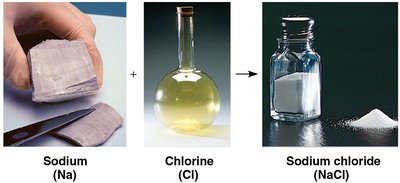
Example: Table salt (NaCl) is a compound formed from sodium (Na) and chlorine (Cl), illustrating emergent properties: the compound has characteristics different from its constituent elements.
Elements Found in the Human Body
About 25 elements are essential for human life. The most abundant elements are oxygen, carbon, hydrogen, and nitrogen. Trace elements, though present in minute amounts, are vital for health.
Trace Elements: Elements required in small quantities, such as iron and fluoride, which are often added to food and water to prevent disease.
Atomic Structure
Subatomic Particles
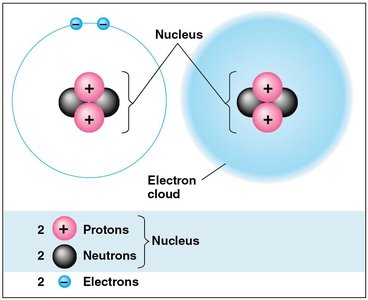
Atoms are composed of three main subatomic particles:
Protons: Positively charged particles found in the nucleus.
Neutrons: Neutral particles found in the nucleus.
Electrons: Negatively charged particles orbiting the nucleus.
The atomic number is the number of protons in an atom, which defines the element. The mass number is the sum of protons and neutrons.
Isotopes
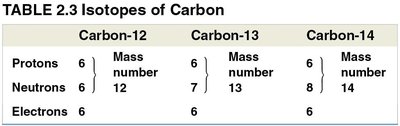
Isotopes are variants of an element with the same number of protons but different numbers of neutrons. Some isotopes are radioactive and can be used as tracers in biological research.
Carbon-12 | Carbon-13 | Carbon-14 | |
|---|---|---|---|
Protons | 6 | 6 | 6 |
Neutrons | 6 | 7 | 8 |
Electrons | 6 | 6 | 6 |
Mass number | 12 | 13 | 14 |
Applications of Radioactive Isotopes
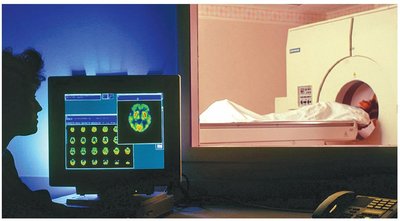
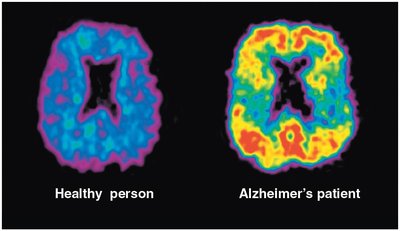
Radioactive isotopes are used in medical imaging and research to trace the movement of substances within organisms. However, they can also pose health risks if not handled properly.
Chemical Bonds
Electron Distribution and Chemical Properties
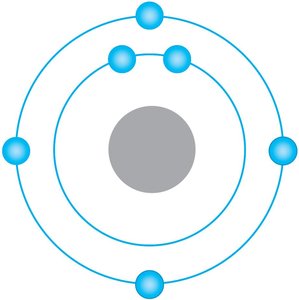
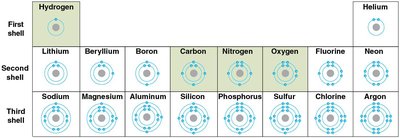
Electrons occupy specific shells around the nucleus. Atoms with incomplete outer shells tend to form chemical bonds by sharing, gaining, or losing electrons.
Types of Chemical Bonds
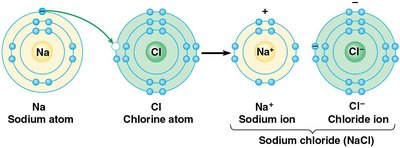
Ionic Bonds: Formed when electrons are transferred from one atom to another, resulting in oppositely charged ions that attract each other.
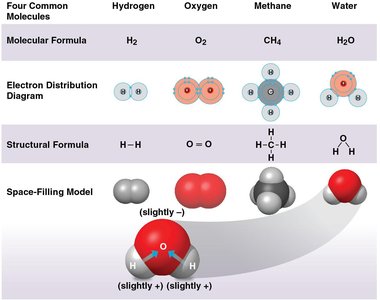
Covalent Bonds: Formed when atoms share electrons. Can be nonpolar (equal sharing) or polar (unequal sharing).
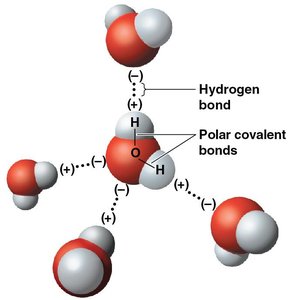
Hydrogen Bonds: Weak bonds important in biological systems, often occurring between polar molecules like water.
Polarity of Water Molecules
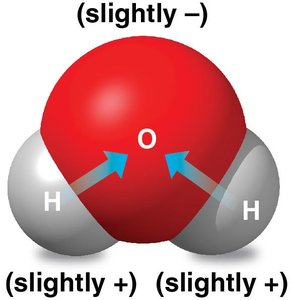
Water molecules have polar covalent bonds, resulting in a partial negative charge on the oxygen atom and partial positive charges on the hydrogen atoms. This polarity enables hydrogen bonding between water molecules.
Chemical Reactions
Making and Breaking Bonds
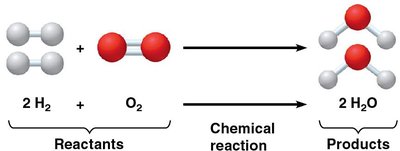
Chemical reactions involve breaking existing bonds and forming new ones, converting reactants into products. Matter is not created or destroyed, only rearranged.
Example: Formation of water from hydrogen and oxygen:
Water’s Life-Supporting Properties
Cohesion, Adhesion, and Surface Tension
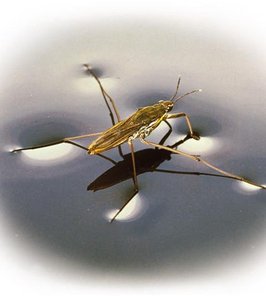
Water molecules stick together (cohesion) and to other substances (adhesion) due to hydrogen bonding. Surface tension is the result of cohesion and allows certain organisms to walk on water.
Temperature Moderation
Water moderates temperature through its high specific heat and evaporative cooling. Hydrogen bonds absorb heat, helping organisms maintain stable internal temperatures.
Density of Ice vs. Liquid Water
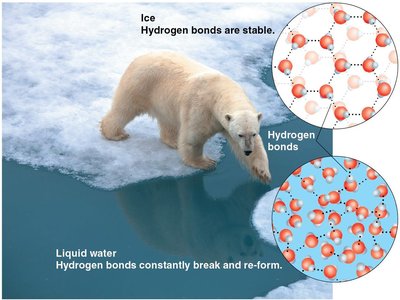
Ice is less dense than liquid water because hydrogen bonds stabilize and keep water molecules further apart in the solid state, allowing ice to float and insulate aquatic life below.
Water as a Solvent
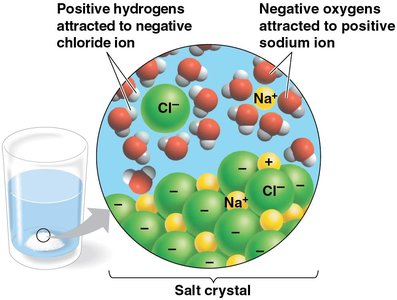
Water’s polarity makes it an excellent solvent for polar and ionic substances, forming aqueous solutions essential for biological processes.
Acids, Bases, and pH
pH Scale and Buffers
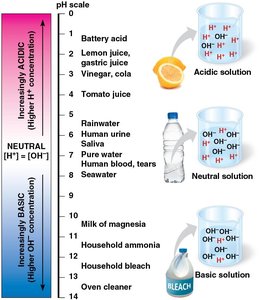
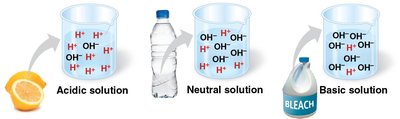
The pH scale measures the concentration of hydrogen ions (H+) in a solution. Acids increase H+ concentration, while bases decrease it. Buffers help maintain stable pH in biological systems.
Impact of Chemistry on Coral Reefs
Ocean Acidification
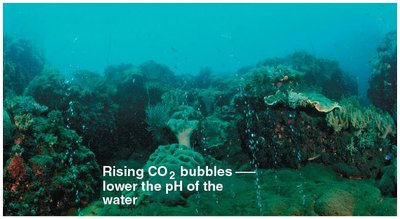
Rising atmospheric CO2 dissolves in seawater, forming carbonic acid and lowering ocean pH. This process, known as ocean acidification, reduces carbonate ion concentration, hindering coral and shell-building organisms.
Evolution Connection: Water and Extraterrestrial Life
Importance of Water in the Search for Life
The unique properties of water are essential for life as we know it. The search for extraterrestrial life often focuses on finding water, as its presence may indicate the potential for life.
Summary Table: Key Concepts
Concept | Definition | Example/Application |
|---|---|---|
Element | Pure substance, cannot be broken down | Oxygen, Carbon |
Atom | Smallest unit of an element | Hydrogen atom |
Compound | Substance of two or more elements | NaCl (table salt) |
Ionic Bond | Attraction between oppositely charged ions | NaCl |
Covalent Bond | Sharing of electrons | H2O |
Hydrogen Bond | Weak bond between polar molecules | Water molecules |
Isotope | Atoms with same protons, different neutrons | Carbon-12, Carbon-14 |
pH | Measure of H+ concentration | Blood pH ~7.4 |
Buffer | Minimizes pH changes | Bicarbonate in blood |
Additional info: These notes expand on the original slides and textbook content, providing definitions, examples, and context for each concept. All images included are directly relevant to the adjacent explanations and reinforce the educational content.
