 뒤로
뒤로Chapter 2: The Chemical Context of Life – Study Notes
스터디 가이드 - 스마트 노트
 자료에 맞춘 맞춤형 노트, 핵심 정의, 예시, 맥락을 확장해 제공합니다.
Chapter 2: The Chemical Context of Life
Concept 2.1: Matter consists of chemical elements in pure form and in combinations called compounds
All living organisms are composed of matter, which is anything that occupies space and has mass. Matter is made up of elements, and combinations of elements form compounds with unique properties.
Element: A substance that cannot be broken down into other substances by chemical reactions.
Compound: A substance consisting of two or more elements in a fixed ratio, exhibiting emergent properties distinct from its constituent elements.
Emergent Properties: Characteristics of a compound that are different from those of the individual elements.
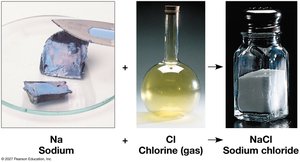
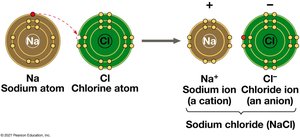
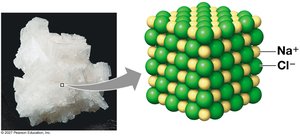
Example: Sodium (Na) and chlorine (Cl) combine to form sodium chloride (NaCl), which has properties different from either element alone.
The Elements of Life
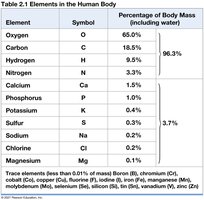
Only a subset of the 92 naturally occurring elements are essential for life. The most abundant elements in living matter are carbon, hydrogen, oxygen, and nitrogen.
Essential Elements: Elements required for an organism to survive and reproduce (about 20–25% of all elements).
Major Elements: Carbon, hydrogen, oxygen, and nitrogen make up 96% of living matter.
Minor Elements: Calcium, phosphorus, potassium, and sulfur constitute most of the remaining 4%.
Trace Elements: Required in minute quantities, such as iron and zinc.
Element | Symbol | Percentage of Body Mass (including water) |
|---|---|---|
Oxygen | O | 65.0% |
Carbon | C | 18.5% |
Hydrogen | H | 9.5% |
Nitrogen | N | 3.3% |
Calcium | Ca | 1.5% |
Phosphorus | P | 1.0% |
Potassium | K | 0.4% |
Sulfur | S | 0.3% |
Sodium | Na | 0.2% |
Chlorine | Cl | 0.2% |
Magnesium | Mg | 0.1% |
Case Study: Evolution of Tolerance to Toxic Elements
Some elements are toxic, but certain species can adapt to environments containing these elements. For example, some plants thrive in serpentine soils, which are rich in toxic metals.
Adaptation: Evolutionary process by which organisms become tolerant to toxic elements in their environment.
Example: Plant communities adapted to serpentine soil.

Concept 2.2: An element’s properties depend on the structure of its atoms
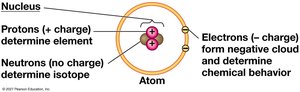
Atoms are the smallest units of matter that retain the properties of an element. The structure of an atom determines its chemical properties.
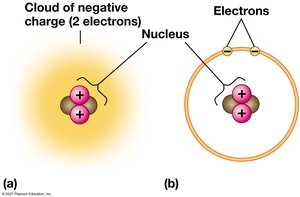
Atom: Composed of subatomic particles: protons, neutrons, and electrons.
Proton: Positively charged particle in the nucleus.
Neutron: Neutral particle in the nucleus.
Electron: Negatively charged particle orbiting the nucleus.
Dalton: Unit of mass for atoms and subatomic particles.
Atomic Number and Atomic Mass
Atoms of different elements differ in their number of subatomic particles. The atomic number and mass number are key identifiers.
Atomic Number: Number of protons in the nucleus.
Mass Number: Sum of protons and neutrons in the nucleus.
Atomic Mass: Total mass of an atom, approximated by the mass number.
Isotopes and Radioactivity
Isotopes are variants of elements with different numbers of neutrons. Some isotopes are radioactive and decay spontaneously, emitting energy.
Isotope: Atoms of the same element with different numbers of neutrons.
Radioactive Isotope: Unstable isotope that decays, releasing particles and energy.
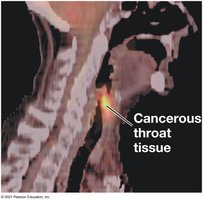
Applications: Used as tracers in medicine and for radiometric dating.
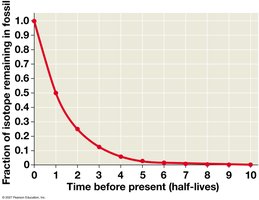
Radiometric Dating: Measures the ratio of isotopes to determine the age of fossils and rocks. The decay rate is expressed as half-life.
The Energy Levels of Electrons
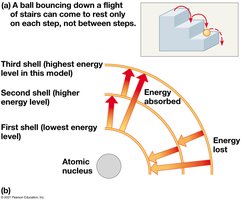
Electrons occupy specific energy levels or shells around the nucleus. The arrangement of electrons determines the atom’s chemical behavior.
Potential Energy: Energy due to position or structure.
Electron Shells: Levels where electrons reside, each with a characteristic energy.
Valence Electrons: Electrons in the outermost shell, crucial for chemical bonding.
Electron Distribution and Chemical Properties
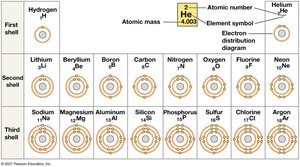
The periodic table organizes elements by their electron configuration. The distribution of electrons, especially in the valence shell, determines reactivity.
Periodic Table: Arranges elements by increasing atomic number and electron configuration.
Chemical Inertness: Elements with full valence shells are chemically inert (e.g., noble gases).
Electron Orbitals
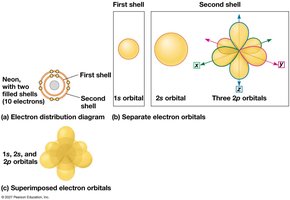
Orbitals are three-dimensional regions where electrons are likely to be found. Each shell contains a specific number of orbitals.
Orbital: Space where an electron is found 90% of the time.
Shell Structure: Each shell has a set number of orbitals; no more than two electrons per orbital.
Concept 2.3: Chemical bonding between atoms
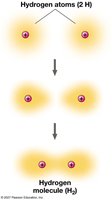
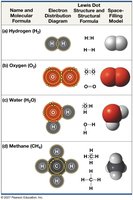
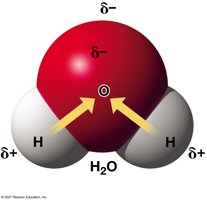
Atoms with incomplete valence shells can share or transfer electrons, forming chemical bonds. These bonds are essential for the formation of molecules and compounds.
Covalent Bond: Sharing of valence electrons between atoms.
Ionic Bond: Transfer of electrons, resulting in oppositely charged ions that attract each other.
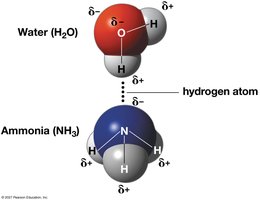
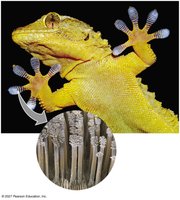
Weak Bonds: Hydrogen bonds and van der Waals interactions, important for maintaining biological molecule structure.
Molecular Shape and Function
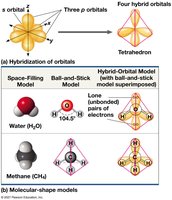
The shape of a molecule is determined by the arrangement of its atoms and orbitals. Molecular shape is critical for biological function, such as enzyme-substrate interactions and receptor binding.
Hybrid Orbitals: s and p orbitals combine to form specific shapes.
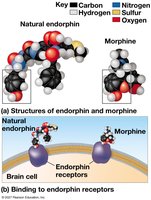
Molecular Mimicry: Molecules with similar shapes can bind the same biological receptors.
Example: Morphine and endorphins have similar shapes and bind the same brain receptors.
Concept 2.4: Chemical reactions make and break chemical bonds
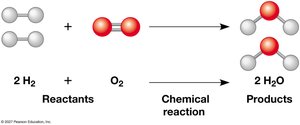
Chemical reactions involve the rearrangement of atoms by making and breaking chemical bonds. Reactants are transformed into products, and reactions can be reversible.
Reactants: Starting substances in a chemical reaction.
Products: Resulting substances after the reaction.
Reversibility: Most reactions are reversible; equilibrium is reached when forward and reverse reactions occur at the same rate.
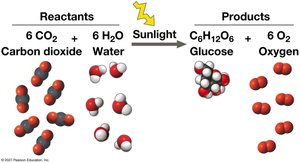
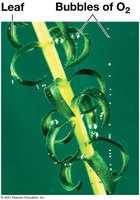
Photosynthesis: Sunlight powers the conversion of carbon dioxide and water into glucose and oxygen.
Summary of Key Concepts
Understanding the chemical context of life is foundational for biology. The structure of atoms, the nature of chemical bonds, and the dynamics of chemical reactions underpin all biological processes.
Atoms: Defined by their protons, neutrons, and electrons.
Chemical Bonds: Covalent, ionic, and weak interactions are essential for molecular structure and function.
Chemical Reactions: Enable the transformation of matter in living systems.
 Additional info: Academic context was expanded for completeness and clarity, including definitions, examples, and applications relevant to General Biology.
