 뒤로
뒤로Chapter 2: The Chemical Context of Life – Study Notes
스터디 가이드 - 스마트 노트
 자료에 맞춘 맞춤형 노트, 핵심 정의, 예시, 맥락을 확장해 제공합니다.
Chapter 2: The Chemical Context of Life
2.1 Matter Consists of Chemical Elements in Pure Form and in Combinations Called Compounds
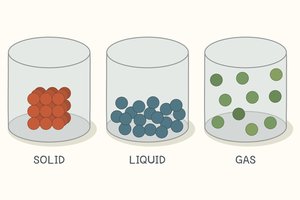
Matter is anything that occupies space and has mass. All organisms are composed of matter, which exists in three primary states: solid, liquid, and gas. Matter can be broken down into elements and compounds, with elements being substances that cannot be broken down by chemical means, and compounds being substances formed from two or more elements in fixed ratios.
Element: A substance that cannot be decomposed into simpler substances by chemical reactions (e.g., Oxygen, Carbon).
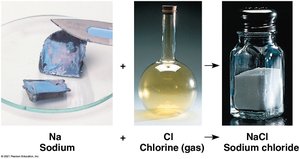
Compound: A substance consisting of two or more elements combined in a fixed ratio (e.g., NaCl – sodium chloride).
Organic Compounds: Compounds containing carbon and usually hydrogen, often associated with living organisms.
Element | Symbol | Percentage of Body Mass (including water) |
|---|---|---|
Oxygen | O | 65.0% |
Carbon | C | 18.5% |
Hydrogen | H | 9.5% |
Nitrogen | N | 3.3% |
Calcium | Ca | 1.5% |
Phosphorus | P | 1.0% |
Potassium | K | 0.4% |
Sulfur | S | 0.3% |
Sodium | Na | 0.2% |
Chlorine | Cl | 0.2% |
Magnesium | Mg | 0.1% |
2.2 An Element’s Properties Depend on the Structure of Its Atoms
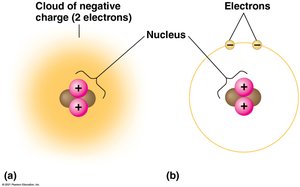
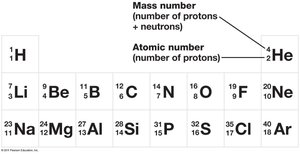
Atoms are the smallest units of elements that retain their properties. Each atom consists of a nucleus (containing protons and neutrons) and a cloud of electrons. The number of protons defines the atomic number, while the sum of protons and neutrons gives the mass number.
Proton: Positively charged particle, mass = 1 Dalton (amu).
Neutron: Neutral particle, mass = 1 Dalton (amu).
Electron: Negatively charged particle, negligible mass.
Atomic Number (Z): Number of protons in the nucleus.
Mass Number (A): Number of protons + neutrons.
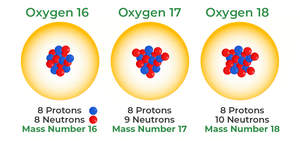
Isotopes: Atoms of the same element with different numbers of neutrons.
Radioactive Isotopes: Unstable isotopes that decay spontaneously, releasing energy.
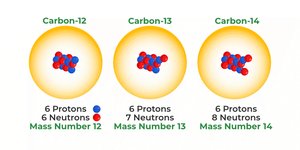
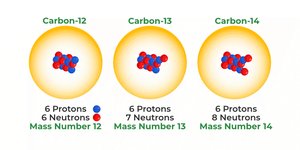
Example: Carbon-12, Carbon-13, and Carbon-14 are isotopes of carbon, differing in neutron number. Carbon-14 is radioactive and used in radiometric dating.
2.3 The Formation and Function of Molecules Depend on Chemical Bonding Between Atoms
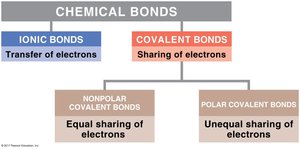
Atoms interact through chemical bonds to achieve stable electron configurations. The main types of chemical bonds are covalent, ionic, hydrogen bonds, and Van der Waals interactions.
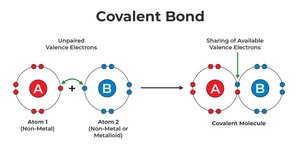
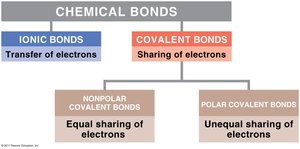
Covalent Bond: Sharing of electron pairs between atoms. Can be single, double, or triple bonds.
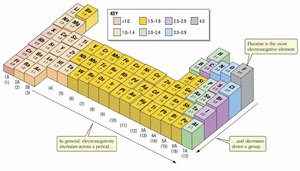
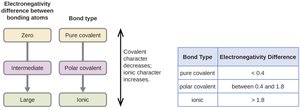
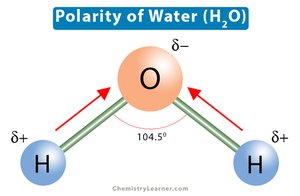
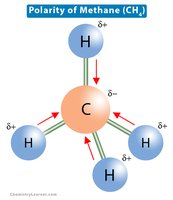
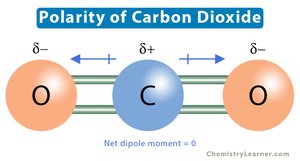
Electronegativity: The tendency of an atom to attract electrons in a bond. Differences in electronegativity determine bond polarity.
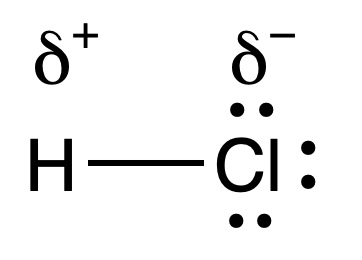
Polar Covalent Bond: Unequal sharing of electrons, resulting in partial charges (e.g., H2O).
Nonpolar Covalent Bond: Equal sharing of electrons (e.g., O2, CH4).
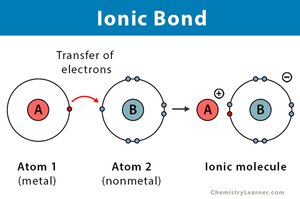
Ionic Bond: Transfer of electrons from one atom to another, forming oppositely charged ions (e.g., NaCl).
Hydrogen Bond: Weak attraction between a hydrogen atom covalently bonded to a highly electronegative atom (O, N, F) and another electronegative atom.
Van der Waals Interactions: Weak, transient interactions due to fluctuating electron distributions.

Electron Arrangement and Chemical Properties
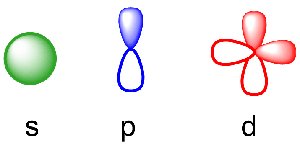
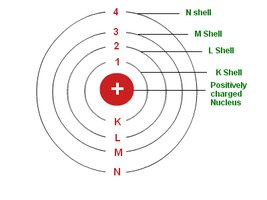
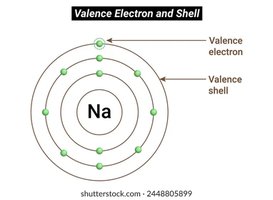
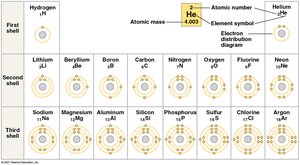
Electrons occupy orbitals, which are organized into shells around the nucleus. The arrangement of electrons determines an atom’s chemical behavior, especially the electrons in the outermost shell (valence shell).
Orbital: Region in space where an electron is likely to be found.
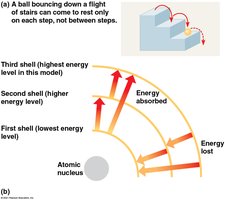
Electron Shell: Group of orbitals with similar energy levels. The further from the nucleus, the higher the energy.
Valence Electrons: Electrons in the outermost shell, responsible for chemical reactivity.
Shell Capacity Formula: (where n = shell number)
Summary Table: Types of Chemical Bonds
Bond Type | Mechanism | Relative Strength | Example |
|---|---|---|---|
Covalent (Nonpolar) | Equal sharing of electrons | Strong | O2, CH4 |
Covalent (Polar) | Unequal sharing of electrons | Strong | H2O |
Ionic | Transfer of electrons | Strong (in dry conditions) | NaCl |
Hydrogen Bond | Attraction between H and electronegative atom | Weak | Between water molecules |
Van der Waals | Transient induced dipoles | Very weak | All molecules |
Major Points to Remember
Matter consists of chemical elements that can combine to form compounds.
The atom is the smallest unit of an element, composed of protons, neutrons, and electrons.
Atomic number and mass number are key identifiers for elements.
Isotopes differ in neutron number and mass; radioactive isotopes are useful in dating and tracing.
Chemical bonds (ionic, covalent, hydrogen, Van der Waals) differ in strength and nature, influencing molecular structure and function.
