 뒤로
뒤로Chapter 2: The Chemical Context of Life – Study Notes
스터디 가이드 - 스마트 노트
 자료에 맞춘 맞춤형 노트, 핵심 정의, 예시, 맥락을 확장해 제공합니다.
Chapter 2: The Chemical Context of Life
Introduction
Understanding the chemical basis of life is essential for studying biology. This chapter explores the nature of matter, the structure of atoms, the types of chemical bonds, and how these concepts relate to biological molecules and processes.
Concept 2.1: Matter, Elements, and Compounds
Definitions and Relationships
Matter: Anything that takes up space and has mass.
Element: A substance that cannot be broken down into other substances by chemical reactions.
Atom: The smallest unit of matter that retains the properties of an element.
Compound: A substance consisting of two or more different elements combined in a fixed ratio.
Molecule: Two or more atoms held together by covalent bonds.
Mixture: A combination of substances in which each retains its individual properties.
Avogadro’s Number: The number of particles (usually atoms or molecules) in one mole, approximately $6.022 \times 10^{23}$.
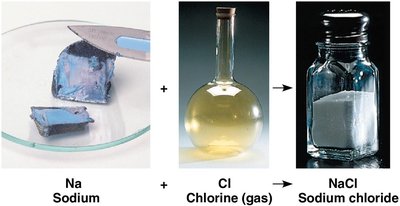
Compounds have emergent properties that are different from those of their constituent elements.
The Elements of Life
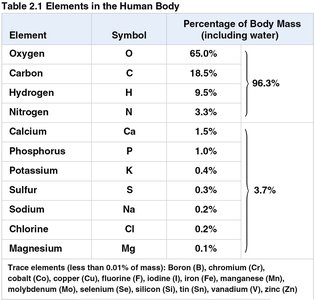
About 20–25% of the 92 natural elements are essential for life.
Four elements—carbon, hydrogen, oxygen, and nitrogen—make up about 96% of living matter.
Other essential elements include calcium, phosphorus, potassium, and sulfur.
Trace elements are required in minute quantities but are vital for proper biological function.
Concept 2.2: Atomic Structure and Properties
Subatomic Particles
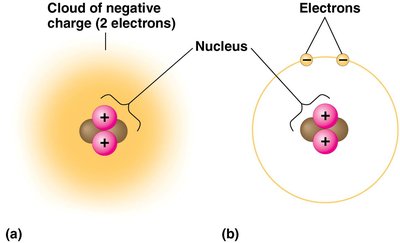
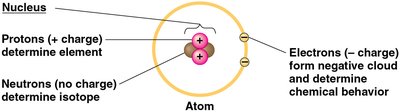
Protons: Positively charged particles in the nucleus; determine the element.
Neutrons: Neutral particles in the nucleus; contribute to atomic mass and isotopes.
Electrons: Negatively charged particles orbiting the nucleus; determine chemical behavior.
Atomic Number, Mass Number, and Isotopes
Atomic Number: Number of protons in the nucleus.
Mass Number: Sum of protons and neutrons.
Atomic Mass: Approximate total mass of an atom (in daltons).
Isotopes: Atoms of the same element with different numbers of neutrons.
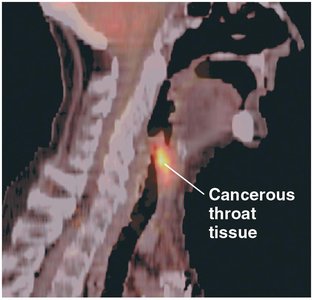
Radioactive Isotopes: Unstable isotopes that decay, emitting particles and energy.
Radiometric Dating
Uses the decay of radioactive isotopes to estimate the age of rocks and fossils.
Half-life: The time required for half of the radioactive atoms to decay.
Energy Levels of Electrons
Energy: The capacity to cause change.
Potential Energy: Energy due to position or structure.
Electrons exist in energy levels called shells; energy increases with distance from the nucleus.
Electrons can move between shells by absorbing or losing energy in fixed amounts.
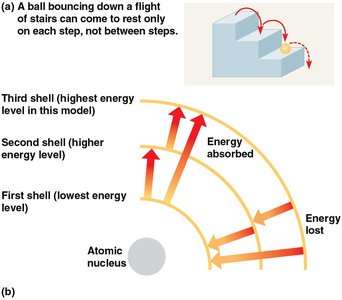
Electron Distribution and Chemical Properties
The arrangement of electrons in shells determines an atom’s chemical behavior.
The periodic table reflects the electron configurations of elements.
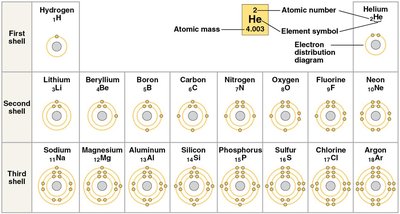
Valence Electrons and Orbitals
Valence Electrons: Electrons in the outermost shell; determine reactivity.
Atoms with full valence shells are chemically inert (noble gases).
Orbitals: Three-dimensional spaces where electrons are found 90% of the time; each shell has a specific number of orbitals.
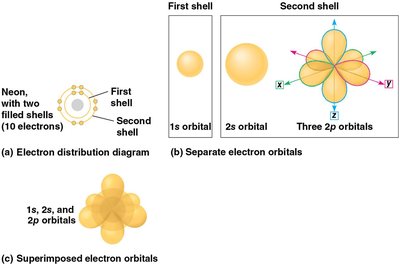
Concept 2.3: Chemical Bonds and Interactions
Covalent Bonds
Covalent Bond: Sharing of a pair of valence electrons between two atoms.
Can be single (one pair shared) or double (two pairs shared).
Structural Formula: Shows how atoms are bonded (e.g., H–H, O=O).
Molecular Formula: Indicates the number and type of atoms (e.g., H2, O2).
Valence: Bonding capacity of an atom.
Electronegativity: Atom’s attraction for shared electrons; determines bond polarity.
Nonpolar Covalent Bond: Electrons shared equally.
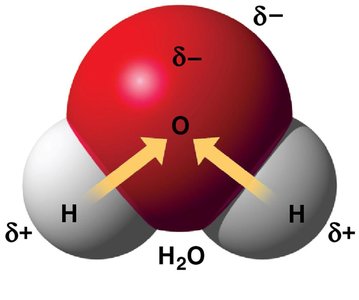
Polar Covalent Bond: Electrons shared unequally, creating partial charges.
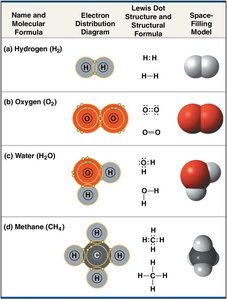
Ionic Bonds
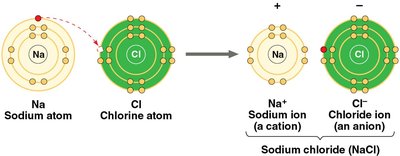
Formed when one atom transfers electrons to another, creating ions.
Cation: Positively charged ion.
Anion: Negatively charged ion.
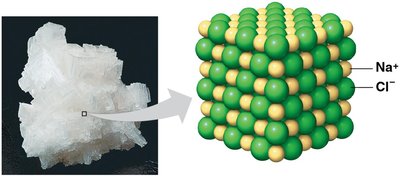
Ionic Bond: Attraction between cations and anions.
Ionic Compounds (Salts): Compounds formed by ionic bonds, often crystalline in structure.
Weak Chemical Interactions
Include hydrogen bonds and van der Waals interactions.
Important for the structure and function of large biological molecules.
Weak bonds are reversible, allowing dynamic biological processes.
Hydrogen Bonds
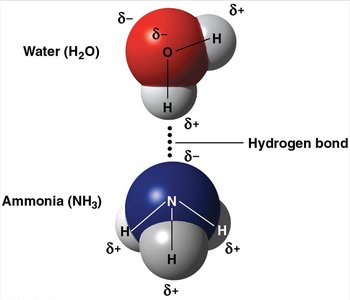
Form when a hydrogen atom covalently bonded to one electronegative atom is attracted to another electronegative atom (often O or N).
Van der Waals Interactions
Occur when transiently positive and negative regions of molecules attract each other.
Collectively, these interactions can be strong, as seen in gecko toe adhesion.
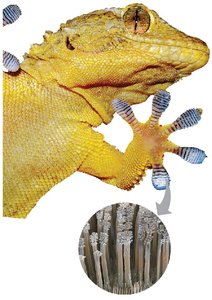
Molecular Shape and Function
Molecular shape is determined by the positions of atoms’ orbitals and is crucial for biological function.
Shape determines how molecules recognize and interact with each other (e.g., hormone-receptor binding).
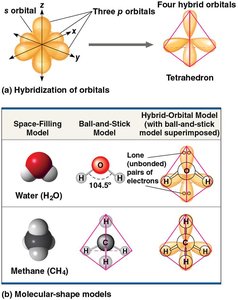
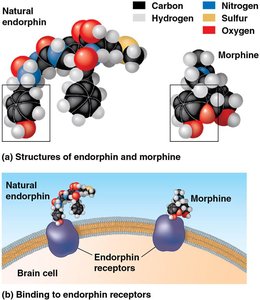
Concept 2.4: Chemical Reactions
Making and Breaking Bonds
Chemical Reaction: The making and breaking of chemical bonds, transforming reactants into products.
All chemical reactions are reversible; equilibrium is reached when forward and reverse reactions occur at the same rate.
Chemical Equilibrium: The point at which the concentrations of reactants and products remain constant.
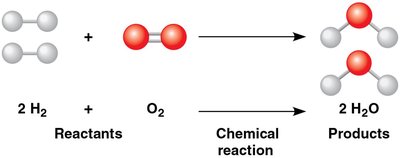
Photosynthesis: A Key Biological Reaction
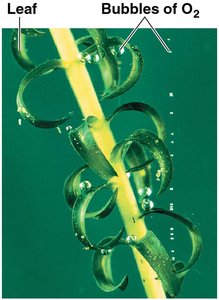
Photosynthesis converts carbon dioxide and water into glucose and oxygen using sunlight.
The overall equation for photosynthesis is:
$6 \mathrm{CO}_2 + 6 \mathrm{H}_2\mathrm{O} \rightarrow \mathrm{C}_6\mathrm{H}_{12}\mathrm{O}_6 + 6 \mathrm{O}_2$
Summary Table: Key Atomic Components
Component | Charge | Location | Determines |
|---|---|---|---|
Proton | +1 | Nucleus | Element |
Neutron | 0 | Nucleus | Isotope |
Electron | -1 | Electron cloud | Chemical behavior |
Key Vocabulary
Matter: Anything that takes up space and has mass.
Element: A substance that cannot be broken down into other substances by chemical reactions.
Atom: The smallest unit of matter that still retains the properties of an element.
Compound: Substance that consists of two or more different elements in a fixed ratio.
Molecule: Group of two or more atoms of the same (or different) elements held together by attractive forces.
Avogadro’s number: Number of particles in one mole ($6.022 \times 10^{23}$).
