뒤로
뒤로Chapter 26: The Colonization of Land by Plants and Fungi
스터디 가이드 - 스마트 노트
 자료에 맞춘 맞춤형 노트, 핵심 정의, 예시, 맥락을 확장해 제공합니다.
Greening of Earth: Colonization of Land
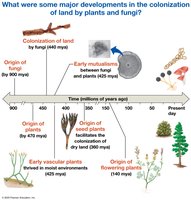
Major Developments in Colonization
The colonization of land by plants and fungi was a pivotal event in Earth's history, fundamentally altering ecosystems and enabling the rise of terrestrial life.
Fungi partnered with plants, breaking down organic material and making nutrients available.
Plants supplied oxygen and became the primary food source for land animals.
Animals moved onto land after plants and fungi established terrestrial ecosystems.
Evolutionary Relationships
Fungi, Animals, and Plants
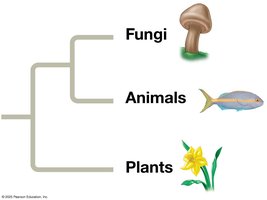
Fungi are more closely related to animals than to plants, sharing a common ancestor with unicellular protists called nucleariids.
Fungi and animals are both opisthokonts.
Plants belong to a separate lineage, Archaeplastida.
Origin and Diversification of Fungi
Fungal Diversity and Adaptations
Fungi are heterotrophs that absorb nutrients from their environment, with diverse forms and life cycles.
Fungi consist of networks of branched hyphae (filaments) adapted for absorption.
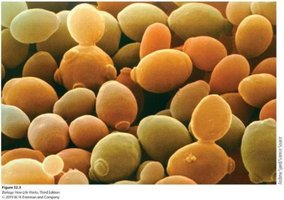
Some fungi are single-celled (yeasts), while others are multicellular.
Fungi secrete hydrolytic enzymes to break down complex molecules.
Cell walls are composed of chitin, preventing cell bursting.
Major Fungal Groups
Cryptomycetes: Parasites of other fungi or protists.
Microsporidians: Unicellular parasites of protists and animals.
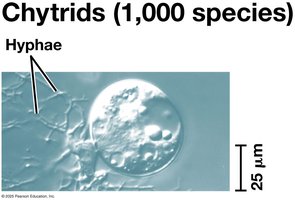
Chytrids: Have flagellated spores; affect amphibians.
Zoopagomycetes: Parasites or symbionts of animals.
Mucuromycetes: Fast-growing molds, including glomeromycetes.
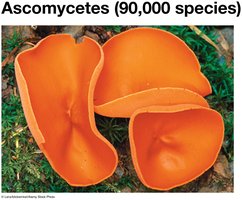
Ascomycetes: Sac fungi, produce ascocarps.
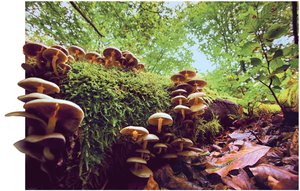
Basidiomycetes: Club fungi, important decomposers, produce mushrooms.
Fungal Reproduction
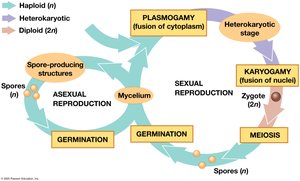
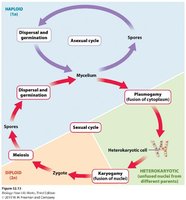
Fungi reproduce by producing spores, either sexually or asexually, but do not have gametes.
Asexual reproduction: Molds produce haploid spores by mitosis; yeasts divide by budding.
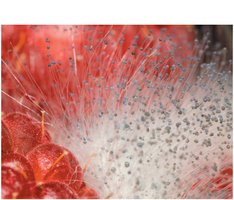
Sexual reproduction: Involves fusion of hyphal tips (plasmogamy), formation of heterokaryotic stage, fusion of nuclei (karyogamy), and meiosis to produce spores.
Mycorrhizae: Fungi-Plant Symbiosis
Key Adaptation to Life on Land
Mycorrhizae are mutually beneficial relationships between fungi and plant roots, crucial for nutrient exchange.
Arbuscular mycorrhizal fungi: Extend hyphae through plant root cell wall.
Ectomycorrhizal fungi: Form sheaths over roots and grow into extracellular spaces.
Fungi provide minerals (e.g., phosphate ions) to plants; plants provide sugars to fungi.
Plant Evolution and Adaptations
Algal Ancestry and Move to Land
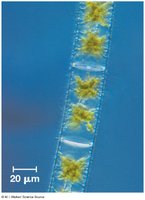
Land plants evolved from green algae called charophytes, sharing several traits.
Multicellular, eukaryotic, photosynthetic autotrophs.
Cell walls made of cellulose; chloroplasts with chlorophyll a and b.
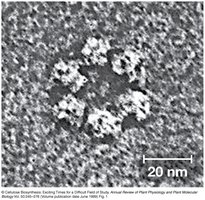
Charophytes have rings of cellulose-synthesizing proteins and similar flagellated sperm.
Boundaries of the Plant Kingdom
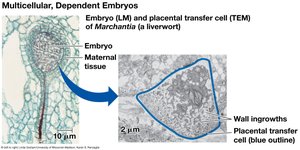
Plants are embryophytes: they have multicellular, dependent embryos.
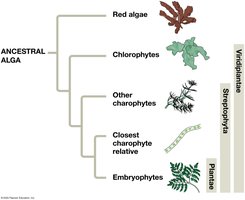
Adaptations Enabling Move to Land
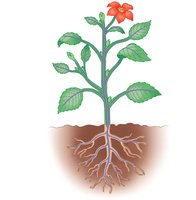
The transition to land required adaptations to overcome challenges such as water scarcity, unfiltered sunlight, and lack of structural support.
Roots: Absorb water and nutrients from soil.
Leaves: Waxy cuticle and stomata regulate gas exchange and water loss.
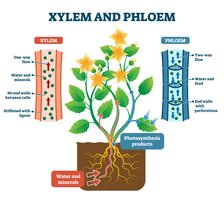
Xylem: Transports water; phloem: Transports carbohydrates.
Sporopollenin: Protective polymer surrounding zygotes and spores.
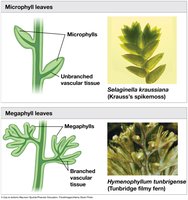
Multicellular, Dependent Embryos
Embryos develop within tissues of the female parent, receiving nutrients via placental transfer cells.
Plants are called embryophytes due to this dependency.
Vascular Tissue: Xylem and Phloem
Vascular tissue enabled plants to grow tall and efficiently transport water, minerals, and organic products.
Xylem: Conducts water and minerals; lignified for structural support.
Phloem: Distributes sugars, amino acids, and other organic products.
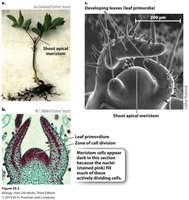
Apical Meristems
Apical meristems are regions of cell division at the tips of roots and shoots, allowing plants to grow throughout their lives.
Enabled evolution of trees and forests.
Sporopollenin
Sporopollenin protects spores from UV damage and desiccation, enabling dispersal in harsh environments.
Spore walls contain sporopollenin, making them resistant.
Alternation of Generations
Plant Life Cycles
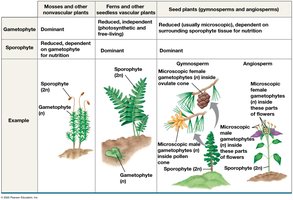
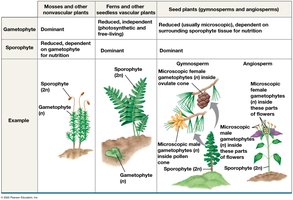
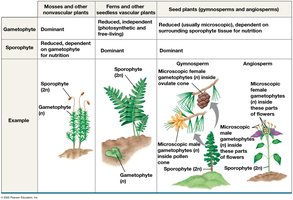
Plants alternate between two generations: sporophyte (diploid, 2n) and gametophyte (haploid, n).
Sporophytes produce spores by meiosis.
Gametophytes produce gametes by mitosis.
Fertilization produces a zygote, which develops into a sporophyte.
Bryophytes: Basal Plant Lineages
Characteristics and Life Cycle
Bryophytes include liverworts, mosses, and hornworts, representing the earliest diverging lineages of land plants.
Have root-like structures called rhizoids for anchorage.
Gametophytes are larger and longer-living than sporophytes.
Limited to moist habitats due to flagellated sperm.
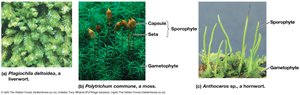
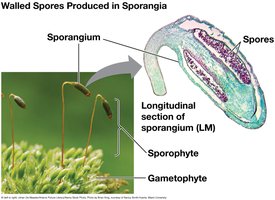
Walled Spores Produced in Sporangia
Sporangia are multicellular organs that produce spores with sporopollenin, making them resistant to harsh environments. 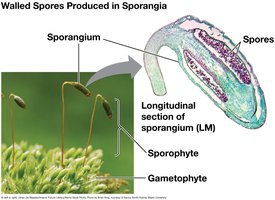
Nonvascular vs. Vascular Plants
Classification and Evolution
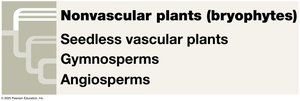
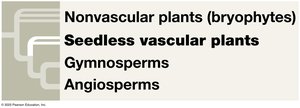
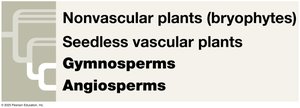
Plants are grouped based on the presence or absence of vascular tissue.
Nonvascular plants (bryophytes): Lack vascular tissue.
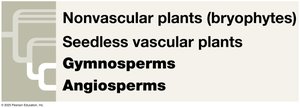
Vascular plants: Have xylem and phloem; include seedless vascular plants, gymnosperms, and angiosperms.
Seedless Vascular Plants
First Tall Plants
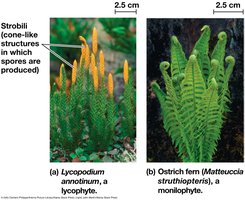
Seedless vascular plants, such as lycophytes and monilophytes (ferns), were the first to grow tall due to vascular tissue.
Early vascular plants lacked seeds but could disperse spores by air.
Ferns exhibit alternation of generations, with independent sporophyte and gametophyte stages.
Derived Traits: Seeds and Pollen
Key Adaptations for Life on Land
Seeds and pollen grains enabled plants to colonize diverse terrestrial habitats.
Seeds: Embryo, food supply, and protective coat; can remain dormant and are dispersed by wind or animals.
Pollen: Allows fertilization without water.
Seed plants are divided into gymnosperms (naked seeds) and angiosperms (seeds in ovaries).
Evolutionary Advantage of Seeds
Seeds are multicellular and protected, can remain dormant, and have stored food.
Spores are usually single-celled and less protected.
Gymnosperms and Angiosperms
Examples and Diversification
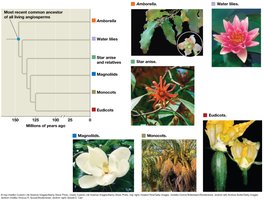
Gymnosperms dominated early terrestrial ecosystems, while angiosperms are now the most widespread and diverse group of plants.
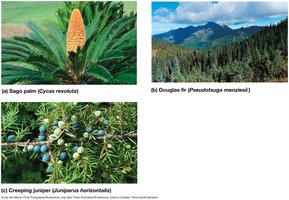
Gymnosperms: Conifers, cycads, ginkgo, and others.
Angiosperms: Flowering plants, pollinated by insects, animals, or wind.
Plants and Fungi: Impact on Chemical Cycling and Biotic Interactions
Physical Environment and Chemical Cycling
Lichens: Symbiotic associations between fungi and photosynthetic microorganisms; promote soil formation.
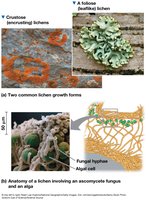
Plants: Stabilize soil, add nutrients, release oxygen, and play a key role in carbon recycling.
Biotic Interactions
Mutualisms: Benefit both species (e.g., mycorrhizae, endophytes).
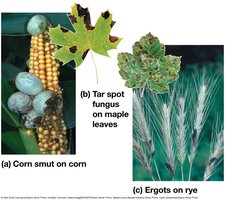
Parasitism: Fungi as pathogens (e.g., chestnut blight, ergots on rye).
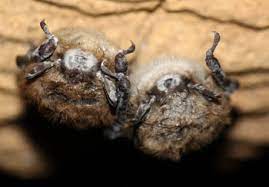
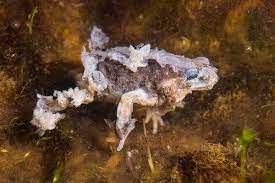
Fungal infections in vertebrates: Chytrid fungi affect amphibians; white-nose syndrome in bats; athlete's foot and yeast infections in humans.
Plant-Animal Interactions
Herbivores select for plant defenses.
Pollinators and flowering plants co-evolve for mutual benefit.
Human activities threaten plant diversity and habitats.
Summary Table: Gametophyte-Sporophyte Relationships in Plant Groups
Comparison of Life Cycles
Group | Gametophyte | Sporophyte | Example |
|---|---|---|---|
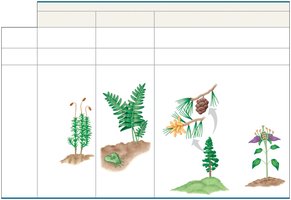
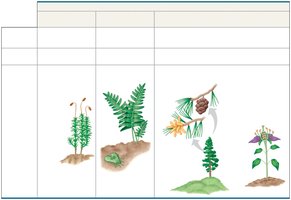
Mosses and other nonvascular plants | Dominant | Reduced, dependent on gametophyte | Sporophyte grows from gametophyte |
Ferns and other seedless vascular plants | Reduced, independent, photosynthetic and free-living | Dominant | Sporophyte and gametophyte are independent |
Seed plants (gymnosperms and angiosperms) | Reduced (usually microscopic), dependent on surrounding sporophyte tissue for nutrition | Dominant | Microscopic gametophytes inside ovulate cone or flower parts; sporophyte is the main plant |