 뒤로
뒤로Chapter 3: Water and Life – Properties and Biological Importance of Water
스터디 가이드 - 스마트 노트
 자료에 맞춘 맞춤형 노트, 핵심 정의, 예시, 맥락을 확장해 제공합니다.
Properties of Water
The Chemical Properties of Water
Water is a unique molecule essential for life, characterized by its polar nature and ability to form hydrogen bonds. These properties give rise to many of water's critical biological functions.
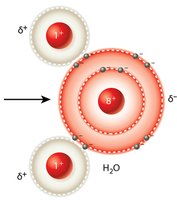
Polarity: Water (H2O) is a polar molecule, with a partial negative charge on the oxygen atom and partial positive charges on the hydrogen atoms.
Hydrogen Bonding: The polarity allows water molecules to form hydrogen bonds with each other and with other polar molecules.
Solvent Properties: Water readily dissolves polar and ionic substances, making it a universal solvent in biological systems.
Water Exists in Three States
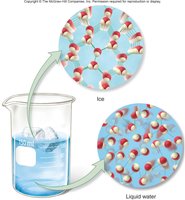
Water can exist as a solid (ice), liquid, or gas, depending on temperature. The transitions between these states are governed by the breaking and forming of hydrogen bonds.
Liquid: At moderate temperatures, hydrogen bonds are constantly breaking and reforming, keeping water in a liquid state.
Gas: At higher temperatures, hydrogen bonds break rapidly, allowing water molecules to escape as vapor.
Solid (Ice): At lower temperatures, hydrogen bonds form stable, ordered clusters, resulting in ice. Ice is less dense than liquid water due to its open lattice structure.
No Life Without Water
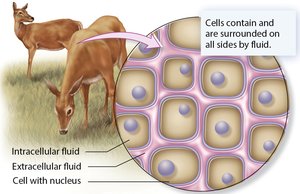
Water is fundamental to all living organisms. It constitutes a major portion of body weight and is the medium for most biochemical reactions.
Body Composition: 60-70% of human body weight is water; some plants contain up to 95% water.
Cellular Environment: Cells are surrounded by and contain fluid, facilitating transport and reactions.
Biochemical Reactions: Most reactions in nature occur in aqueous environments.
Water as a Solvent
Water Readily Dissolves Polar Molecules
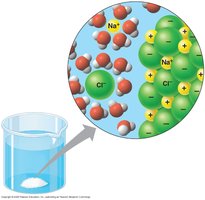
Water's polarity enables it to dissolve a wide range of substances, especially those with polar or ionic bonds.
Solutes: Substances dissolved in a liquid.
Solvent: The liquid in which solutes are dissolved; water is the most common biological solvent.
Solution: A homogeneous mixture of solutes in a solvent.
Aqueous Solution: A solution where water is the solvent.
Example: Sodium chloride (NaCl) dissolves in water because water molecules surround and separate the Na+ and Cl- ions.
Affinity of Molecules for Water
Hydrophilic, Hydrophobic, and Amphipathic Molecules
Molecules interact with water differently based on their chemical properties.
Hydrophilic: "Water loving" molecules dissolve in water or interact via hydrogen bonds (usually polar).
Hydrophobic: "Water fearing" molecules repel water (usually nonpolar).
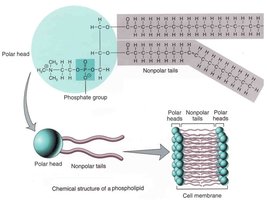
Amphipathic: Molecules with both hydrophilic and hydrophobic regions, such as phospholipids, which form cell membrane bilayers.
Cohesion, Adhesion, and Surface Tension
Cohesion and Adhesion
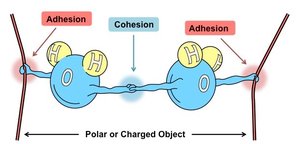
Water molecules exhibit cohesion (attraction to each other) and adhesion (attraction to other surfaces), both mediated by hydrogen bonding.
Cohesion: Responsible for water's high surface tension and the ability to form droplets.
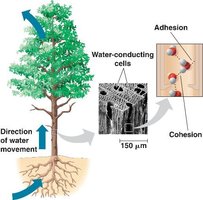
Adhesion: Enables water to stick to surfaces, important for processes like capillary action in plants.
Example: Water transport in plants relies on both cohesion and adhesion.
Surface Tension
Surface tension is the measure of the attraction between molecules at the surface of a liquid. Water's high surface tension allows certain organisms, like water striders, to walk on its surface.
Surface Tension: Results from cohesive forces among water molecules at the surface.
Example: Water striders exploit surface tension to remain atop water.

Floating Water Bridge
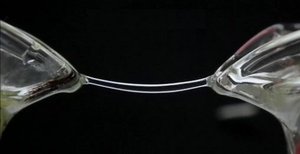
Under certain conditions, water can form a floating bridge between two containers, demonstrating its cohesive and adhesive properties.
Water Dissociation and pH
Water Dissociates
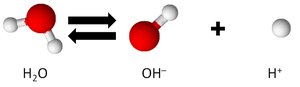
Water molecules can dissociate into hydrogen ions (H+) and hydroxide ions (OH-), a process fundamental to acid-base chemistry.
Dissociation: In pure water, only a small fraction of molecules dissociate.
Concentration: [H+] and [OH-] in pure water are both M.
pH Calculation: pH is defined as .
Example: pH of pure water is 7.
Acids, Bases, and Buffers
Acids, bases, and buffers play crucial roles in maintaining pH balance in biological systems.
Acids: Release H+ ions, increasing [H+] and lowering pH.
Bases: Release OH- ions or remove H+, decreasing [H+] and raising pH.
pH Scale: Logarithmic scale from 0 (acidic) to 14 (basic).
Buffers: Minimize pH fluctuations in living organisms.
Example: The pH of stomach acid ([H+] = ) is 2.


Biological Importance of pH
Why pH Matters for Living Cells
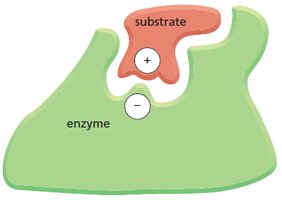
Maintaining proper pH is vital for cellular function. Even small changes in pH can affect protein structure, enzyme activity, and the solubility of molecules.
Protein Shape and Function: pH changes can alter protein conformation, impacting function.
Chemical Reactions: Reaction rates and binding interactions are pH-dependent.
Solubility: pH affects the ability of ions and molecules to dissolve in water.
Cellular Range: Cells typically operate within a narrow pH range.
Summary Table: Water Properties and Biological Relevance
Property | Biological Importance | Example |
|---|---|---|
Polarity | Enables hydrogen bonding and solvent capabilities | Dissolving salts and polar molecules |
Cohesion | Maintains surface tension, aids water transport | Water movement in plants |
Adhesion | Allows water to stick to surfaces | Capillary action |
Surface Tension | Supports small organisms on water | Water striders |
Dissociation | Regulates pH and acid-base balance | Buffer systems in blood |
