 뒤로
뒤로Chapter 33: An Introduction to Invertebrates – Structured Study Notes
스터디 가이드 - 스마트 노트
 자료에 맞춘 맞춤형 노트, 핵심 정의, 예시, 맥락을 확장해 제공합니다.
An Introduction to Invertebrates
Overview of Invertebrate Diversity
Invertebrates are animals that lack a backbone and represent over 95% of known animal species. They inhabit nearly every environment on Earth and display remarkable morphological diversity, ranging from microscopic forms to species up to 18 meters long.
Definition: Invertebrates are animals without a vertebral column (backbone).
Habitat: Found in marine, freshwater, and terrestrial environments.
Diversity: Kingdom Animalia has 1.3 million known species, with estimates up to 10–20 million.
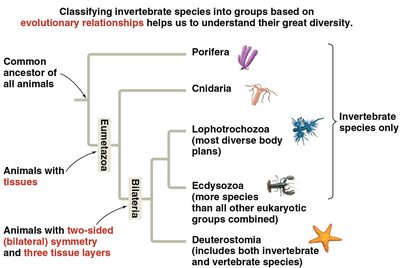
Classification: Major groups include Porifera, Cnidaria, Lophotrochozoa, Ecdysozoa, and Deuterostomia.

Major Invertebrate Groups
Invertebrates are classified based on evolutionary relationships and body plan characteristics. The main groups are:
Porifera: Sponges, basal animals lacking true tissues.
Cnidaria: Radially symmetrical, diploblastic animals with a gastrovascular cavity (e.g., corals, jellies).
Lophotrochozoa: Diverse body plans, including flatworms, molluscs, and annelids.
Ecdysozoa: Includes nematodes and arthropods, characterized by molting a cuticle.
Deuterostomia: Includes both invertebrate and vertebrate species (e.g., echinoderms, hemichordates).
Porifera (Sponges)
Characteristics of Porifera
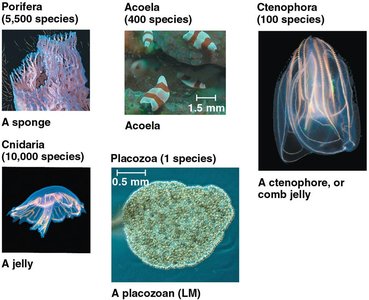
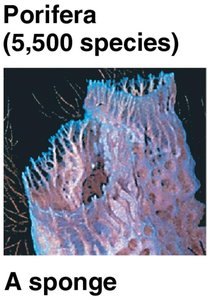
Sponges are among the simplest animals, lacking true tissues and organs. They are sedentary filter feeders, mostly marine, ranging in size from millimeters to meters.
Body Structure: Body is a perforated sac; water flows through the central cavity (spongocoel) and exits via the osculum.
Cell Types: Includes choanocytes (flagellated collar cells for feeding) and amoebocytes (totipotent cells for digestion and skeletal fiber production).
Reproduction: Most are hermaphrodites, exhibiting sequential hermaphroditism; zygotes develop into swimming larvae.
Phylogeny: Porifera split early from other animals; their cells are not organized into tissues.
Cnidaria
Characteristics of Cnidarians
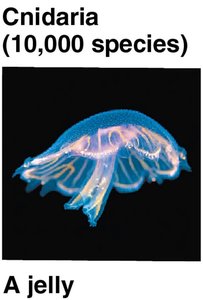
Cnidarians are ancient eumetazoans with radially symmetrical, diploblastic bodies. They include corals, hydras, and jellies, and possess a gastrovascular cavity with a single opening serving as both mouth and anus.
Body Plans: Two forms: sessile polyp and motile medusa.
Feeding: Tentacles armed with cnidocytes (stinging cells) and nematocysts (stinging organelles).
Nervous System: Noncentralized nerve net coordinates movement; sensory structures detect stimuli.
Clades: Medusozoa and Anthozoa.
Lophotrochozoa
Characteristics and Diversity
Lophotrochozoa is a clade identified by molecular data, containing the widest range of animal body forms. Most are bilaterians with bilateral symmetry and triploblastic development.
Body Plan: Most have a coelom and a digestive tract with two openings.
Special Features: Some have a lophophore for feeding or a trochophore larval stage.
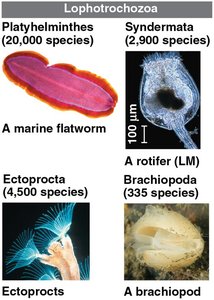
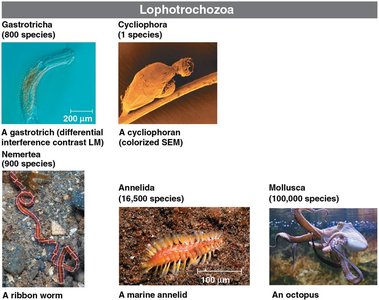
Major Phyla: Includes Platyhelminthes (flatworms), Rotifers, Ectoprocts, Brachiopods, Mollusca, and Annelida.
Platyhelminthes (Flatworms)
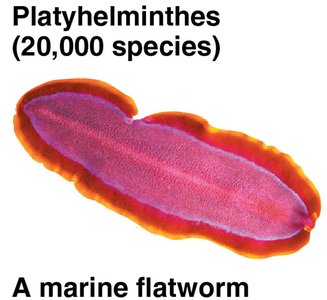
Flatworms are dorsoventrally flattened acoelomates with bilateral symmetry and a central nervous system. They lack a body cavity and circulatory organs.
Habitat: Marine, freshwater, and damp terrestrial environments.
Physiology: Gastrovascular cavity branches throughout the body; gas exchange and waste elimination occur by diffusion.
Excretory System: Protonephridia with flame bulbs maintain osmotic balance.
Lineages: Catenulida (chain worms) and Rhabditophora (diverse, free-living and parasitic species).
Annelida (Segmented Worms)
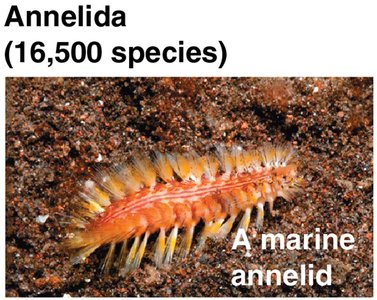
Annelids are segmented worms with a coelom, living in marine, freshwater, and soil habitats. They are important for soil health and nutrient cycling.
Body Structure: Segmented body; range from less than 1 mm to over 3 m.
Reproduction: Hermaphroditic, cross-fertilize, some reproduce asexually by fragmentation.
Ecological Role: Earthworms aerate and improve soil texture.
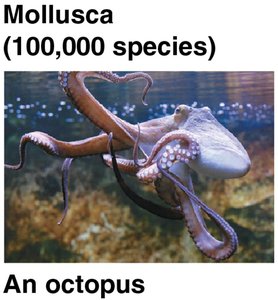
Mollusca (Molluscs)
Molluscs are soft-bodied animals, often protected by a hard shell. This phylum includes snails, clams, squids, and octopuses.
Body Plan: Muscular foot (movement), visceral mass (internal organs), mantle (secretes shell).
Feeding: Many use a radula (teethed tongue) to scrape food.
Reproduction: Most have separate sexes; many snails are hermaphrodites.
Major Clades: Polyplacophora (chitons), Gastropoda (snails/slugs), Bivalvia (clams/oysters), Cephalopoda (squids/octopuses).
Ecdysozoa
Characteristics and Diversity
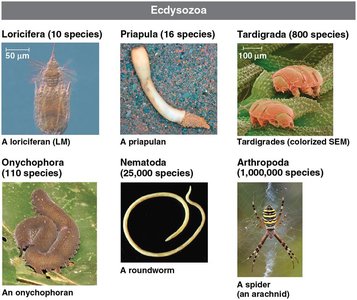
Ecdysozoans are animals with a tough external cuticle that is shed during molting (ecdysis). This group includes nematodes and arthropods, the most species-rich animal group.
Molting: Cuticle is shed for growth.
Major Phyla: Nematoda (roundworms) and Arthropoda (insects, crustaceans, arachnids).
Nematoda (Roundworms)
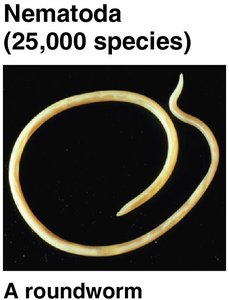
Nematodes are cylindrical, unsegmented worms with a tough cuticle. They are abundant in soil and aquatic habitats, and many are parasitic.
Body Structure: Cylindrical, tapered at ends, covered by cuticle.
Physiology: Alimentary canal present; lack circulatory system.
Movement: Longitudinal muscles produce thrashing motion.
Parasitism: Many species parasitize plants and animals.
Arthropoda (Arthropods)
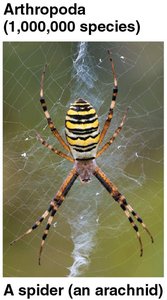
Arthropods are the most diverse animal phylum, including insects, crustaceans, and arachnids. They have a segmented exoskeleton and jointed appendages.
Body Plan: Segmented body, hard exoskeleton (chitin), jointed appendages.
Evolution: Body regions specialized for feeding, walking, or swimming.
Physiology: Open circulatory system; exoskeleton must be shed for growth.
Major Lineages: Chelicerates (spiders, scorpions), Myriapods (centipedes, millipedes), Pancrustaceans (insects, crustaceans).
Deuterostomia
Characteristics and Diversity
Deuterostomes include both invertebrate and vertebrate species. They share developmental characteristics such as radial cleavage and formation of the anus from the blastopore.
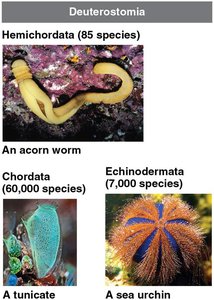
Major Phyla: Hemichordata (acorn worms), Chordata (vertebrates and invertebrates), Echinodermata (sea stars, sea urchins).
Development: Defined by DNA similarities and embryonic development.
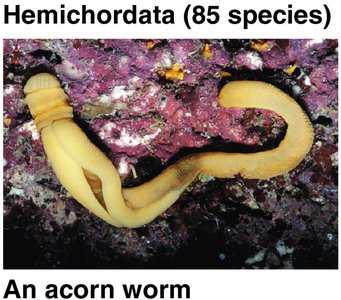
Hemichordata
Hemichordates share traits with chordates, such as gill slits and a dorsal nerve cord. The largest group is acorn worms, which are marine animals living in mud or under rocks.
Body Structure: Can grow over 2 meters in length.
Habitat: Marine environments.
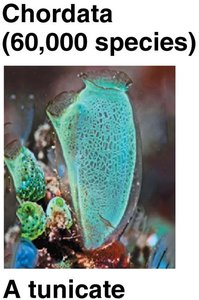
Chordata
Chordates include vertebrates and two groups of invertebrates: lancelets and tunicates. Most chordates are vertebrates, but invertebrate chordates are important for understanding evolutionary relationships.
Body Plan: Bilaterally symmetrical coelomates with segmented bodies.
Evolution: Closely related to echinoderms, but evolved independently for at least 500 million years.
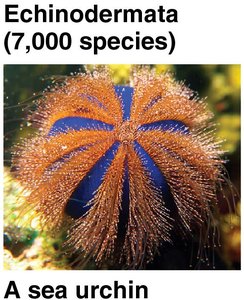
Echinodermata
Echinoderms are marine animals with bilateral symmetry as larvae and unique adult body plans. They move and feed by pumping water through a network of internal canals.
Body Structure: Coelom, endoskeleton of calcareous plates, water vascular system with tube feet.
Major Groups: Sea stars, sea urchins, sand dollars, brittle stars, sea lilies, feather stars, sea cucumbers.
Reproduction: Separate sexes, external fertilization.
Summary Table: Major Invertebrate Groups
Group | Species Count | Example | Key Features |
|---|---|---|---|
Porifera | 5,500 | Sponge | Lack tissues, filter feeders |
Cnidaria | 10,000 | Jelly | Radial symmetry, stinging cells |
Lophotrochozoa | Varies | Flatworm, annelid, octopus | Bilateral symmetry, diverse body plans |
Ecdysozoa | Varies | Roundworm, spider | Molting cuticle, jointed appendages |
Deuterostomia | Varies | Acorn worm, tunicate, sea urchin | Radial cleavage, anus from blastopore |
Additional info: These notes expand on the original content by providing definitions, examples, and context for each major invertebrate group, as well as a summary table for quick comparison.
