 뒤로
뒤로Chemical Components of Cells: Atoms, Bonds, and Biomolecules
스터디 가이드 - 스마트 노트
 자료에 맞춘 맞춤형 노트, 핵심 정의, 예시, 맥락을 확장해 제공합니다.
Chemical Components of Cells
Atoms and Their Structure
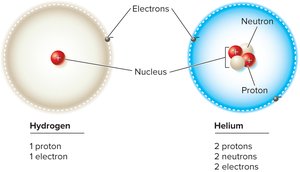
Atoms are the fundamental units of matter and are composed of three types of subatomic particles: protons, neutrons, and electrons. The arrangement and number of these particles determine the properties of each element.
Protons: Positively charged particles found in the nucleus.
Neutrons: Neutral particles also located in the nucleus.
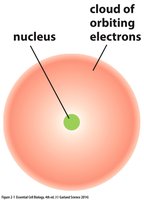
Electrons: Negatively charged particles that orbit the nucleus in electron shells.
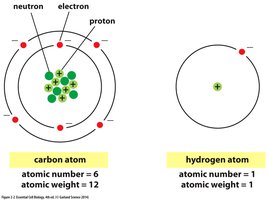
Atomic number (Z): The number of protons in the nucleus, which defines the element.
Atomic weight: The sum of protons and neutrons in the nucleus.
Isotopes: Atoms of the same element with different numbers of neutrons.
Electron Shells and Orbitals
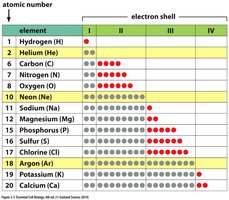
Electrons occupy specific energy levels called shells, each containing one or more orbitals. The outermost shell contains valence electrons, which are crucial for chemical bonding.
Atoms tend to share, gain, or lose electrons to fill their outer shell.
The distribution of electrons among shells determines chemical reactivity.
Chemical Bonds
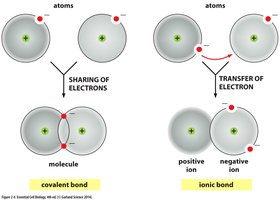
Chemical bonds are forces that hold atoms together in molecules. The main types are covalent and ionic bonds, with additional weak interactions such as hydrogen bonds.
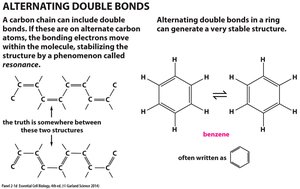
Covalent bonds: Formed by sharing electrons between atoms. Can be single, double, or triple bonds.
Ionic bonds: Formed by the transfer of electrons, resulting in charged ions.
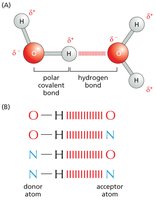
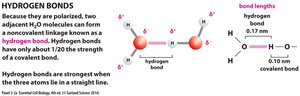
Hydrogen bonds: Weak bonds between polar molecules, especially important in water and biological macromolecules.
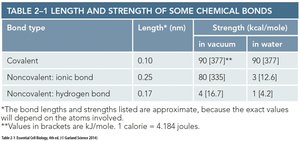
Bond Strength and Length
The strength and length of chemical bonds vary depending on the type of bond and the environment (e.g., in vacuum or water).
Bond Type | Length (nm) | Strength (kcal/mole) in vacuum | Strength (kcal/mole) in water |
|---|---|---|---|
Covalent | 0.10 | 90 [377] | 90 [377] |
Noncovalent: ionic bond | 0.25 | 80 [335] | 3 [12.6] |
Noncovalent: hydrogen bond | 0.17 | 4 [16.7] | 1 [4.2] |
Covalent Bond Geometry and Properties
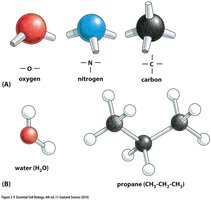
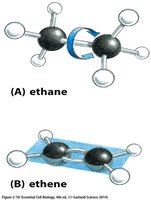
Covalent bonds have characteristic geometries that influence the three-dimensional structure of molecules. The spatial arrangement affects molecular function and interactions.
Single bonds allow rotation; double bonds restrict rotation.
Bond angles and shapes are determined by the types of atoms and the number of shared electron pairs.
Electronegativity and Bond Polarity
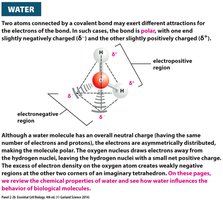
Electronegativity is the ability of an atom to attract electrons in a bond. Differences in electronegativity lead to polar or nonpolar covalent bonds.
Nonpolar covalent bonds: Equal sharing of electrons between atoms with similar electronegativities.
Polar covalent bonds: Unequal sharing, resulting in partial charges across the molecule.
Hydrogen Bonds
Hydrogen bonds form between polar molecules, such as water, and are essential for the structure and function of biological macromolecules.
Water: Structure and Properties
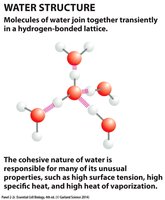
Water is a polar molecule with unique properties due to its ability to form hydrogen bonds. These properties are critical for life.
High surface tension, specific heat, and heat of vaporization.
Acts as a solvent for hydrophilic substances.
Forms a transient hydrogen-bonded lattice.
Hydrophilic and Hydrophobic Molecules
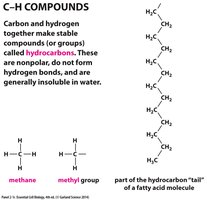
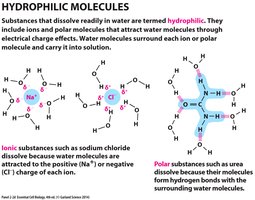
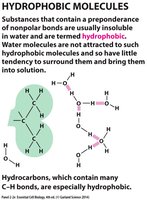
Substances that dissolve readily in water are termed hydrophilic, while those that do not are hydrophobic.
Hydrophilic: Includes ions and polar molecules.
Hydrophobic: Includes nonpolar molecules, such as hydrocarbons.
Water as a Solvent
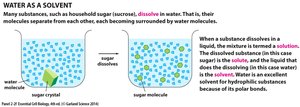
Water's polarity allows it to dissolve many substances, forming solutions. The dissolved substance is the solute, and water is the solvent.
Acids, Bases, and pH
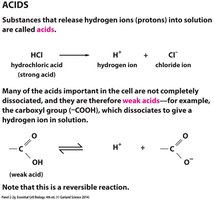
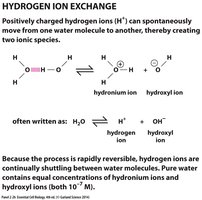
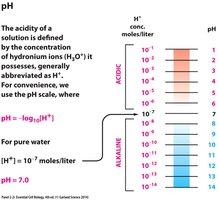
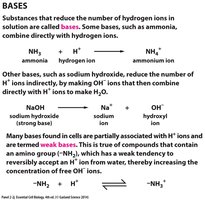
Acids release hydrogen ions (protons) into solution, while bases reduce the number of hydrogen ions. The pH scale measures the acidity or alkalinity of a solution.
Acids: Strong acids dissociate completely; weak acids only partially dissociate.
Bases: Can directly or indirectly reduce H+ concentration.
pH: Defined as
Biological Macromolecules
Monomers and Polymers
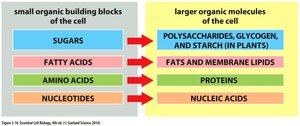
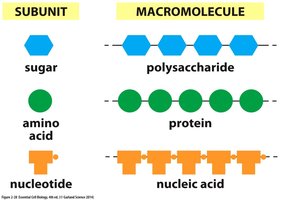
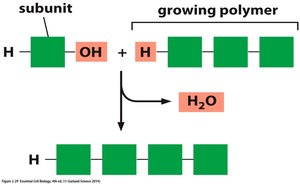
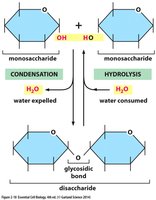
Biological macromolecules are composed of smaller units called monomers, which are joined together by condensation reactions to form polymers.
Sugars: Form polysaccharides.
Fatty acids: Form fats and membrane lipids.
Amino acids: Form proteins.
Nucleotides: Form nucleic acids.
Carbohydrates
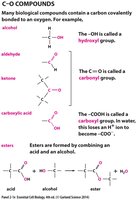
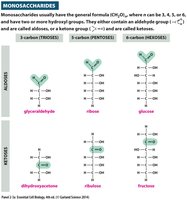
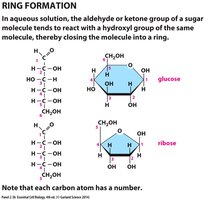
Carbohydrates are composed of monosaccharides, which can form rings and isomers. They are linked by glycosidic bonds to form disaccharides and polysaccharides.
Monosaccharides: Simple sugars with the formula CnH2nOn.
Ring formation: Occurs in aqueous solution.
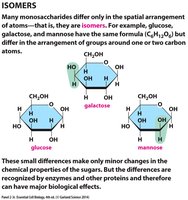
Isomers: Same formula, different arrangement.
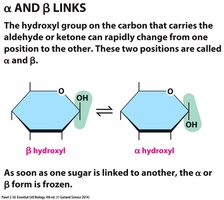
α and β links: Different forms of glycosidic bonds.
Lipids
Lipids are hydrophobic molecules that serve as energy storage and structural components of membranes. They include fatty acids, triacylglycerols, and phospholipids.
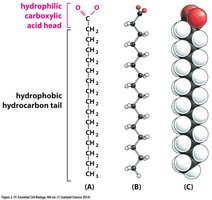
Fatty acids: Have hydrophilic heads and hydrophobic tails.
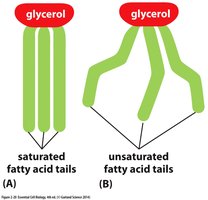
Saturated vs. unsaturated: Saturated fatty acids have no double bonds; unsaturated have one or more.
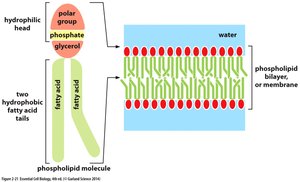
Phospholipids: Form bilayers in aqueous solutions, essential for cell membranes.
Proteins
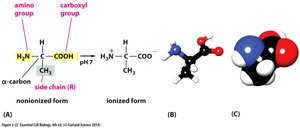
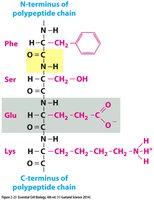
Proteins are polymers of amino acids linked by peptide bonds. Their structure and function are determined by the sequence and properties of amino acids.
Amino acids: Contain amino, carboxyl, and side chain (R) groups.
Peptide bonds: Link amino acids in a polypeptide chain.
Nucleic Acids
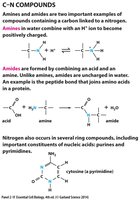
Nucleic acids (DNA and RNA) are polymers of nucleotides. Each nucleotide consists of a sugar, phosphate, and nitrogenous base.
DNA: Contains purines (A, G) and pyrimidines (T, C).
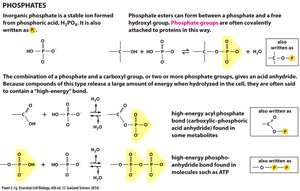
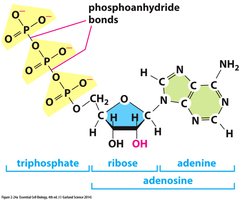
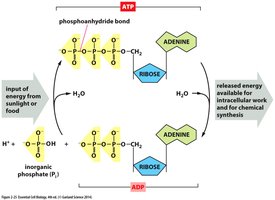
ATP: Energy carrier, releases energy upon hydrolysis of phosphoanhydride bonds.
Summary Table: Chemical Composition of a Bacterial Cell
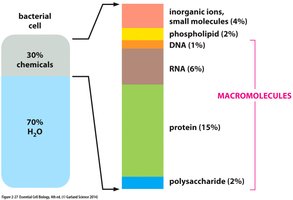
The table below summarizes the major chemical components of a bacterial cell, including their relative abundance and diversity.
Component | Percent of total cell weight | Approximate number of types of each class of molecule |
|---|---|---|
Water | 70 | 1 |
Inorganic ions | 1 | 20 |
Sugars and precursors | 1 | 250 |
Amino acids and precursors | 0.4 | 100 |
Nucleotides and precursors | 0.4 | 100 |
Fatty acids and precursors | 0.2 | 50 |
Other small molecules | 0.2 | 300 |
Phospholipids | 2 | 4* |
Macromolecules (nucleic acids, proteins, polysaccharides) | 24 | 3000 |
Macromolecular Assembly
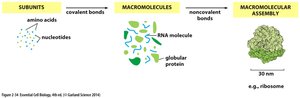
Macromolecules are assembled from subunits via covalent bonds and stabilized by noncovalent interactions. This hierarchical structure is essential for cellular function.
Subunits (amino acids, nucleotides) form macromolecules (proteins, RNA).
Macromolecules assemble into larger complexes (e.g., ribosomes).
