 뒤로
뒤로Chromosomal Basis of Inheritance: Key Concepts and Patterns
스터디 가이드 - 스마트 노트
 자료에 맞춘 맞춤형 노트, 핵심 정의, 예시, 맥락을 확장해 제공합니다.
Chromosomal Basis of Inheritance
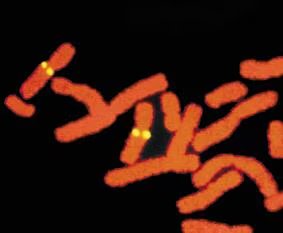
Concept 15.1: Morgan's Evidence for Chromosome Theory of Inheritance
The chromosome theory of inheritance states that genes are located on chromosomes, and the behavior of chromosomes during meiosis explains Mendel’s laws. Morgan’s experiments with Drosophila (fruit flies) provided the first solid evidence that specific genes are associated with specific chromosomes.
Chromosome Theory: Genes reside on chromosomes, and their segregation and independent assortment during meiosis account for Mendelian inheritance.
Sex Chromosomes: The unique behavior of sex chromosomes (X and Y) allowed Morgan to correlate the inheritance of the eye color gene with chromosome behavior.
Example: Morgan observed that the white-eye trait in Drosophila was linked to the X chromosome, supporting the chromosome theory.
Concept 15.2: Sex-Linked Genes and Patterns of Inheritance
Sex-linked genes are located on sex chromosomes, most commonly the X chromosome in mammals. These genes exhibit unique inheritance patterns, especially in males, who have only one X chromosome.
X-Y System: In humans and other mammals, sex is determined by the presence or absence of the Y chromosome.
X-Linked Genes: Most sex-linked genes are found on the X chromosome. Males express recessive X-linked traits (e.g., color blindness) because they have only one X chromosome.
Barr Body: In females, one X chromosome per cell is randomly inactivated, forming a condensed structure called a Barr body.
Example: Color blindness is more common in males due to their single X chromosome.
Concept 15.3: Linked Genes and Genetic Recombination
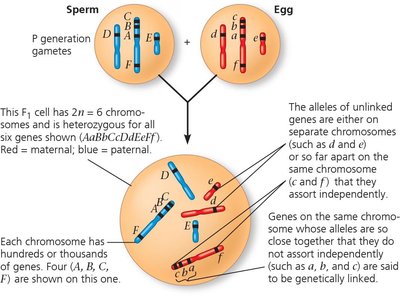
Genes located close together on the same chromosome tend to be inherited together, a phenomenon known as genetic linkage. Recombination occurs when crossing over during meiosis separates linked genes, producing new allele combinations.
Linked Genes: Genes near each other on the same chromosome are inherited together and do not assort independently.
Recombination Frequency: The frequency of recombination between two genes depends on their distance apart; genes farther apart are more likely to recombine.
Linkage Maps: Recombination data can be used to construct linkage maps, showing the order and relative distances of genes on a chromosome.
Example: An F1 dihybrid testcross produces parental and recombinant types, with recombination frequency less than 50% for linked genes.
Concept 15.4: Chromosomal Alterations and Genetic Disorders
Alterations in chromosome number or structure can cause genetic disorders. These changes may result from errors during meiosis or chromosome breakage.
Aneuploidy: Abnormal chromosome number due to nondisjunction (failure of chromosomes to separate properly). Results in trisomy (2n+1) or monosomy (2n-1).
Polyploidy: Presence of extra sets of chromosomes, often due to nondisjunction of all chromosomes.
Structural Alterations: Includes deletions, duplications, inversions, and translocations. Reciprocal translocations and inversions are less likely to be lethal than deletions or duplications.
Example: Down syndrome is usually caused by trisomy 21. Certain cancers are associated with chromosomal translocations.
Concept 15.5: Exceptions to Standard Mendelian Inheritance
Some inheritance patterns deviate from Mendel’s laws, including genomic imprinting and organelle gene inheritance.
Genomic Imprinting: The expression of an allele depends on whether it is inherited from the mother or father. Imprints are established during gamete formation, silencing one allele in offspring.
Organelle Genes: Genes in mitochondria and plastids are inherited only from the maternal parent, as the zygote’s cytoplasm comes from the egg.
Example: Some mitochondrial diseases affect the nervous and muscular systems due to defects in mitochondrial genes.
Summary Table: Types of Chromosomal Alterations
Type | Description | Example |
|---|---|---|
Aneuploidy | Abnormal number of chromosomes | Down syndrome (trisomy 21) |
Polyploidy | Extra sets of chromosomes | Common in plants |
Deletion | Loss of chromosome segment | Cri du chat syndrome |
Duplication | Repeat of chromosome segment | Some cancers |
Inversion | Reversal of segment | Usually less severe |
Translocation | Segment moves to another chromosome | Chronic myelogenous leukemia |
Key Equations
Chromosome Number in Aneuploidy: (trisomy), (monosomy)
Additional info: Linkage maps are constructed using recombination frequencies, where 1% recombination equals 1 map unit (centimorgan).
