뒤로
뒤로Evidence and Mechanisms of Evolution
스터디 가이드 - 스마트 노트
 자료에 맞춘 맞춤형 노트, 핵심 정의, 예시, 맥락을 확장해 제공합니다.
Chapter 22: Evidence and Mechanisms of Evolution
Introduction to Evolution
Evolution is the process by which populations of organisms change over generations. The diversity of life on Earth is a result of evolutionary processes, which are supported by extensive scientific evidence. This chapter explores the evidence for evolution and the mechanisms by which it occurs.
Theory of Evolution
Key Elements of Evolution
Descent over time: Populations undergo slow changes across generations, resulting in differences from their ancestors.
Modification: Changes in the phenotype of a species arise from genetic mutations or gene reshuffling during meiosis.
Unpredictable and natural: Evolution is influenced by chance, natural selection, historical events, and environmental changes.
All living organisms are believed to have descended from a single, simple life-form that existed approximately 3 billion years ago. Today, there are nearly 2 million different forms of life on Earth.
Evidence for Evolution
Overview of Evidence
Fossils and the fossil record
Comparative anatomy, embryology, and biochemistry
Biogeography
Fossil Evidence
Fossils are preserved remains or traces of organisms. Fossilization typically occurs when an organism's remains are rapidly covered by sediment or volcanic ash, protecting hard tissues from decomposition. Over time, these remains become mineralized, forming rock-like impressions.
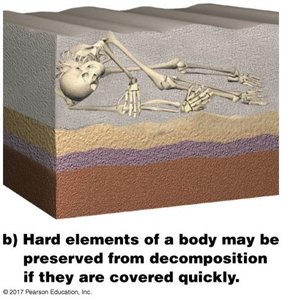
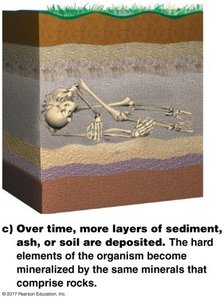
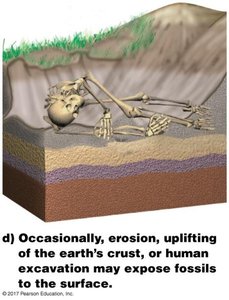
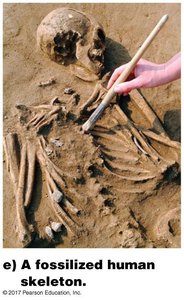
Fossils provide a record of over 200,000 species, though the record is incomplete due to the lack of hard tissues in many organisms.
Radiometric dating (e.g., potassium or carbon-14 dating) is used to determine the age of fossils.
Fossils allow scientists to observe and compare changes in organisms over time.
Comparative Anatomy
Comparative anatomy involves studying the similarities and differences in the anatomical structures of different organisms. These comparisons can reveal evolutionary relationships.
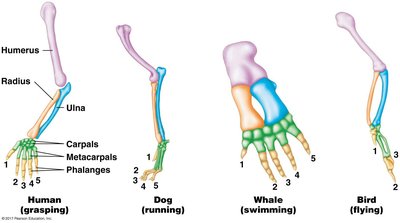
Homologous structures: Body parts that share a common ancestry but may serve different functions in modern species.
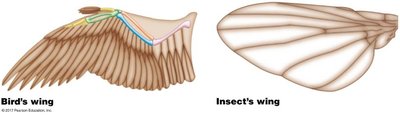
Analogous structures: Structures that serve similar functions but do not arise from a common ancestor (e.g., bird wings and insect wings).
Vestigial structures: Structures that have little or no function in an organism but may be homologous to functional structures in other species (e.g., human tailbone, appendix, ear muscles, wisdom teeth).
Comparative Embryology
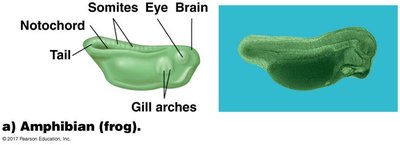
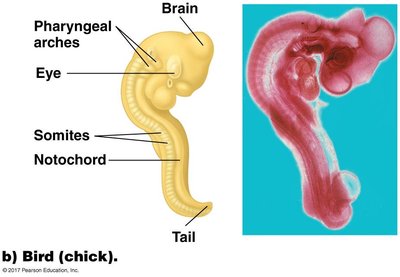
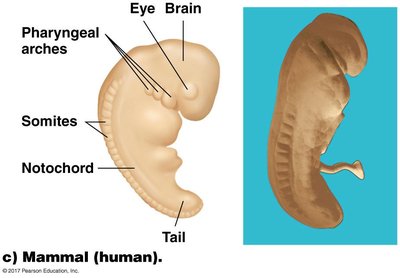
Embryology compares the early developmental stages of different animals. Early embryonic development is remarkably similar among vertebrates, indicating common ancestry. All vertebrate embryos develop a notochord, somites, and pharyngeal (gill) arches, which later differentiate into various structures.
Comparative Biochemistry
Comparative biochemistry examines similarities in proteins and genes among different species. The presence of identical or nearly identical biochemical molecules (homologous molecules) suggests common ancestry. For example, the protein cytochrome c is identical in humans and chimpanzees, with increasing differences in more distantly related species.
The greater the biochemical difference, the more distant the evolutionary relationship.
Biogeography
Biogeography is the study of the geographic distribution of species. Physical barriers such as oceans and mountains, as well as environmental conditions, influence the distribution and migration of species. Continental drift has played a significant role in the isolation and evolution of species.
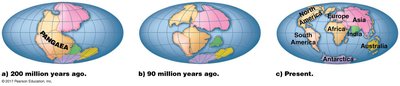
Continental drift separated populations, leading to parallel but independent evolution.
Mechanisms of Evolution
Mutations
Mutations are random, rare changes in the DNA of an organism. They may result from replication errors or epigenetic changes and can be passed to subsequent generations. Over time, the accumulation of mutations can lead to the divergence of species.
Natural Selection
Natural selection, first described by Charles Darwin, is the process by which individuals with traits better suited to their environment are more likely to survive and reproduce. Beneficial alleles increase in frequency, while harmful alleles decrease.
Natural selection acts on genetic variation produced by mutations and gene shuffling.
Genetic Drift
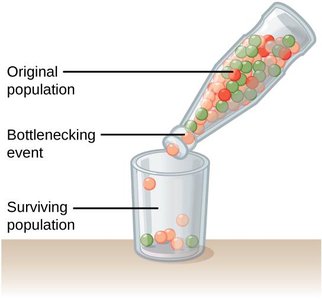
Genetic drift refers to random changes in allele frequencies due to chance events, especially in small populations. Two main types are the bottleneck effect and the founder effect.
Bottleneck effect: A major catastrophe drastically reduces population size, leaving a surviving population that may not represent the original gene pool.
Founder effect: A few individuals establish a new population in a different location, resulting in a gene pool that may differ from the original population.
Gene Flow
Gene flow is the redistribution of alleles due to immigration or emigration, resulting in the mixing of gene pools that might not otherwise interact.
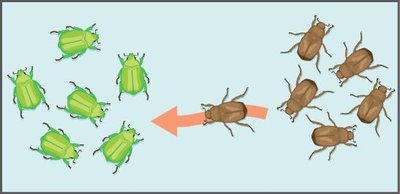
Antigenic Shift
Antigenic shift is a rapid and dramatic change in a virus, often due to the combination or exchange of genetic material between different viruses. This process can produce new, highly infective viral strains (e.g., bird flu, swine flu).
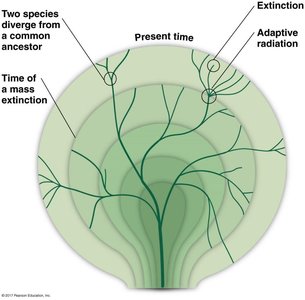
Extinction
Extinction occurs when a species dies out completely. There have been at least five mass extinction events in the past 530 million years, usually caused by environmental changes. The most recent mass extinction occurred at the end of the Cretaceous period, likely due to an asteroid impact. Human activity is now contributing to a potential sixth mass extinction.
Evolutionary Trees and Adaptive Radiation
Evolutionary trees (phylogenies) depict points of divergence between species, showing evolutionary relationships, extinction events, and adaptive radiation. Adaptive radiation is the rapid development of new species from a single ancestor, often following environmental changes or the opening of new ecological niches.