 뒤로
뒤로Evolution: Origin and Development of Life on Earth
스터디 가이드 - 스마트 노트
 자료에 맞춘 맞춤형 노트, 핵심 정의, 예시, 맥락을 확장해 제공합니다.
Evolution
Origin of Life
The study of evolutionary biology explores the history and diversity of life forms on Earth, beginning with the origin of the universe and the planet itself. The Big Bang theory describes the universe's origin, leading to the formation of galaxies, stars, and eventually the Earth about 4.5 billion years ago. Early Earth had no atmosphere, and its surface was covered by water vapor, methane, carbon dioxide, and ammonia. As the planet cooled, water condensed to form oceans, and life appeared approximately 500 million years after Earth's formation.
Panspermia Hypothesis: Suggests life may have originated from spores transferred from outer space.
Spontaneous Generation: The disproven idea that life arises from non-living matter. Louis Pasteur's experiments confirmed that life comes only from pre-existing life.
Chemical Evolution: Oparin and Haldane proposed that life originated from non-living organic molecules under early Earth conditions. S.L. Miller's 1953 experiment simulated these conditions, producing amino acids and other organic compounds, supporting the idea of chemical evolution.
It is believed that the first non-cellular life forms were giant molecules (e.g., RNA, proteins) that eventually led to the first cellular organisms about 2 billion years ago, all of which lived in aquatic environments.
Evolution of Life Forms – A Theory
The theory of special creation, which posited that all species were created as they are and have remained unchanged, was challenged by scientific observations. Charles Darwin, through his voyage on the H.M.S. Beagle, concluded that life forms share similarities due to common ancestry and that new species arise while others go extinct over time. Darwin introduced the concept of natural selection, where individuals with traits better suited to their environment leave more offspring, leading to gradual evolution.
Evidence for Evolution
Multiple lines of evidence support the theory of evolution:
Fossil Record: Fossils found in sedimentary rock layers show that different life forms existed at different times, indicating change over time (paleontological evidence).
Comparative Anatomy: Homologous structures (e.g., forelimbs of whales, bats, cheetahs, and humans) have similar anatomical features but different functions, indicating common ancestry (divergent evolution). Analogous structures (e.g., wings of birds and insects) have similar functions but different anatomical origins, resulting from convergent evolution.
Embryology: Early embryos of vertebrates show similar features, though not all persist into adulthood.
Biochemical Evidence: Similarities in proteins and genes among diverse organisms suggest shared ancestry.
Artificial Selection: Humans have bred plants and animals for specific traits, demonstrating how selection can drive significant changes over relatively short periods.
Anthropogenic Evolution: Examples include the development of antibiotic resistance in bacteria and pesticide resistance in insects, showing rapid evolution due to human influence.
Adaptive Radiation
Adaptive radiation is the evolution of different species from a common ancestor in response to different environmental conditions. Darwin's finches on the Galapagos Islands are a classic example, where finches evolved different beak shapes to exploit various food sources. Australian marsupials also demonstrate adaptive radiation, with diverse species evolving from a common ancestor to fill different ecological niches.
Biological Evolution and Natural Selection
Darwinian evolution is driven by natural selection, where heritable variations that improve survival and reproduction become more common in a population. The rate of evolution depends on the organism's life cycle; microbes can evolve rapidly, while larger animals evolve more slowly. Fitness is determined by an organism's ability to survive and reproduce in its environment, and it has a genetic basis.
Mechanism of Evolution
Variation arises through mutations (sudden, random changes in DNA) and genetic recombination. Hugo de Vries emphasized the role of mutations in evolution, proposing that large, sudden changes (saltations) could lead to new species. Population genetics later clarified that both small, gradual changes and larger mutations contribute to evolution.
Hardy-Weinberg Principle
The Hardy-Weinberg principle states that allele frequencies in a population remain constant from generation to generation in the absence of evolutionary forces. This genetic equilibrium can be described by the equation:
where p and q are the frequencies of two alleles. Evolution occurs when factors such as gene flow, genetic drift, mutation, recombination, or natural selection disrupt this equilibrium.
A Brief Account of Evolution
Life evolved from simple, non-cellular forms to complex multicellular organisms. Key milestones include:
First cellular life forms (~2000 mya)
Photosynthetic organisms releasing oxygen
Evolution of invertebrates, fish, amphibians, reptiles, birds, and mammals
Major extinctions (e.g., dinosaurs ~65 mya)
Rise of mammals and eventually humans
Origin and Evolution of Man
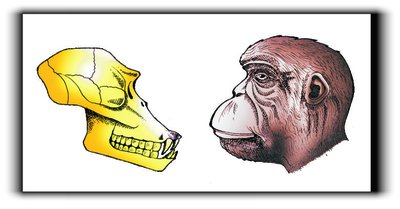
Human evolution traces back to primates like Dryopithecus and Ramapithecus (~15 mya). Fossil evidence shows a progression from upright-walking hominids in Africa to the emergence of Homo habilis (650–800 cc brain), Homo erectus (900 cc brain), Neanderthals (1400 cc brain), and finally modern Homo sapiens. Key developments include increased brain size, use of tools, language, and the development of agriculture and civilization.
Summary Table: Key Evolutionary Concepts
Concept | Description | Example |
|---|---|---|
Homologous Structures | Similar anatomy, different function | Forelimbs of mammals |
Analogous Structures | Different anatomy, similar function | Wings of birds and insects |
Adaptive Radiation | Diversification from a common ancestor | Darwin's finches |
Natural Selection | Survival and reproduction of the fittest | Antibiotic resistance in bacteria |
Mutation | Random genetic changes | Color variation in moths |
Genetic Drift | Random changes in allele frequencies | Founder effect |
Key Equations
Hardy-Weinberg Equation:
Sum of allele frequencies:
Conclusion
The origin and evolution of life on Earth is a complex process involving chemical evolution, natural selection, genetic variation, and adaptation. Evidence from fossils, anatomy, embryology, and molecular biology supports the theory of evolution. Human evolution is a remarkable example of adaptive change, leading to the development of intelligence, language, and culture.
