 뒤로
뒤로General Biology: Concepts, Processes, and Case Studies
스터디 가이드 - 스마트 노트
 자료에 맞춘 맞춤형 노트, 핵심 정의, 예시, 맥락을 확장해 제공합니다.
Introduction to Biology
The Scientific Method
The scientific method is a systematic approach used by scientists to explore observations, answer questions, and test hypotheses. It involves making observations, forming a hypothesis, making predictions, conducting experiments, and drawing conclusions. This process is fundamental to all biological research and underpins the study of living systems.
Observation: Gathering data about phenomena.
Hypothesis: A testable explanation for an observation.
Prediction: A logical statement about what will happen if the hypothesis is correct.
Experiment: Testing the prediction through controlled investigation.
Conclusion: Interpreting results to support or refute the hypothesis.
Example: Testing whether a treatment reduces the duration of COVID-19 symptoms in patients using control and experimental groups.
Cell Components
Structure of Eukaryotic Cells
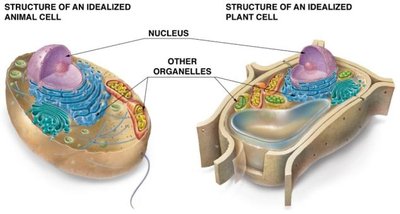
All eukaryotic cells, including plant and animal cells, share several key organelles that perform essential functions. These include the plasma membrane, nucleus, and mitochondria. Plant cells also contain unique structures such as the cell wall and chloroplasts.
Nucleus: Contains genetic material (DNA) and controls cellular activities.
Mitochondria: Site of cellular respiration and energy (ATP) production.
Other Organelles: Endoplasmic reticulum, Golgi apparatus, lysosomes, etc.
Plant Cell Specifics: Cell wall, large central vacuole, chloroplasts.
Energy and Metabolism
ATP Production and Cellular Respiration
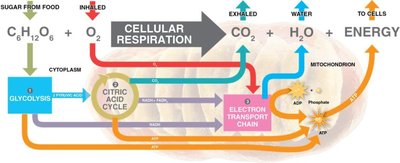
Cells obtain energy primarily through the process of cellular respiration, which converts glucose and oxygen into ATP, the energy currency of the cell. This process occurs in the mitochondria and involves glycolysis, the citric acid cycle, and the electron transport chain.
Equation for Cellular Respiration:
Oxygen: Required as the final electron acceptor in the electron transport chain.
ATP: Produced by adding a phosphate group to ADP.
Organ Systems
Major Human Organ Systems and Their Functions
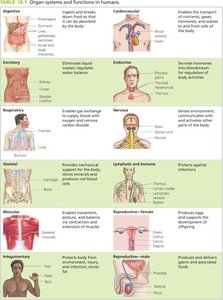
The human body is composed of multiple organ systems, each with specialized functions essential for survival and homeostasis. Understanding these systems is crucial for studying the effects of diseases such as COVID-19.
System | Main Organs | Function |
|---|---|---|
Digestive | Mouth, esophagus, stomach, intestines | Breaks down food, absorbs nutrients |
Cardiovascular | Heart, blood vessels | Transports nutrients, gases, wastes |
Respiratory | Lungs, trachea | Gas exchange (O2 in, CO2 out) |
Immune | Lymph nodes, spleen | Defends against pathogens |
Nervous | Brain, spinal cord, nerves | Coordinates body activities |
Muscular | Muscles | Movement |
Skeletal | Bones | Support, protection |
Endocrine | Glands | Hormone secretion |
Excretory | Kidneys, bladder | Removes waste |
Reproductive | Ovaries, testes | Produces gametes |
Integumentary | Skin | Protection |
Gene Expression and Protein Synthesis
The Genetic Code
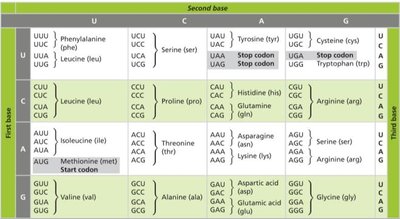
The genetic code is a set of rules by which information encoded in DNA and transcribed into mRNA is translated into proteins. Each group of three mRNA nucleotides (codon) specifies a particular amino acid or a stop signal during protein synthesis.
Start Codon: AUG (methionine)
Stop Codons: UAA, UAG, UGA
Redundancy: Multiple codons can code for the same amino acid.
Cell Division
Mitosis and Meiosis
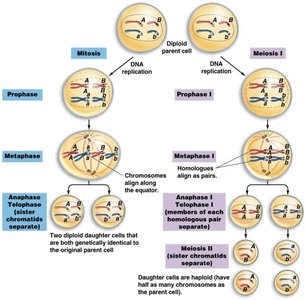
Cell division is essential for growth, repair, and reproduction. Mitosis produces two genetically identical diploid cells, while meiosis produces four genetically unique haploid gametes. Understanding the differences between these processes is fundamental in genetics and development.
Mitosis: One division, produces somatic cells, maintains chromosome number.
Meiosis: Two divisions, produces gametes, halves chromosome number.
Viruses and Immunity
Vaccination and Herd Immunity
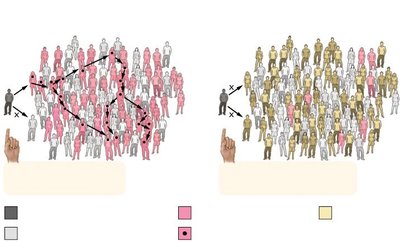
Vaccination exposes the immune system to antigens, stimulating the production of memory cells and providing immunity without causing disease. Herd immunity occurs when a large portion of a community becomes immune, reducing the spread of infectious diseases and protecting vulnerable individuals.
Modern Vaccines: Made from killed microbes or protein fragments.
Herd Immunity: Indirect protection for those who cannot be vaccinated.
Genetics and Inheritance
Punnett Squares and Pedigrees
Punnett squares are used to predict the probability of offspring inheriting particular genotypes and phenotypes. Pedigrees are family trees that show the inheritance of traits across generations, useful for studying genetic diseases.
Allele: Different forms of a gene.
Genotype: Genetic makeup (e.g., Aa, AA, aa).
Phenotype: Observable traits.
Dominant/Recessive: Dominant alleles mask recessive ones in heterozygotes.
Mutations and Biotechnology
Types of Mutations
Mutations are changes in the DNA sequence that can affect gene function and phenotype. They can be substitutions, insertions, deletions, or duplications. Some mutations are harmless, while others can cause diseases or be used in biotechnology applications such as PCR and gene editing.
Substitution: One base is replaced by another.
Insertion/Deletion: Addition or loss of bases, potentially causing frameshifts.
Polymerase Chain Reaction (PCR): Technique to amplify DNA sequences.
Evolution and Populations
Natural Selection and Speciation
Evolution is the change in genetic composition of populations over time, driven by mechanisms such as natural selection, genetic drift, and gene flow. Speciation is the formation of new species, often through reproductive isolation.
Natural Selection: Differential survival and reproduction of individuals with advantageous traits.
Speciation: The process by which new species arise.
Ecology and Biodiversity
Interactions and Disease
Ecology studies the interactions between organisms and their environment. Biodiversity includes the variety of life forms, which can influence the spread and impact of infectious diseases. Understanding these relationships is important for conservation and public health.
Conclusion
This review covers foundational concepts in general biology, including the scientific method, cell structure, metabolism, genetics, evolution, and immunity. These principles are essential for understanding human health, disease, and the diversity of life on Earth.
