 뒤로
뒤로General Biology Final Exam Review: Key Concepts and Step-by-Step Guidance
스터디 가이드 - 스마트 노트
 자료에 맞춘 맞춤형 노트, 핵심 정의, 예시, 맥락을 확장해 제공합니다.
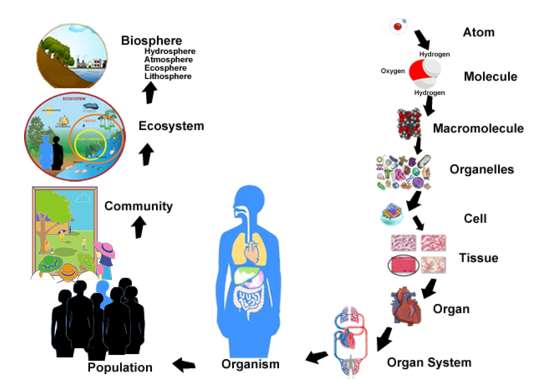
Q1. Life is organized in a hierarchical fashion. Which sequence correctly lists that hierarchy from least inclusive to most inclusive?
Background
Topic: Levels of Biological Organization
This question tests your understanding of how living systems are structured, from the smallest chemical units to the entire biosphere. Recognizing the correct order helps you see how complexity builds in biology.
Key Terms:
Molecule: A group of atoms bonded together.
Organelle: Specialized structures within a cell.
Cell: The basic unit of life.
Tissue: A group of similar cells performing a function.
Organ: A structure made of different tissues working together.
Organ System: A group of organs that work together.
Organism: An individual living thing.
Population: All individuals of a species in an area.
Community: All living organisms in an area.
Ecosystem: All living and nonliving things in an area.
Biosphere: All environments on Earth that support life.
Step-by-Step Guidance
Start by identifying the smallest unit in the hierarchy. In biology, this is typically the molecule.
Next, consider what molecules form—organelles, which are parts of cells.
Continue building up: organelles make up cells, which then form tissues, and so on.
As you move up, remember that each level is more complex and includes the previous one.
Stop before you reach the final two levels. Review the options and see which sequence follows this logical progression from smallest to largest.
Try solving on your own before revealing the answer!
Final Answer: D) molecule, organelle, cell, tissue, organ, organ system, organism, population, community, ecosystem
This sequence correctly lists the levels of biological organization from least inclusive (molecule) to most inclusive (ecosystem).
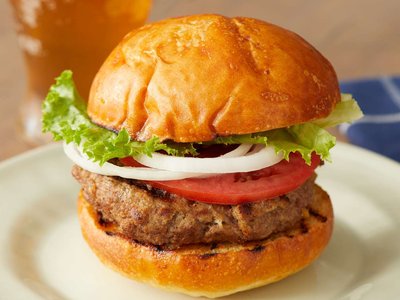
Q2. A person who is eating a hamburger is mainly eating ground-up beef muscle. What levels of organization are represented in this ground-up muscle?
Background
Topic: Levels of Organization in Living Systems
This question asks you to identify which biological levels are present in a sample of muscle tissue, such as that found in a hamburger.
Key Terms:
Organelle: Structures within a cell.
Cell: The basic unit of life, making up tissues.
Tissue: A group of similar cells performing a function (muscle tissue in this case).
Step-by-Step Guidance
Recall that muscle is a type of tissue, which is made up of many cells.
Within each muscle cell, there are organelles that perform specific functions.
Think about which levels are present in a sample of muscle: organelle, cell, and tissue.
Stop here and review the answer choices to see which matches these levels.
Try solving on your own before revealing the answer!
Final Answer: C) organelle, cell, and tissue
Ground-up muscle contains muscle tissue, which is made of muscle cells, and those cells contain organelles.
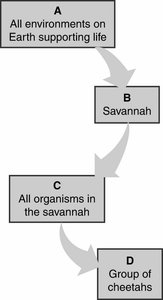
Q3. Which level in the hierarchy shown is a community?
Background
Topic: Ecological Organization
This question tests your ability to identify the community level in a diagram of ecological organization.
Key Terms:
Community: All the different species living in a particular area.
Population: All individuals of one species in an area.
Ecosystem: All living and nonliving things in an area.
Step-by-Step Guidance
Look at the diagram and identify what each labeled level represents.
Recall that a community includes all living organisms in a specific area, not just one species.
Compare the descriptions for each level to determine which one matches the definition of a community.
Stop before selecting the final answer and review the options.
Try solving on your own before revealing the answer!
Final Answer: C) level C
Level C represents all organisms in the savannah, which is the community level in ecological organization.
