 뒤로
뒤로How Genes Are Controlled: Regulation of Gene Expression in Prokaryotes and Eukaryotes
스터디 가이드 - 스마트 노트
 자료에 맞춘 맞춤형 노트, 핵심 정의, 예시, 맥락을 확장해 제공합니다.
How Genes Are Controlled
Introduction to Gene Regulation
Gene regulation is the process by which cells control the expression and timing of their genes. This regulation is essential for cellular specialization, development, and adaptation to environmental changes. Although every somatic cell in an organism contains the same DNA, gene regulation allows for the diversity of cell types and functions.
Gene expression refers to the process by which information from a gene is used to synthesize functional gene products, typically proteins.
Regulation occurs at multiple stages, including transcription, RNA processing, translation, and post-translational modifications.
Gene Regulation and Cellular Specialization
Cell Differentiation
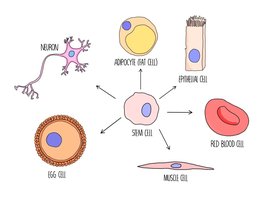
Despite having identical genetic material, cells in multicellular organisms differentiate into various types, such as neurons, muscle cells, and red blood cells, through selective gene expression. This process is fundamental to development and tissue function.
Gene regulation enables cells to turn on only the genes necessary for their specific roles.
Specialization is achieved by activating or repressing specific sets of genes.
Gene Regulation in Bacteria
The lac Operon Model
Bacteria, such as Escherichia coli, regulate gene expression efficiently to conserve resources. The lac operon is a classic example of gene regulation in prokaryotes, allowing the cell to respond to the presence or absence of lactose.
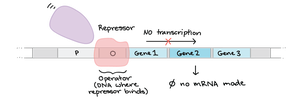
Operon: A cluster of genes under the control of a single promoter and operator, functioning as a unit.
Promoter: DNA sequence where RNA polymerase binds to initiate transcription.
Operator: DNA segment that acts as a switch, controlled by a repressor protein.
When lactose is present, it inactivates the repressor, allowing transcription of genes needed for lactose metabolism.
When lactose is absent, the repressor binds to the operator, blocking transcription.
Gene Regulation in Eukaryotic Cells
Complexity of Eukaryotic Gene Regulation
Eukaryotic gene regulation is more intricate than in prokaryotes, involving multiple levels of control from DNA packing to protein modification. This complexity allows for fine-tuned responses to developmental and environmental signals.
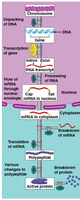
Regulation can occur at the level of chromatin structure, transcription initiation, RNA processing, mRNA stability, translation, and protein modification or degradation.
Transcription factors and enhancers/silencers play key roles in controlling gene expression.
DNA Packing and X Chromosome Inactivation
DNA can be tightly packed to prevent gene expression. In female mammals, one of the two X chromosomes is randomly inactivated in each cell, a process known as X chromosome inactivation. This ensures dosage compensation between males and females.
Once an X chromosome is inactivated in a cell, all its descendants will have the same X chromosome turned off.
This phenomenon explains the tortoiseshell coloration in female cats, where different cells express different X-linked genes.
Transcriptional Regulation
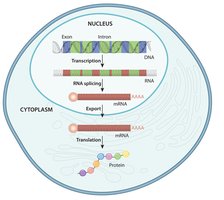
The initiation of transcription is a major control point in gene expression. In eukaryotes, multiple proteins called transcription factors bind to DNA sequences (enhancers and promoters) to regulate the start of transcription.
Activators increase transcription by facilitating RNA polymerase binding.
Repressors decrease transcription by binding to silencers.
Most genes in multicellular eukaryotes are "off" by default, except for housekeeping genes.
RNA Processing and Alternative Splicing
After transcription, eukaryotic pre-mRNA undergoes processing, including the addition of a cap and tail, removal of introns, and splicing of exons. Alternative splicing allows a single gene to produce multiple mRNA variants, increasing protein diversity.
mRNA stability and degradation rates also influence gene expression levels.
Regulation by Small RNAs
Small non-coding RNAs, such as microRNAs (miRNAs) and small interfering RNAs (siRNAs), can bind to mRNA molecules and block their translation or lead to their degradation. This process, known as RNA interference (RNAi), is a powerful mechanism for post-transcriptional gene regulation.
Translational and Post-Translational Control
Gene expression can also be regulated during translation and after protein synthesis. Some proteins require chemical modifications or cleavage to become active, while others are selectively degraded to control their levels in the cell.
Cell Signaling and Gene Regulation
Signal Transduction Pathways
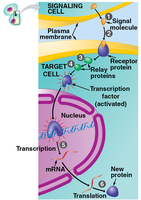
Cells communicate through signaling molecules, such as hormones, which bind to receptor proteins on target cells. This triggers a signal transduction pathway, resulting in changes in gene expression within the target cell.
Signal molecules do not need to enter the cell; they can activate intracellular pathways via membrane receptors.
These pathways often culminate in the activation of transcription factors that regulate gene expression.
Homeotic Genes and Development
Role of Homeotic Genes
Homeotic genes are master control genes that regulate the expression of other genes, determining the body plan and the development of specific structures during embryogenesis. Mutations in these genes can lead to dramatic changes in organismal form.
Homeotic genes are highly conserved across eukaryotes.
They coordinate the spatial and temporal expression of developmental genes.
Visualizing Gene Expression
DNA Microarrays
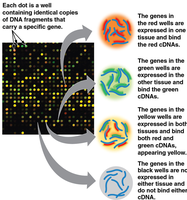
DNA microarrays are tools that allow scientists to measure the expression of thousands of genes simultaneously. Each spot on a microarray contains DNA fragments from a specific gene, and labeled cDNA from different samples can be hybridized to the array to compare gene activity.
Microarrays help identify which genes are active in different tissues or under different conditions.
Cloning and the Genetic Potential of Cells
Plant Cloning
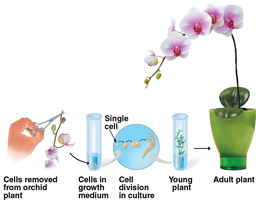
Cloning demonstrates that differentiated cells retain the full genetic potential to develop into an entire organism. In plants, single cells can be cultured to produce genetically identical clones, which is important for agriculture and horticulture.
Cloning is used to propagate plants with desirable traits or to reproduce seedless varieties.
Animal Cloning
In animals, reproductive cloning involves transferring the nucleus from an adult cell into an enucleated egg, which is then implanted into a surrogate mother. This technique has been used to clone mammals, such as sheep (Dolly), and has applications in agriculture, research, and conservation.
Therapeutic cloning aims to produce embryonic stem cells for medical treatments, not whole organisms.
Cloning raises ethical and practical concerns, including reduced genetic diversity and health issues in clones.
The Genetic Basis of Cancer
Oncogenes and Tumor-Suppressor Genes
Cancer results from the accumulation of mutations that disrupt normal gene regulation. Genes that promote cell division are called proto-oncogenes; when mutated, they become oncogenes and can cause uncontrolled cell growth. Tumor-suppressor genes normally inhibit cell division; mutations that inactivate these genes also contribute to cancer development.
Cancer progression involves multiple genetic changes, including activation of oncogenes and loss of tumor-suppressor function.
Some cancers are inherited due to mutations in these critical genes (e.g., BRCA1 and BRCA2 in breast cancer).
Cancer Risk and Prevention
Most cancers are caused by environmental factors, such as carcinogens (e.g., tobacco, UV radiation), rather than inherited mutations. Lifestyle choices, including diet and exposure to carcinogens, significantly influence cancer risk.
Prevention strategies include avoiding tobacco, limiting sun exposure, and consuming a diet rich in plant fiber and vitamins.
