 뒤로
뒤로Introduction: Evolution and the Foundations of Biology – Mini Study Guide
스터디 가이드 - 스마트 노트
 자료에 맞춘 맞춤형 노트, 핵심 정의, 예시, 맥락을 확장해 제공합니다.
Introduction to Biology
Definition and Scope of Biology
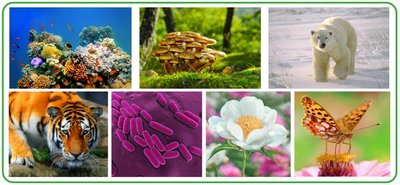
Biology is the scientific study of life, encompassing the vast diversity of living organisms and their processes. The term "biology" is derived from the prefix "bio" meaning "life" and the suffix "ology" meaning "the study of." Biology investigates everything from microscopic organisms to large multicellular animals and plants.
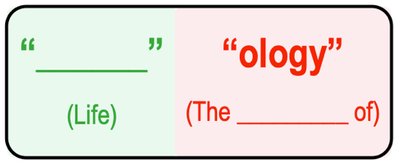
Biology: The study of life and living organisms.
Bio: Life.
Ology: The study of.
Most life on Earth is microscopic and not visible to the naked eye.
Unicellular vs. Multicellular Organisms
Cellular Organization
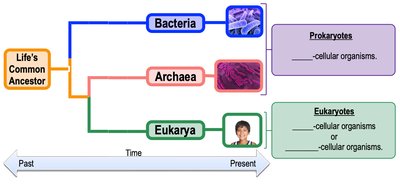
Living organisms can be classified based on their cellular structure. They are either unicellular (consisting of a single cell) or multicellular (composed of multiple cells). Cells are the fundamental unit of life, and an organism is any individual form of life.
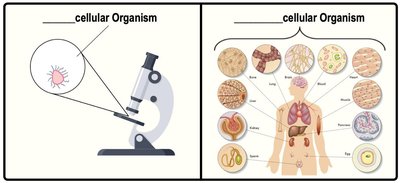
Unicellular organisms: Life forms with a single cell, often microscopic.
Multicellular organisms: Life forms with multiple cells, often visible to the naked eye.
Examples: Bacteria (unicellular), humans (multicellular).
Characteristics of Life
Defining Features of Living Organisms
All living organisms share a set of characteristics that distinguish them from nonliving things. These include cellular organization, response to stimuli, homeostasis, reproduction, energy acquisition, genetic information, and evolution.
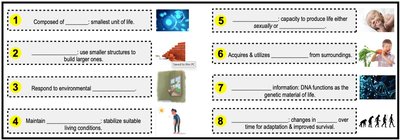
Composed of cells – the smallest unit of life.
Organized structures – use smaller structures to build larger ones.
Respond to environmental stimuli or change.
Maintain homeostasis – stabilize internal conditions.
Reproduce – capacity to produce life either sexually or asexually.
Acquire and utilize energy from surroundings.
Genetic information – DNA functions as the genetic material.
Evolution – changes in DNA over time for adaptation and improved survival.
Viruses are not considered alive because they lack many of these characteristics.
Life’s Organizational Hierarchy
Levels of Biological Organization
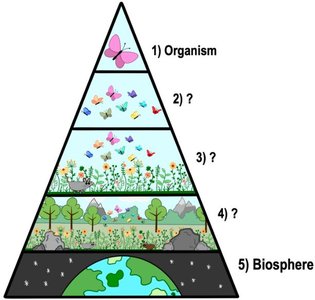
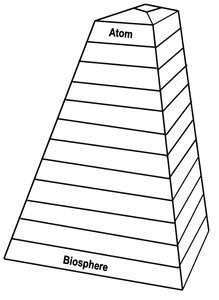
Life is organized into a hierarchical structure, from the smallest atoms to the largest biosphere. Each level builds upon the previous, and new properties emerge at each level.
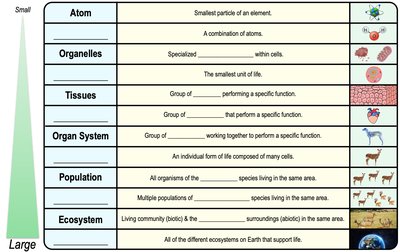
Atom: Smallest particle of an element.
Molecule: Combination of atoms.
Organelle: Specialized structures within cells.
Cell: Smallest unit of life.
Tissue: Group of cells performing a specific function.
Organ: Group of tissues that perform a function.
Organ System: Group of organs working together.
Organism: Individual form of life.
Population: All organisms of the same species in an area.
Community: Multiple populations in an area.
Ecosystem: Living community and its nonliving surroundings.
Biosphere: All ecosystems on Earth.
Emergent Properties
Emergent properties are characteristics that arise when smaller parts combine to form a larger system. The whole is greater than the sum of its parts, and new functions appear at each level of organization.
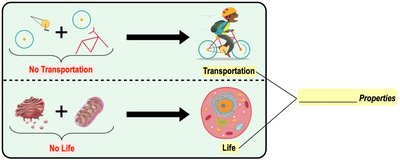
Example: Cells are made of molecules, but only when organized together do they perform living functions.
Life emerges at the cellular level.
Natural Selection & Evolution
Adaptation and Fitness
Organisms are well suited to their environments due to adaptation, which improves their fitness. Fitness is an organism’s ability to survive and reproduce.
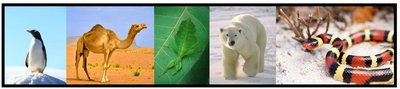
Adaptation: Process enabling survival and reproduction in specific environments.
Fitness: Ability to survive and reproduce.
Natural Selection
Natural selection is the process by which the environment selects for organisms with traits that improve fitness. It is often described as "survival of the fittest." Natural selection requires genetic variation and selective pressure for heritable traits.
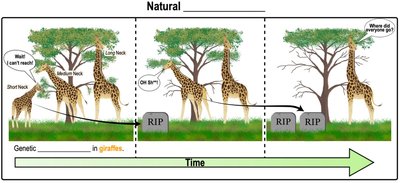
Requirements: Genetic diversity and environmental selection.
Results in differential reproductive success.
Evolution
Evolution is the change in DNA of a population over generations. It can occur via natural selection and is responsible for the diversity of life on Earth.
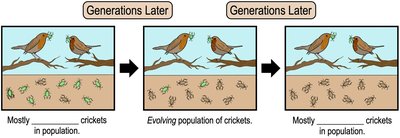
Evolution shapes all life and leads to adaptation.
Introduction to Taxonomy
Classification of Life
Taxonomy is the branch of science that classifies, identifies, and names organisms. Life is categorized into hierarchical groups, from the broadest domain to the most specific species.
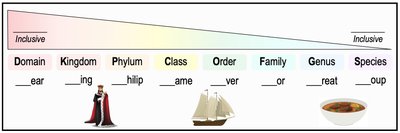
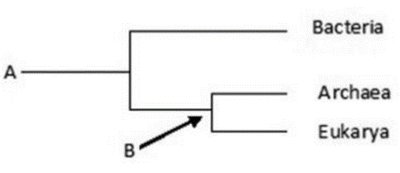
Domains: Bacteria, Archaea, Eukarya.
Kingdoms: Subdivisions within domains.
Kingdoms of Eukarya
The domain Eukarya is divided into four kingdoms: Animalia, Plantae, Fungi, and Protista. These kingdoms are classified based on cellular structure and mode of energy acquisition.
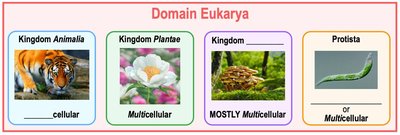
Animalia: Multicellular.
Plantae: Multicellular.
Fungi: Mostly multicellular.
Protista: Unicellular or multicellular.
Energy Acquisition
Organisms are categorized based on how they acquire energy: autotrophs (producers), heterotrophs (consumers), and decomposers. Most energy originates from the sun, and some is lost as heat during energy transfer.
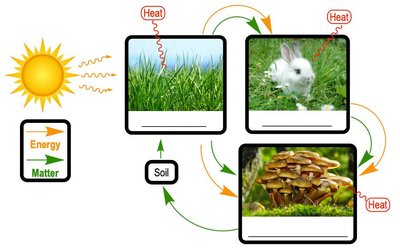
Autotrophs: Make their own food (producers).
Heterotrophs: Eat other organisms (consumers).
Decomposers: Obtain energy from wastes and dead organisms.
Scientific Method
Process of Scientific Inquiry
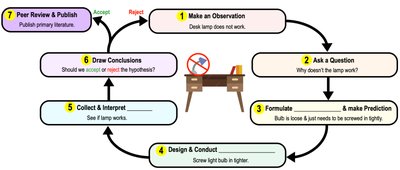
The scientific method is a systematic procedure used to answer questions, test ideas, and gain scientific knowledge. It begins with an observation and a question, followed by hypothesis formation, experimentation, data collection, and conclusion.
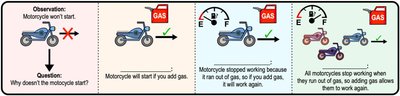
Prediction: Expected outcome of an event.
Hypothesis: Proposed, testable explanation for an observation.
Theory: Broad, testable hypothesis supported by evidence.
Basic Theories of Biology
Three fundamental theories underpin biology: cell theory, homeostasis, and evolution.
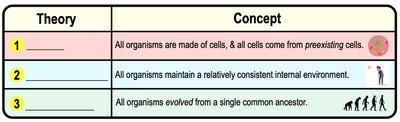
Cell Theory: All organisms are made of cells; all cells come from preexisting cells.
Homeostasis: Organisms maintain a consistent internal environment.
Evolution: All organisms evolved from a single common ancestor.
Experimental Design
Variables in Experiments
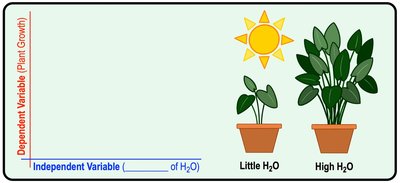
Experiments are designed to test hypotheses by manipulating variables. The independent variable is controlled by the researcher, while the dependent variable is measured.

Variable Type | Definition | Example |
|---|---|---|
Independent Variable | Variable controlled by the researcher | Age, Time/Exposure, Amount |
Dependent Variable | Variable measured by the researcher | Growth of plant, Drug effectiveness |
Controls in Experiments
Control groups are essential to prevent false positives and negatives. Negative controls expect no response, while positive controls expect a response. Ideally, control groups differ from the experimental group only in the factor being tested.

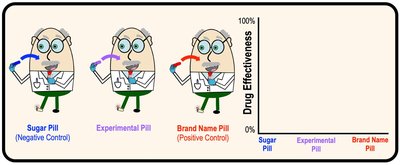
Control Type | Definition | Purpose |
|---|---|---|
Negative Control | Control group where no response is expected | Prevents false positives |
Positive Control | Control group where a response is expected | Prevents false negatives |
Additional info: These notes expand on brief points from the original materials, providing definitions, examples, and context for each concept. All images included are directly relevant to the adjacent explanations, visually reinforcing key ideas in General Biology.
