 뒤로
뒤로Introduction to Biology and the Scientific Method
스터디 가이드 - 스마트 노트
 자료에 맞춘 맞춤형 노트, 핵심 정의, 예시, 맥락을 확장해 제공합니다.
Introduction to Biology
What is Life?
Biology is the scientific study of life. To understand what constitutes life, biologists identify several key characteristics that all living things share:
Membrane Delimited: All living organisms are separated from their environment by a membrane, typically the plasma membrane.
Information Storage and Transmission: Life stores and transmits instructions, primarily through genetic material such as DNA.
Energy Utilization: Living things store, transform, and use energy to carry out cellular processes.
Regulation and Response: Organisms control their internal functions and respond to environmental changes.
Self-Replication: Life is capable of reproducing itself.
Evolution: Populations of living organisms evolve over generations.
Biomolecules: The properties of life are facilitated by complex molecules such as proteins, nucleic acids, lipids, and carbohydrates.
Cell Theory: The cell is the smallest unit of life.
Example: A bacterium is a single-celled organism that can grow, reproduce, and respond to its environment, fulfilling all the criteria above.
Fundamental Concepts in Biology
Building Knowledge
Biology is cumulative; understanding foundational concepts is essential for mastering advanced topics. Students are encouraged to seek help early and use effective study strategies to build a strong foundation.
Set clear goals and develop a study schedule.
Engage in group study and attend office hours.
Use active learning techniques such as drawing, concept mapping, and self-testing.
Regular review and practice are crucial for long-term retention.

Organization of the Course
Course Structure and Resources
The course is organized into modules, each containing multiple pages and resources. Students are expected to utilize online platforms (e.g., Canvas), participate in quizzes and exams, and complete assignments to reinforce learning.
Effective Study Habits
Memory and Retention
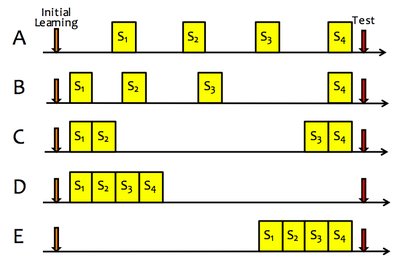
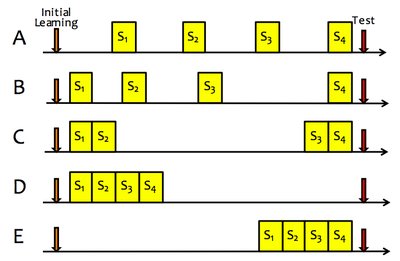
Research shows that we forget more than 50% of what we learn within one hour if we do not review the material. Spaced repetition and active recall are proven strategies to enhance memory retention.
Distribute study sessions over time rather than cramming.
Test yourself regularly to reinforce learning.
Apply knowledge by explaining concepts to others.
Understanding and Interpreting Data
Graphs and Variables
Biologists use graphs to represent data and analyze relationships between variables. Understanding how to read and interpret graphs is essential for scientific literacy.
Independent Variable (x-axis): The factor that is manipulated or categorized (e.g., time).
Dependent Variable (y-axis): The factor that is measured or observed (e.g., growth).
Experimental Variable (Independent Variable) | Responding Variable (Dependent Variable) |
|---|---|
Factor of the experiment being tested | Result or change that occurs due to the experimental variable |
The Scientific Method
Steps in Scientific Inquiry
The scientific method is a systematic approach used to investigate natural phenomena. It involves making observations, forming hypotheses, making predictions, conducting experiments, and drawing conclusions.
Observation: Gathering information about a phenomenon.
Hypothesis: A testable explanation for an observation.
Prediction: A logical statement about what will happen if the hypothesis is correct.
Experiment: A controlled test to evaluate the hypothesis.
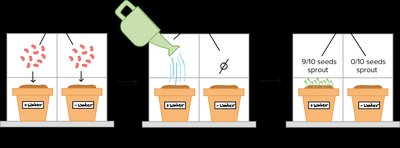
Control Group: A group that does not receive the experimental treatment, serving as a baseline for comparison.
Conclusion: Interpretation of the results to accept or reject the hypothesis.

Example: Tomato Plant Experiment
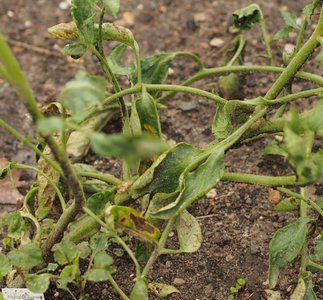
Suppose you observe that your neighbor's tomato plants are healthier than yours. You hypothesize that a difference in watering frequency is responsible. You predict that increasing water will improve your plants' health. You set up an experiment with a control group (no change in watering) and a treatment group (increased watering) to test your hypothesis.

Controls in Experiments
A control group is essential for determining whether the experimental variable is responsible for observed changes. For example, in a baking experiment to test the effect of baking powder, the control would be a cake made without baking powder, while the experimental group includes it.
Example: If Sam wants to test if baking powder makes a cake airy, the control is the cake made exactly as the original recipe (without baking powder).
Summary
Biology is the study of life, characterized by specific properties and processes.
Effective study habits and understanding scientific methods are foundational for success in biology.
Interpreting data and using controls in experiments are critical skills for biologists.
