 뒤로
뒤로Introduction to Biology and the Scientific Method
스터디 가이드 - 스마트 노트
 자료에 맞춘 맞춤형 노트, 핵심 정의, 예시, 맥락을 확장해 제공합니다.
Introduction to Biology
What is Life? I
Biology is the scientific study of life. Living organisms share several fundamental characteristics that distinguish them from non-living matter.
Membrane delimited: All living things are separated from their environment by a membrane, typically the plasma membrane.
Information storage and transmission: Life stores and transmits instructions, primarily through genetic material such as DNA.
Energy transformation and use: Organisms acquire, transform, and utilize energy to maintain order and support life processes.
Regulation and response: Living things control their internal functions and respond to environmental changes.
Self-replication: Life is capable of reproducing itself.
Evolution: Populations of living organisms evolve over generations.
Biomolecules: The properties of life are facilitated by complex molecules such as proteins, lipids, carbohydrates, and nucleic acids.
Cell theory: The cell is the smallest unit of life.

Fundamentals of Biology: Building Concepts
Effective Study Habits in Biology
Success in biology requires building understanding step by step, much like constructing a wall brick by brick. Consistent study and engagement are essential for mastering foundational concepts.
Set goals and schedule study sessions to cover textbook readings, attend classes, and complete assignments.
Form study groups and attend office hours for collaborative learning and clarification of concepts.
Use active learning techniques such as drawing, concept mapping, and flashcards.
Self-testing is crucial: explain concepts to others without notes to reinforce understanding.
Consistent attendance and participation lay the foundation for success in advanced biology courses and standardized exams (e.g., MCAT, DAT, GRE).

Biology as a Science
The Scientific Method
The scientific method is a systematic approach used by biologists to investigate natural phenomena. It involves making observations, forming hypotheses, making predictions, conducting experiments, and drawing conclusions.
Observation: Gathering information about the natural world.
Hypothesis: A testable explanation for an observation.
Prediction: A logical statement about what will happen if the hypothesis is correct.
Experiment: A controlled test to evaluate the hypothesis, often including a control group for comparison.
Conclusion: Interpretation of experimental results to support or refute the hypothesis.

Example: Tomato Plant Experiment
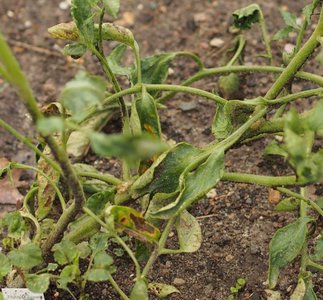
Suppose you observe that your neighbor's tomato plants are healthier than yours. You hypothesize that a difference in watering frequency is responsible. You predict that increasing water will improve your plants' health. You design an experiment with a control group (no change in watering) and a treatment group (increased watering) to test your prediction.

Control Groups in Experiments
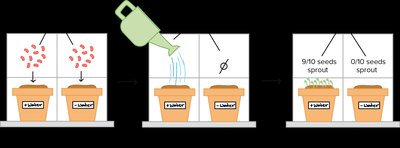
A control group is a subset of subjects in an experiment that does not receive the experimental treatment. It serves as a baseline for comparison, ensuring that observed effects are due to the variable being tested.
Example: In testing whether baking powder makes a cake airy, the control group would be cakes made without baking powder, while the experimental group includes it.
Variables in Scientific Experiments
Independent and Dependent Variables
Experiments involve manipulating one variable to observe its effect on another.
Experimental Variable (Independent Variable) | Responding Variable (Dependent Variable) |
|---|---|
Factor of the experiment being tested | Result or change that occurs due to the experimental variable |
Data Representation in Biology
Understanding Graphs
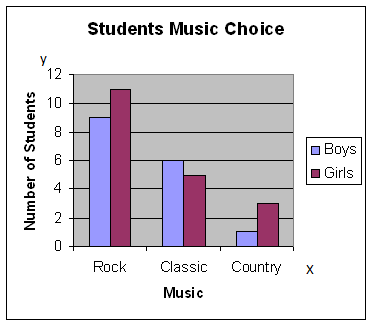
Biologists use graphs to visually represent data and relationships between variables. The horizontal axis (x-axis) typically represents the independent variable, while the vertical axis (y-axis) shows the dependent variable.
Bar graphs are used to compare quantities across categories.
Line graphs show trends over time or continuous data.
Summary
Biology is the study of life, characterized by specific properties and processes.
The scientific method provides a structured approach to investigating biological questions.
Control groups and variables are essential for designing fair and interpretable experiments.
Data is often represented graphically to reveal patterns and relationships.
