 뒤로
뒤로Introduction to Biology for Veterinary Technicians: Foundations of Scientific Thinking and Biological Organization
스터디 가이드 - 스마트 노트
 자료에 맞춘 맞춤형 노트, 핵심 정의, 예시, 맥락을 확장해 제공합니다.
Introduction to Biology for Veterinary Technicians
Connecting Science to Veterinary Technology Practice
Veterinary technicians rely on foundational biological principles to provide effective patient care, support clinical assessments, and communicate with both veterinarians and clients. Understanding the building blocks of biology and the scientific method is essential for safe, evidence-based practice and professional growth in veterinary medicine.
Biological Organization: From Atoms to Organisms
Levels of Biological Organization
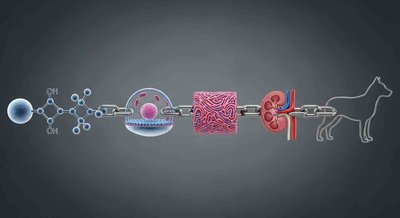
Living systems are organized into hierarchical levels, each with increasing complexity. Veterinary technicians encounter these levels daily, from microscopic laboratory work to whole-animal care.
Atom: The smallest unit of an element, retaining its chemical properties.
Molecule: Two or more atoms bonded together, forming the chemical basis of life (e.g., water, proteins, medications).
Cell: The fundamental unit of life, capable of carrying out all life processes (e.g., red blood cells, white blood cells).
Tissue: Groups of similar cells performing a common function (e.g., muscle, connective, epithelial, nervous tissue).
Organ: Structures composed of multiple tissue types working together (e.g., heart, kidney, liver).
Organ System: Groups of organs coordinating to perform complex functions (e.g., cardiovascular, digestive systems).
Organism: A complete living individual (e.g., a dog, cat, or rabbit).
Population: A group of organisms of the same species in a given area.
Community: Different species living together in a shared environment.
Ecosystem: All living and nonliving factors interacting in an area.
Biosphere: The sum of all ecosystems on Earth.
Emergent Properties
Emergent properties are new characteristics that arise at each level of biological organization due to the interactions of simpler components. For example, individual heart muscle cells cannot pump blood, but together as heart tissue, they produce a coordinated heartbeat essential for life.
Coordinated muscle contractions enable movement and circulation.
Cellular dehydration can lead to organ dysfunction and systemic illness.
Characteristics of Living Things
Defining Life in Veterinary Medicine
Veterinary patients exhibit the fundamental characteristics of living organisms. Recognizing these helps distinguish normal from abnormal states:
Metabolism: All chemical reactions that convert nutrients into energy and building materials, and eliminate waste.
Homeostasis: Maintaining stable internal conditions (e.g., temperature, hydration, blood glucose).
Growth and Development: Predictable changes in size and function over time.
Reproduction: The ability to produce new life.
Response to Stimuli: Reacting to environmental changes (e.g., pain, fear, neurological signals).
Classifying Biological Organization in Clinical Practice
Application in Veterinary Technology
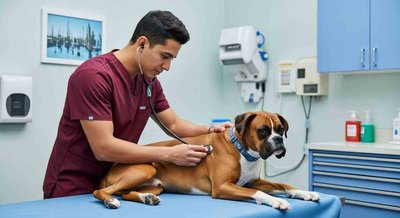
Understanding biological hierarchy allows veterinary technicians to connect microscopic findings to patient care and communicate effectively with the veterinary team.
Blood tests reveal cellular-level information about organ system health.
Physical exams assess tissues, organs, and overall organism health.
Population and community-level thinking informs disease prevention and herd health management.
The Scientific Method in Veterinary Practice
Steps of the Scientific Method
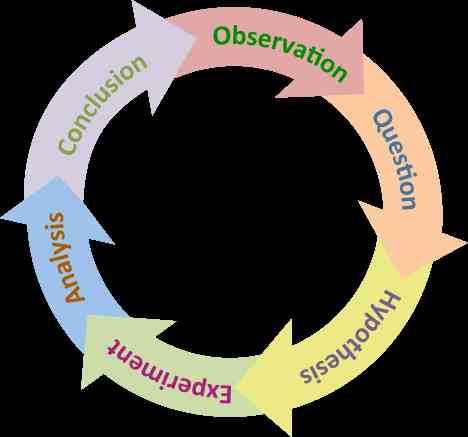
The scientific method is a systematic approach to problem-solving and clinical reasoning in veterinary medicine. It transforms observations into evidence-based decisions.
Observation: Collecting objective data through senses or instruments.
Question: Asking why or how based on observations.
Hypothesis: Forming a testable, evidence-based explanation.
Prediction: Stating expected outcomes if the hypothesis is correct.
Experimentation: Testing the hypothesis through controlled procedures.
Analysis: Reviewing and interpreting results.
Conclusion: Summarizing findings and planning next steps.
Variables in Clinical Testing
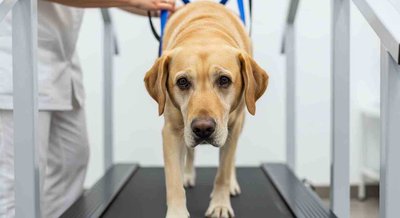
Independent Variable: The factor intentionally changed (e.g., medication type).
Dependent Variable: The outcome measured (e.g., pain score, activity level).
Control Variables: Factors kept constant to ensure fair testing.
Distinguishing Observations from Inferences
Accurate Documentation in Veterinary Medicine
Clear communication and legal documentation require distinguishing between observations (facts) and inferences (interpretations):
Observation: Directly measurable or observable fact (e.g., "Heart rate 140 bpm").
Inference: Conclusion drawn from observations (e.g., "Patient appears anxious").
Observations form the foundation of patient assessment, while inferences guide further investigation and require veterinary confirmation.

Examples in Veterinary Settings
Observation: "Dog breathing 45 respirations per minute with open mouth." Inference: "Dog is having difficulty breathing."
Observation: "Surgical site has 2cm area of redness." Inference: "Incision site may be infected."
Evaluating Research in Veterinary Practice
Types of Scientific Literature
Primary Literature: Original research articles presenting new data.
Secondary Literature: Summaries or reviews of multiple primary studies.
Tertiary Literature: General overviews, textbooks, or educational resources.
Peer Review and Replication
Peer review ensures research quality and reliability. Replication of studies confirms findings and supports evidence-based practice.
Structure of a Primary Research Article
Introduction: States the research question and significance.
Materials and Methods: Describes study design and procedures.
Results: Presents findings objectively.
Discussion: Interprets results and clinical implications.
Key Scientific Terms for Veterinary Technicians
Term | Definition | Clinical Application |
|---|---|---|
Atom | Smallest unit of an element | Basis of all matter, including medications and nutrients |
Cell | Basic unit of life | Blood, tissue, and cytology samples |
Tissue | Group of similar cells | Muscle, connective, epithelial, nervous tissue |
Organ | Structure of multiple tissues | Heart, kidney, liver exams |
Homeostasis | Stable internal conditions | Vital sign monitoring |
Metabolism | Chemical reactions in the body | Drug dosing, nutrition |
Observation | Directly measured fact | Objective patient data |
Inference | Interpretation of observations | Suggests clinical concerns |
Hypothesis | Testable explanation | Guides diagnostic testing |
Peer Review | Expert evaluation of research | Ensures study reliability |
Summary
Mastering the foundations of biology and scientific reasoning is essential for veterinary technicians. These skills support accurate patient assessment, effective communication, and evidence-based clinical practice. By understanding biological organization, applying the scientific method, distinguishing observations from inferences, and evaluating research, veterinary technicians provide high-quality care and contribute to the advancement of veterinary medicine.
