 뒤로
뒤로Introduction to Biology: Foundations, Methods, and Characteristics of Life
스터디 가이드 - 스마트 노트
 자료에 맞춘 맞춤형 노트, 핵심 정의, 예시, 맥락을 확장해 제공합니다.
Introduction to Biology
What is Biology?
Biology is the scientific study of life and living organisms. It encompasses a wide range of topics, from the molecular mechanisms inside cells to the interactions between organisms and their environments.
Science: An organized way of using evidence to learn about the natural world.
Biogenesis Theory: States that all life comes from pre-existing life.
Technology: The practical application of scientific knowledge.
Examples of living things: Bacteria, plants, insects, animals.
Branches of Biology
Zoology: Study of animals.
Botany: Study of plants.
Taxonomy: Science of classification of organisms.
Anatomy: Study of the structure of organisms.
Ecology: Study of interactions between organisms and their environment.
Domains of Life
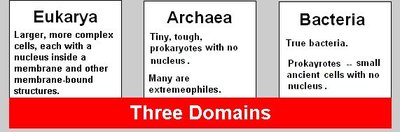
All living organisms are classified into three domains based on differences in cellular and metabolic complexity.
Eukarya: Organisms with larger, more complex cells containing a nucleus and membrane-bound organelles. Includes kingdoms Animalia, Plantae, Fungi, and Protista.
Archaea: Tiny, tough prokaryotes with no nucleus; many are extremophiles.
Bacteria: True bacteria; small, ancient prokaryotic cells with no nucleus.
Scientific Measurement and Problem Solving
Metric System
The metric system is the universal system of measurement in science, based on units scaled by powers of ten.
Base Units: Meter (length), gram (mass), liter (volume), second (time), ampere (current), mole (amount of substance), kelvin (thermodynamic temperature), Celsius (temperature).
Prefixes:
Kilo (103): 1,000
Hecto (102): 100
Deca (101): 10
Deci (10-1): 1/10
Centi (10-2): 1/100
Milli (10-3): 1/1,000
Metric Conversion Steps
Write the starting value and unit.
Place the known unit on the bottom and the desired unit on top.
Place 1 with the larger unit and the corresponding number with the smaller unit.
Cross-multiply so units cancel appropriately.
The Process of Science
How Scientists Work
Scientists use a systematic approach to investigate the natural world, including experiments, field observations, research, and technology.
Scientific Method: A universal method for conducting experiments.
Steps of the Scientific Method
Observation: Recognize a problem using the senses.
Research: Gather initial information to explain the observation.
Form Hypothesis: Propose a possible explanation based on prior knowledge or research.
Set Up Controlled Experiment: Compare a control group (all factors constant) with an experimental group (one variable changed).
Record and Analyze Data: Collect quantitative (numerical) or qualitative (descriptive) data; analyze for trends using graphs or equations.
Draw Conclusions: Accept or reject the hypothesis based on analysis.
Publish or Repeat: Share results in scientific journals or repeat the experiment for verification.
Graphing and Interpreting Data
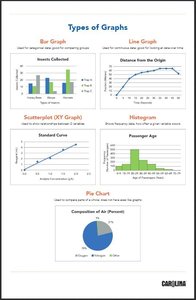
Graphs are essential tools for visualizing and interpreting scientific data. Common types include bar graphs, line graphs, scatterplots, histograms, and pie charts.
Characteristics of Life
RAREHOG: The Seven Characteristics of Life
Reproduce: Ability to produce new organisms (asexual or sexual reproduction).
Adapts: Evolution and adaptation to environmental changes over time.
Responds to Stimuli: Reacts to environmental signals (e.g., light, temperature).
Energy: Obtains and uses energy (metabolism).
Homeostasis: Maintains stable internal conditions.
Organized with Cells: Composed of one or more cells, the basic unit of life.
Growth and Development: Increases in size and complexity through cell division and differentiation.
Reproduction
Asexual Reproduction: One parent produces genetically identical offspring (e.g., bacteria, mitosis).
Sexual Reproduction: Two parents produce genetically diverse offspring (e.g., humans, frogs, meiosis).
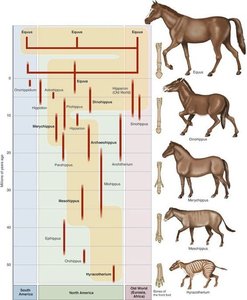
Adaptation and Evolution
Organisms change over time in response to their environment, a process known as evolution.
Responds to Stimulus
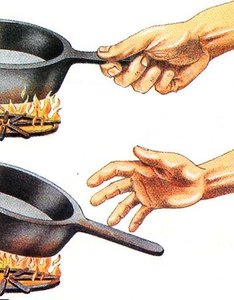
Living things detect and respond to stimuli in their environment, such as heat, cold, hunger, or light (e.g., phototropism in plants).
Energy and Metabolism
Metabolism is the sum of all chemical reactions in an organism. Organisms obtain energy in two main ways:
Autotrophs: Make their own food using sunlight (e.g., plants).
Heterotrophs: Obtain energy by consuming other organisms (e.g., humans).
Homeostasis
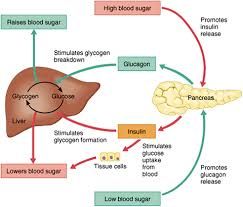
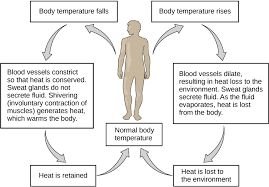
Homeostasis is the maintenance of stable internal conditions, often regulated by negative feedback loops (e.g., body temperature, blood glucose levels).
Organization of Cells
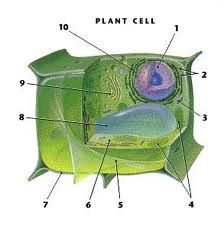
Cells are the basic unit of structure and function in living things. Organisms can be unicellular (one cell, e.g., bacteria) or multicellular (many cells, e.g., plants and animals).
Levels of Biological Organization
Molecular: Atoms and molecules form organelles.
Organelles: Specialized cell structures with specific functions.
Cell: Basic unit of life.
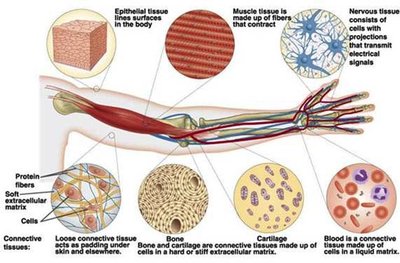
Tissue: Group of similar cells performing a specific function.
Organ: Two or more tissues working together.
Organ System: Multiple organs working together.
Organism: All organ systems functioning together.
Population: Members of one species living together.
Community: Different populations in the same area.
Ecosystem: Communities and their environment in a similar climate.
Biosphere: All regions of Earth where life exists.
Biodiversity: Variety and number of species in an ecosystem.
Deoxyribonucleic Acid (DNA)
DNA is the universal genetic code found in all living cells. It carries genetic information from parent to offspring and is essential for growth and development.
Classification of Life (Taxonomy)
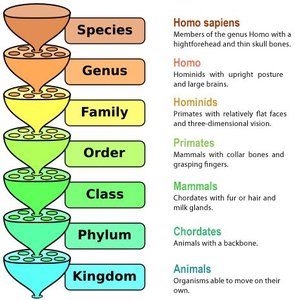
Taxonomy is the science of classifying organisms. The binomial system uses genus and species names (e.g., Felis catus for the domestic cat). There are hierarchical levels of classification, with subcategories such as subspecies.
Growth and Development
Growth refers to an increase in cell size, while development involves cell division and differentiation, leading to specialized cell types (e.g., bone, muscle cells).
Microscopes in Biology
Microscope Basics
Microscopes are instruments that produce enlarged images of small objects, allowing scientists to study cells and microorganisms.
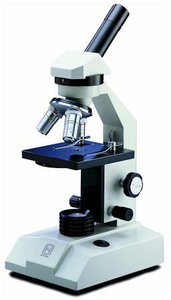
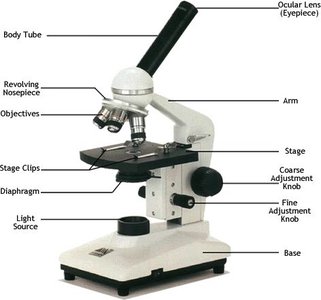
Magnification: The increase in an object's apparent size (total magnification = eyepiece × objective lens).
Resolution: The ability to distinguish details clearly; higher resolution provides a clearer image.
Types of Microscopes
Light Microscope: Uses light to illuminate specimens; most common in biology labs.
Electron Microscope: Uses beams of electrons for much higher magnification and resolution; includes Transmission Electron Microscope (TEM) and Scanning Electron Microscope (SEM). Cannot be used with living specimens.
Additional info:
Organ systems such as cardiovascular, integumentary, digestive, muscular, and lymphatic each have specialized functions in multicellular organisms.
Scientific research and publication are essential for sharing and verifying new discoveries.
