 뒤로
뒤로Introduction to Biology: Hierarchy, Characteristics of Life, and Scientific Inquiry
스터디 가이드 - 스마트 노트
 자료에 맞춘 맞춤형 노트, 핵심 정의, 예시, 맥락을 확장해 제공합니다.
Introduction to Biology
Overview of Life and Biological Organization
Biology is the scientific study of life, encompassing a vast array of living systems structured at multiple interrelated levels. Understanding the hierarchy of biological organization and the emergent properties that arise from these levels is fundamental to the study of biology.
Biological Hierarchy: Structure Relates to Function
Levels of Biological Organization
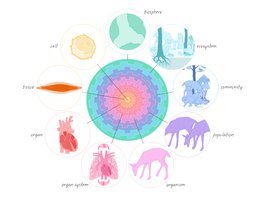
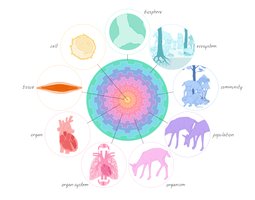
Biological systems are organized in a hierarchical manner, where each level contains and interacts with the levels below it. This structure allows for complex functions and emergent properties to arise.
Biosphere: The global sum of all ecosystems.
Ecosystem: All living and nonliving components in a particular area.
Community: All populations of different species interacting within an area.
Population: Individuals of the same species living in a specific area.
Organism: An individual living entity.
Organ System: Groups of organs working together (e.g., circulatory system).
Organ: Structures composed of tissues with specific functions (e.g., heart).
Tissue: Groups of similar cells performing a function.
Cell: The smallest unit of life.
Organelle: Specialized structures within cells (e.g., mitochondria).
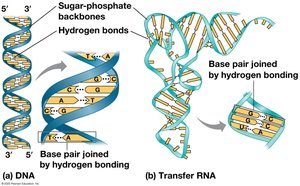
Molecule: Chemical structures consisting of two or more atoms.
Emergent Properties
Emergent properties are novel characteristics that arise at each level of biological organization, which are not present in the individual components. These properties result from the arrangement and interaction of parts within a system.
Example: Bird flight emerges at the organism level, not at the tissue or cell level.
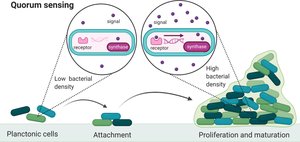
Example: Quorum sensing in bacteria is a population-level property, enabling coordinated behavior that individual bacteria cannot achieve alone.
Defining Life: Characteristics of Living Organisms
Seven Common Characteristics of Life
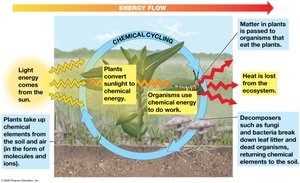
Life is defined by a combination of seven characteristics. No single trait is sufficient; all must be present together to define living organisms.
Organization (Order): Structured arrangement of components.
Energy Processing (Metabolism): Ability to obtain and use energy.
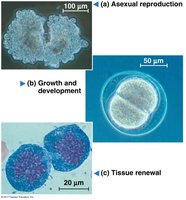
Reproduction: Production of offspring.
Growth and Development: Increase in size and change in form.
Response to Stimuli (Environment): Reacting to external changes.
Regulation (Homeostasis): Maintaining internal stability.
Adaptation/Evolution: Populations change over time to survive.
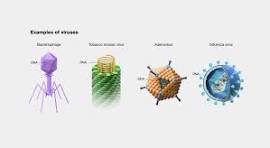
Is a Virus Alive?
Viruses exhibit some but not all characteristics of life. They possess genetic material and can evolve, but lack metabolism and cannot reproduce independently, raising debate about their status as living entities.
Practice: Determining Life Status
Applying the characteristics of life to various examples helps clarify what is considered alive, dead, or never alive.
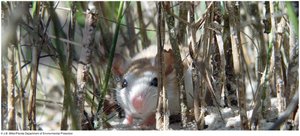
Beach Mouse: Alive (shows all characteristics of life).
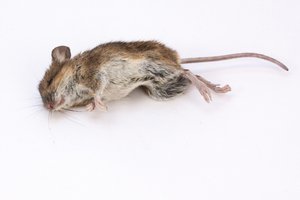
Dead Mouse: Dead (once alive, now lacks characteristics).
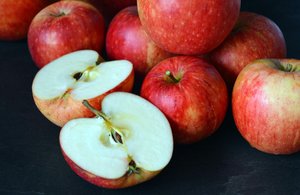
Apples: Alive and Dead (living when attached to tree, dead when harvested).
Molecules: Never Alive (do not exhibit characteristics of life).
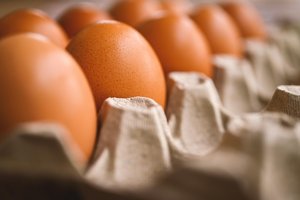
Chicken Eggs: Not alive unless fertilized and developing; otherwise, they lack most characteristics of life.
Biological Hierarchy in Action: Sickle Cell Anemia
Impact of Molecular Changes Across Levels
Small changes at the molecular level, such as a mutation in DNA, can have cascading effects throughout the biological hierarchy, impacting cells, tissues, organs, organisms, and populations.
Sickle Cell Anemia: A single gene mutation alters hemoglobin structure, causing cells to sickle, which leads to organ damage and affects population health.
Emergent Properties: Bird Flight and Quorum Sensing
Bird Flight
Bird flight is an emergent property resulting from the arrangement and interaction of anatomical structures at the organism level. Individual tissues or cells cannot achieve flight alone.
Quorum Sensing in Bacteria
Quorum sensing is a population-level emergent property where bacteria coordinate gene expression based on cell density, enabling group behaviors such as infection.
Scientific Inquiry: How Do We Study Life?
Principles of Experimental Design and Hypothesis Testing
Scientists use hypothesis-driven research to expand understanding of the natural world. The scientific method is a systematic approach to inquiry.
Good Hypothesis: Specific, testable, and falsifiable.
Steps of the Scientific Method:
Observation
Scientific Question
Form a Hypothesis
Design a Controlled Experiment
Collect Data
Analyze Data (Statistical Analyses)
Support or Reject Null Hypothesis
Null Hypothesis: No relationship between variables.
Alternative Hypothesis: There is a relationship between variables.
Example: Null Hypothesis: Flower color does not affect butterfly visits. Alternative Hypothesis: Flower color does affect butterfly visits.
Summary Table: Levels of Biological Organization
Level | Description | Example |
|---|---|---|
Biosphere | Global ecosystem | Earth |
Ecosystem | Community and environment | Forest, lake |
Community | Multiple populations | All species in a meadow |
Population | Individuals of one species | Deer in a forest |
Organism | Individual living entity | Single deer |
Organ System | Group of organs | Circulatory system |
Organ | Structure with function | Heart |
Tissue | Group of cells | Muscle tissue |
Cell | Smallest unit of life | Muscle cell |
Organelle | Cell structure | Mitochondria |
Molecule | Chemical structure | DNA |
Additional info:
Emergent properties are central to understanding complex biological systems.
Scientific inquiry relies on rigorous experimental design and hypothesis testing.
Hierarchy and interconnectedness are key themes in biology, affecting everything from molecular changes to ecosystem dynamics.
