 뒤로
뒤로Introduction to Biology: Properties, Organization, and Scientific Inquiry
스터디 가이드 - 스마트 노트
 자료에 맞춘 맞춤형 노트, 핵심 정의, 예시, 맥락을 확장해 제공합니다.
Introduction to Biology
Biology is the scientific study of life and living organisms. It encompasses a wide range of topics, from the molecular mechanisms inside cells to the interactions between organisms and their environments. Understanding biology begins with recognizing the fundamental properties that define life and the organizational hierarchy that structures living systems.
Properties of Life
Order
Living organisms exhibit a high degree of order and organization, from the molecular level to the whole organism. This order is essential for maintaining life processes and is a distinguishing feature of living things.
Order: Biological systems are highly structured, with cells as the basic unit of life.
Example: The arrangement of cells in tissues and organs demonstrates biological order.
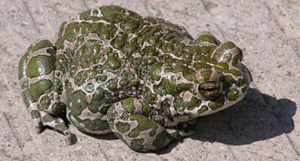
Sensitivity or Response to the Environment
All living organisms can sense and respond to environmental stimuli. This ability allows them to adapt to changing conditions and survive in diverse habitats.
Sensitivity: Organisms detect and react to physical or chemical changes in their environment.
Example: Plants bending toward light (phototropism) or animals fleeing from predators.
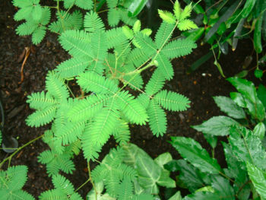
Reproduction
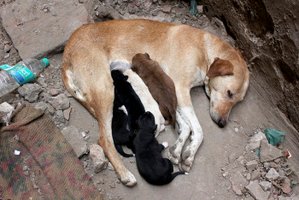
Living organisms have the capacity to reproduce, ensuring the continuation of their species. Reproduction can be sexual or asexual, depending on the organism.
Reproduction: The process by which organisms produce new individuals.
Example: Mammals giving birth to live young, bacteria dividing by binary fission.
Growth and Development
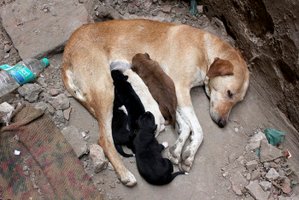
Organisms grow and develop according to specific instructions coded in their DNA. Growth involves an increase in size, while development refers to changes in form and function during an organism's life cycle.
Growth: Increase in size and mass of an organism.
Development: Progression through a life cycle, including differentiation of cells and tissues.
Regulation
Organisms possess regulatory mechanisms that coordinate internal functions, such as nutrient transport and response to stimuli, to maintain stability and adapt to environmental changes.
Regulation: Control and coordination of internal processes to maintain balance.
Example: Hormonal regulation of blood sugar levels in animals.
Homeostasis
Homeostasis is the maintenance of a stable internal environment despite external fluctuations. This is crucial for the proper functioning of cells and organs.
Homeostasis: The ability to maintain constant internal conditions (e.g., temperature, pH).
Example: Human body temperature regulation.
Energy Processing
All living organisms require energy to power their metabolic activities. They obtain energy either by producing it (autotrophs, e.g., photosynthesis) or by consuming other organisms (heterotrophs, e.g., cellular respiration).
Energy Processing: Conversion of energy from one form to another to sustain life.
Photosynthesis: Process by which plants convert solar energy into chemical energy.
Cellular Respiration: Process by which cells extract energy from organic molecules.
Organization of Matter and Life
Levels of Biological Organization
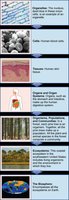
Life is organized in a hierarchical structure, from the smallest chemical units to the entire biosphere.
Atoms: The fundamental units of matter.
Molecules: Combinations of atoms; many are biologically important macromolecules (e.g., proteins, nucleic acids).
Organelles: Aggregates of macromolecules that perform specific functions within cells.
Cells: The basic unit of life, composed of organelles and macromolecules.
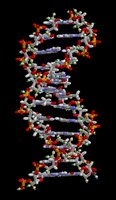
DNA as a Molecule of Life
Deoxyribonucleic acid (DNA) is a macromolecule that carries genetic information essential for growth, development, and reproduction.
DNA: Composed of nucleotides; encodes instructions for building proteins.
Hierarchy of Life
Living organisms are part of a structured hierarchy, from organelles to the biosphere.
Hierarchy: Organelles → Cells → Tissues → Organs → Organ Systems → Organisms → Populations → Communities → Ecosystems → Biosphere
Cell Structure and Types
Features of All Cells
All cells, regardless of type, share four fundamental components:
Plasma Membrane: Encloses the cell, controlling the movement of substances in and out.
Cytoplasm: Jelly-like fluid inside the cell where organelles are suspended.
DNA: Genetic material that directs cellular activities.
Ribosomes: Structures responsible for protein synthesis.
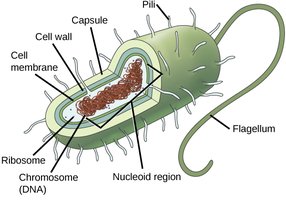
Prokaryotic Cells
Prokaryotic cells are simpler and smaller than eukaryotic cells. They lack a true nucleus and membrane-bound organelles.
Nucleoid: Region where DNA is located (not enclosed by a membrane).
Cell Wall: Provides structure and protection.
Flagella/Pili: Structures for movement and attachment.
Eukaryotic Cells
Eukaryotic cells are typically larger and more complex than prokaryotic cells. They have a true nucleus and various membrane-bound organelles.
Nucleus: Membrane-bound compartment containing DNA.
Organelles: Specialized structures (e.g., mitochondria, endoplasmic reticulum) that perform distinct cellular functions.
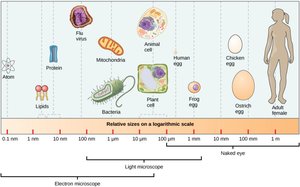
Relative Sizes of Cells
Cells and their components vary greatly in size, from atoms and molecules to entire organisms. Understanding these size differences is important for studying cell structure and function.
Scale: Atoms < Molecules < Organelles < Cells < Tissues < Organs < Organisms
Biodiversity, Phylogeny, and Taxonomy
Biodiversity
Biodiversity refers to the variety of life forms and their processes, including diversity among species, within populations, and across ecosystems.
Biodiversity: The range of different living organisms and their genetic variation.
Phylogeny
Phylogeny is the evolutionary history and relationship among species or groups of organisms. Phylogenetic trees visually represent these relationships, showing common ancestry and divergence.
Three Domains of Life: Bacteria, Archaea, and Eukarya.
Taxonomy
Taxonomy is the science of classifying organisms. It uses a hierarchical system and binomial nomenclature to assign scientific names to species.
Binomial Nomenclature: Two-part scientific naming system (Genus species).
Example: The scientific name for the common dog is Canis lupus familiaris.
Branches of Biology
Biology is divided into various branches, each focusing on specific aspects of life, such as genetics, ecology, physiology, and evolution.
Scientific Inquiry
Forming a Hypothesis
A hypothesis is a testable and falsifiable statement that explains an observation or answers a scientific question.
Testable: Can be supported or refuted by experimental evidence.
Falsifiable: Can be proven false by data.
Experimental Design
Designing an experiment involves careful planning to ensure valid and reliable results.
Sample Size and Selection: Choosing appropriate numbers and types of subjects.
Avoiding Bias: Using controls and randomization.
Experimental Variables
Experiments involve manipulating variables to test hypotheses.
Independent Variable: The factor that is changed or controlled by the experimenter.
Dependent Variable: The factor that is measured or observed.
Controlled Variables: Factors kept constant to ensure a fair test.
Interpreting Results
Data collected from experiments are analyzed to determine if the results support the hypothesis. Statistical analysis is used to assess significance.
Statistical Significance: Indicates whether observed differences are likely due to chance or represent true effects.
Quick Review
Defining characteristics of biological life include order, sensitivity, reproduction, growth, regulation, homeostasis, and energy processing.
Cells are the basic units of life, with prokaryotic and eukaryotic types.
Classification and organizational tools include taxonomy and phylogeny.
Biology is a science that uses the scientific method to investigate life processes.
Key components of scientific inquiry are hypothesis formation, experimental design, variable control, and result interpretation.
