 뒤로
뒤로Introduction to Biology: The Science of Life
스터디 가이드 - 스마트 노트
 자료에 맞춘 맞춤형 노트, 핵심 정의, 예시, 맥락을 확장해 제공합니다.
Introduction to Biology
The Science of Life
Biology is the scientific study of life, encompassing the vast diversity and complexity of living organisms. It integrates principles from chemistry, physics, and other fields to understand living systems, which are the most complex chemical systems on Earth. Modern biology is interdisciplinary, often combining multiple scientific disciplines to address complex questions.
Unifying Themes in Biology
The study of life reveals several unifying themes that help organize biological knowledge:
Organization: Living systems are structured in a hierarchical manner.
Information: Genetic information guides biological processes.
Energy and Matter: Organisms obtain and use energy, cycling matter through biological systems.
Interactions: Organisms interact with each other and their environment.
Evolution: Evolution explains the unity and diversity of life.
Characteristics of Living Organisms
Defining Life
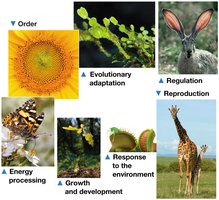
All living organisms share a set of fundamental characteristics that distinguish them from non-living matter:
Composed of cells
Complex and ordered
Respond to their environment
Can grow, develop, and reproduce
Obtain and use energy
Maintain internal balance (homeostasis)
Allow for evolutionary adaptation
Biological Organization
Hierarchical Organization of Life
Living systems exhibit a hierarchical organization, with each level building upon the previous one. This hierarchy extends from the smallest chemical building blocks to the entire biosphere.
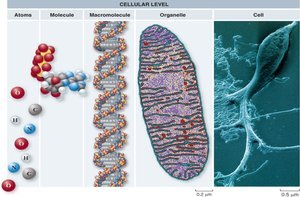
Cellular Level: Atoms, molecules, macromolecules, organelles, cells
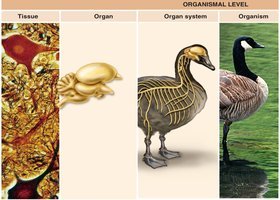
Organismal Level: Tissues, organs, organ systems, organism
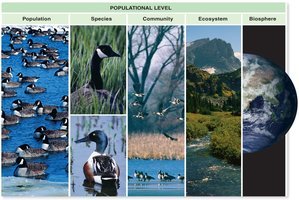
Populational Level: Population, species, community, ecosystem, biosphere
Cellular Level
The cellular level includes the basic chemical and structural units of life.
Organismal Level
The organismal level includes tissues, organs, organ systems, and the complete organism.
Populational Level
The populational level includes groups of organisms and their environments, from populations to the biosphere.
Emergent Properties
Each level of organization exhibits emergent properties—new characteristics that arise from the interactions and arrangement of parts at lower levels. For example, life itself is an emergent property that cannot be deduced by examining molecules alone.
Structure and Function
There is a close relationship between structure and function at all levels of biological organization. Understanding the structure of a biological component provides insight into its function, and vice versa.
Example: The structure of the insulin receptor in humans can be compared to similar molecules in other organisms to infer function.
Cell Theory
Fundamental Principles
The cell theory is a foundational concept in biology, stating that:
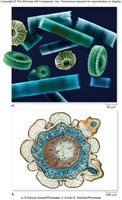
The cell is the smallest unit of organization that can perform all activities required for life.
All organisms are composed of cells.
All cells arise from preexisting cells.
Genetic Information and Inheritance
DNA: The Genetic Material
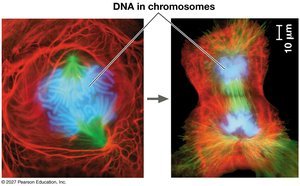
Within cells, genetic information is stored in the form of deoxyribonucleic acid (DNA). DNA is organized into chromosomes, which contain genes—the units of inheritance. The continuity of life depends on the faithful replication and transmission of DNA from one generation to the next.
Gene: A discrete unit of hereditary information consisting of a specific nucleotide sequence in DNA.
Genome: The complete set of genetic instructions in an organism.
Evolution: The Core Theme of Biology
Unity and Diversity of Life
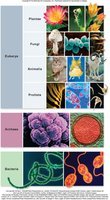
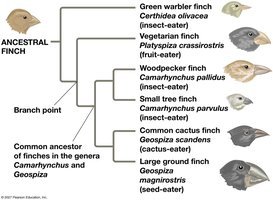
Evolution explains both the unity and diversity of life. All living organisms share a common biochemical and genetic heritage, but evolutionary processes have led to the vast diversity observed today.
Three domains of life: Bacteria (single-celled prokaryotes), Archaea (single-celled prokaryotes), and Eukarya (single-celled or multicellular eukaryotes).
Evolutionary Conservation
Some characteristics, such as the use of DNA as genetic material, are conserved across all forms of life, reflecting their fundamental importance. Cells are information-processing systems that use DNA to direct the synthesis of cellular components and respond to environmental signals.
The Nature of Science
Scientific Inquiry
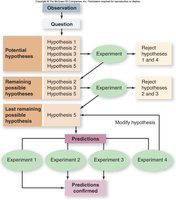
Science is a systematic approach to understanding the natural world. It involves making observations, forming hypotheses, and testing them through experimentation.
Deductive reasoning: Uses general principles to make specific predictions.
Inductive reasoning: Uses specific observations to develop general conclusions.

The Scientific Method
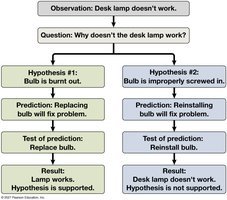
The scientific method is an iterative process involving:
Observation
Hypothesis formation
Prediction
Experimentation
Conclusion
Hypotheses and Experiments
A hypothesis is a testable explanation for an observation. Experiments are designed to test hypotheses, often by manipulating one variable at a time and comparing results to a control group. Predictions derived from hypotheses provide a way to test their validity.
Philosophical Approaches in Science
Reductionism: Breaking complex processes into simpler parts for study.
Systems biology: Focuses on emergent properties that arise from the interactions of system components.
Models: Conceptual frameworks that organize knowledge and suggest new experiments.
Scientific Theory
A scientific theory is a well-supported body of interconnected concepts, based on extensive evidence and reasoning. It is distinct from the everyday use of the word "theory," which may imply a guess or lack of knowledge.
Evolution and Natural Selection
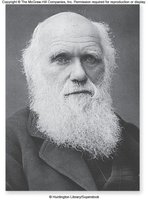
Charles Darwin and the Theory of Natural Selection
Charles Darwin's work established evolution by natural selection as the central mechanism explaining the diversity and unity of life. His observations and studies led to two main points:
Species show evidence of "descent with modification" from common ancestors.
Natural selection is the mechanism behind descent with modification.
Darwin's Observations
Individuals in a population vary in their traits, many of which are heritable.
More offspring are produced than survive, leading to competition.
Species are generally well-suited to their environments.
Evidence for Evolution
Fossil record: Transitional forms found at predicted positions in time.
Earth's age: Estimated at approximately 4.5 billion years.
Comparative anatomy: Homologous structures indicate common ancestry; analogous structures arise from convergent evolution.
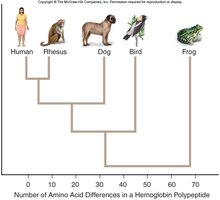
Molecular evidence: Comparison of genomes and proteins reveals evolutionary relationships.
Unity Underlying Diversity
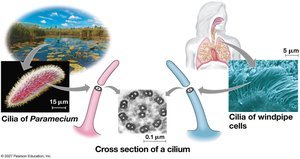
Despite the diversity of life, there is remarkable unity at the molecular and cellular levels. For example, the architecture of cilia is conserved across diverse eukaryotes.
Natural Selection in Action
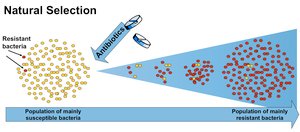
Natural selection can be observed in real time, such as the evolution of antibiotic resistance in bacteria.
Summary Table: Levels of Biological Organization
Level | Examples | Description |
|---|---|---|
Cellular | Atoms, molecules, organelles, cells | Basic building blocks of life |
Organismal | Tissues, organs, organ systems, organism | Functional units of living things |
Populational | Population, species, community, ecosystem, biosphere | Groups of organisms and their environments |
