 뒤로
뒤로Macromolecules: Structure, Function, and Biological Importance
스터디 가이드 - 스마트 노트
 자료에 맞춘 맞춤형 노트, 핵심 정의, 예시, 맥락을 확장해 제공합니다.
Macromolecules
Introduction to Macromolecules
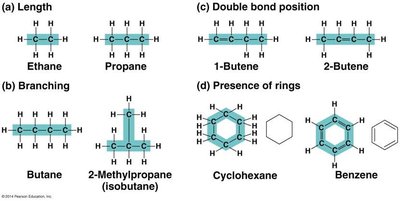
Macromolecules are large, complex molecules essential for life, including carbohydrates, nucleic acids, proteins, and lipids. They are primarily composed of carbon, which forms the backbone of biological molecules due to its ability to make four covalent bonds, allowing for diverse structures such as chains, rings, and branches.
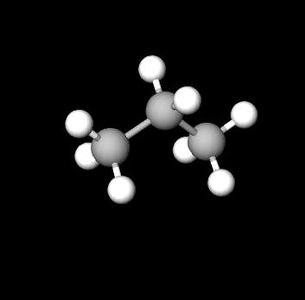
Carbon Chemistry: Carbon atoms can bond with hydrogen, oxygen, nitrogen, sulfur, phosphorus, and other carbons, forming a variety of molecular shapes.
Hydrocarbons: Molecules consisting only of carbon and hydrogen; they release energy when oxidized.
Functional Groups
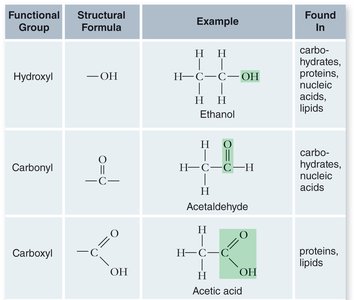
Functional groups are specific groups of atoms within molecules that determine the chemical reactivity and properties of those molecules. They behave consistently across different molecules and are critical in defining the roles of macromolecules in biological systems.
Hydroxyl (-OH): Found in alcohols; increases solubility in water.
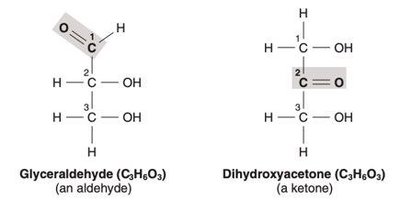
Carbonyl (C=O): Found in aldehydes and ketones; important in sugars.
Carboxyl (-COOH): Acts as an acid; found in amino acids and fatty acids.
Isomers
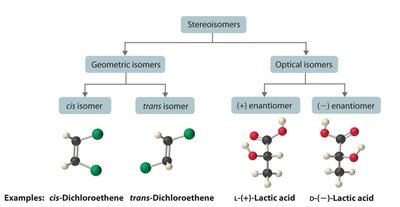
Isomers are molecules with the same molecular formula but different structures or spatial arrangements, leading to different properties.
Structural Isomers: Differ in the covalent arrangement of atoms.
Stereoisomers: Same covalent structure but differ in spatial arrangement of atoms.
Enantiomers: Mirror images of each other; important in biological systems (e.g., D-sugars, L-amino acids).
Formation and Breakdown of Polymers
Polymerization and Depolymerization
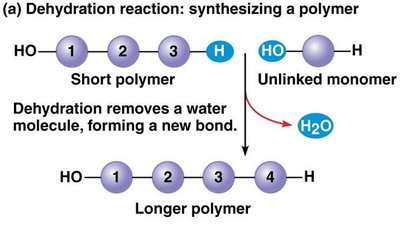
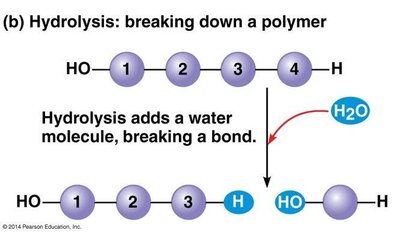
Macromolecules are often polymers, long chains of repeating units called monomers. The formation and breakdown of these polymers involve dehydration and hydrolysis reactions.
Dehydration Reaction: Joins monomers by removing a water molecule, forming a new covalent bond.
Hydrolysis Reaction: Breaks polymers into monomers by adding a water molecule.
Carbohydrates
Structure and Classification
Carbohydrates are organic molecules with the general formula (CH2O)n. They serve as energy sources and structural components in cells.
Monosaccharides: Simple sugars (3-7 carbons); e.g., glucose, ribose.
Disaccharides: Two monosaccharides joined by a glycosidic linkage; e.g., sucrose, maltose.
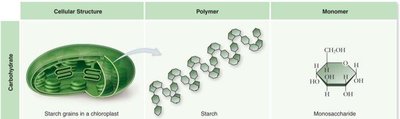
Polysaccharides: Long chains of monosaccharides; used for storage (starch, glycogen) or structure (cellulose, chitin).
Monosaccharides
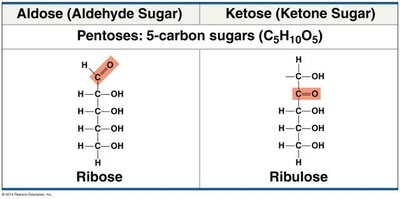
Monosaccharides are the simplest carbohydrates and can exist as straight chains or rings. They are classified by the number of carbon atoms and the position of the carbonyl group.
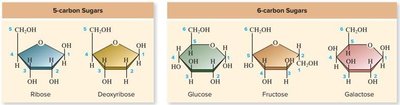
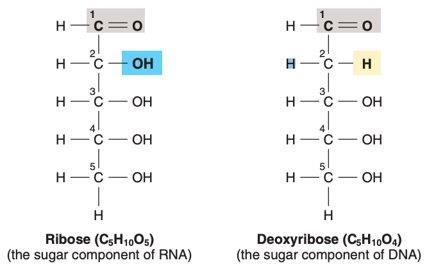
Pentoses: 5-carbon sugars (e.g., ribose, deoxyribose).
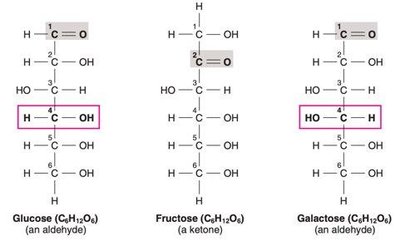
Hexoses: 6-carbon sugars (e.g., glucose, fructose, galactose).
Isomerism in Carbohydrates
Carbohydrates can exist as structural isomers (different arrangement of atoms) or stereoisomers (different spatial arrangement). For example, glucose and galactose are stereoisomers, while glucose and fructose are structural isomers.
Ring Formation and Anomeric Forms
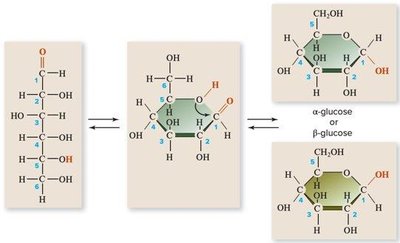
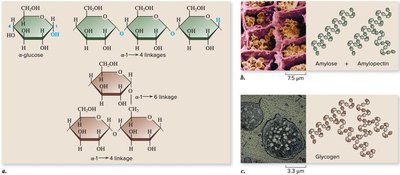
Monosaccharides with five or more carbons often form ring structures in aqueous solutions. Glucose can form α or β anomers, which differ in the orientation of the hydroxyl group at the anomeric carbon.
Disaccharides and Polysaccharides
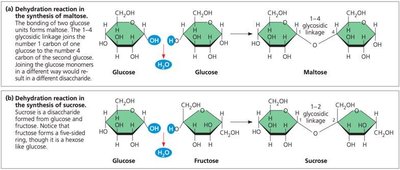
Disaccharides are formed by dehydration reactions between two monosaccharides, creating a glycosidic bond. Polysaccharides are long chains of monosaccharides and serve as energy storage or structural materials.
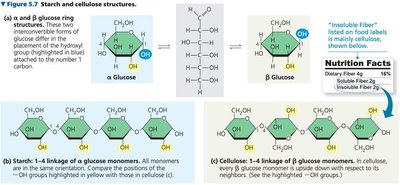
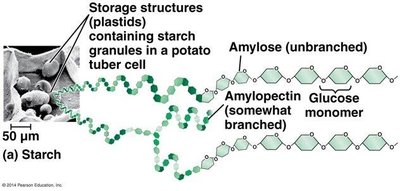
Starch: Storage polysaccharide in plants; composed of amylose (unbranched) and amylopectin (branched).
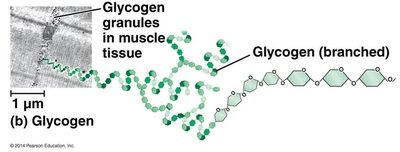
Glycogen: Storage polysaccharide in animals; highly branched.
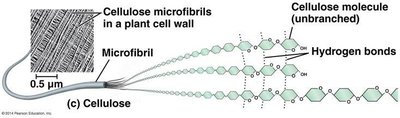
Cellulose: Structural polysaccharide in plant cell walls; composed of β-glucose units.
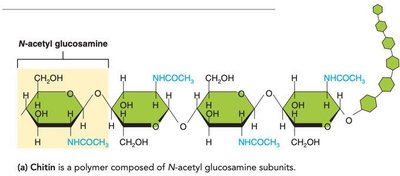
Chitin: Structural polysaccharide in arthropod exoskeletons; composed of N-acetyl glucosamine.
Nucleic Acids
Structure and Function
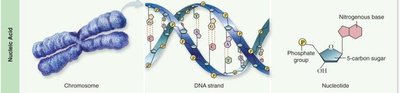
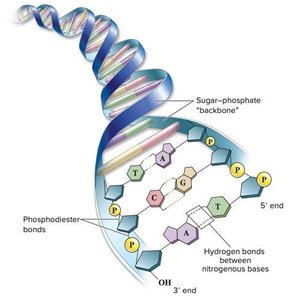
Nucleic acids are polymers of nucleotides and are responsible for storing and transmitting genetic information. There are two main types: DNA (deoxyribonucleic acid) and RNA (ribonucleic acid).
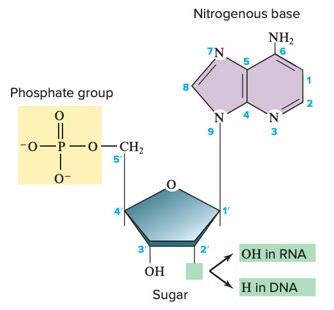
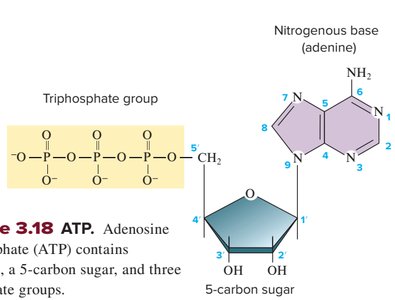
Nucleotide: Composed of a 5-carbon sugar, a phosphate group, and a nitrogenous base.
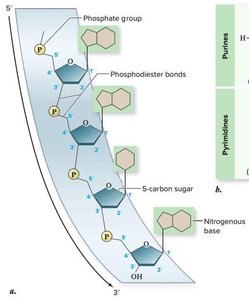
Phosphodiester Bond: Links nucleotides together, forming a sugar-phosphate backbone.
DNA and RNA
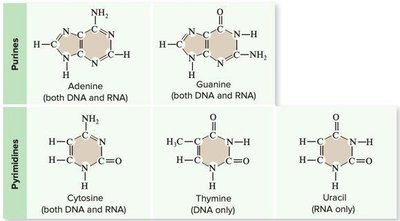
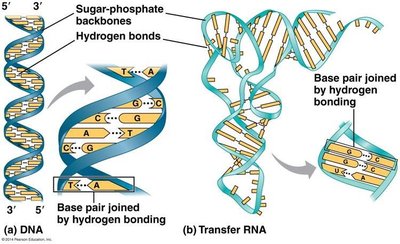
DNA consists of two antiparallel strands forming a double helix, with complementary base pairing (A-T, G-C). RNA is typically single-stranded but can form complex structures through internal base pairing.
DNA Bases: Adenine (A), Thymine (T), Cytosine (C), Guanine (G)
RNA Bases: Adenine (A), Uracil (U), Cytosine (C), Guanine (G)
Other Nucleotides
Some nucleotides serve as energy carriers (e.g., ATP) or electron carriers (e.g., NAD, FAD) in cells.
Proteins
Structure and Function
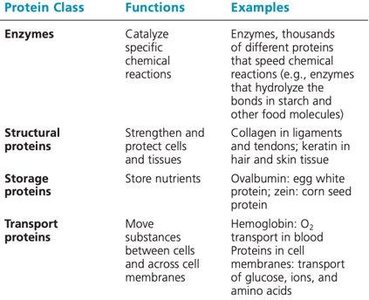
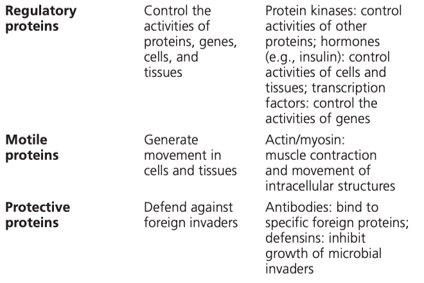
Proteins are polymers of amino acids linked by peptide bonds. They perform a vast array of functions, including catalysis, structure, transport, regulation, movement, and defense.
Amino Acid: Contains a central (α) carbon, amino group, carboxyl group, hydrogen atom, and variable R group (side chain).
Peptide Bond: Covalent bond formed by dehydration between amino and carboxyl groups of adjacent amino acids.
Levels of Protein Structure
The function of a protein is determined by its structure, which is organized into four levels:
Primary Structure: Sequence of amino acids.
Secondary Structure: Local folding into α-helices and β-pleated sheets stabilized by hydrogen bonds.
Tertiary Structure: Overall 3D shape formed by interactions among side chains (hydrophobic interactions, hydrogen bonds, ionic bonds, disulfide bridges).
Quaternary Structure: Association of multiple polypeptide chains into a functional protein.
Lipids
Structure and Function
Lipids are a diverse group of hydrophobic molecules, including fats, phospholipids, and steroids. They are characterized by long hydrocarbon chains and are important for energy storage, membrane structure, and signaling.
Fats (Triglycerides): Composed of glycerol and three fatty acids; used for energy storage, insulation, and protection.
Phospholipids: Major component of cell membranes; consist of glycerol, two fatty acids, and a phosphate group with an additional polar group.
Steroids: Lipids with a characteristic four-ring structure; include hormones like cholesterol.
Phospholipid Bilayer
In aqueous environments, phospholipids spontaneously form bilayers, which are the foundation of biological membranes. The hydrophilic heads face outward toward water, while the hydrophobic tails face inward, away from water.
Macromolecule | Monomer | Bond Type | Example |
|---|---|---|---|
Carbohydrate | Monosaccharide | Glycosidic linkage | Starch, cellulose |
Protein | Amino acid | Peptide bond | Enzyme, collagen |
Nucleic Acid | Nucleotide | Phosphodiester bond | DNA, RNA |
Lipid | Fatty acid, glycerol | Ester linkage | Triglyceride, phospholipid |
Additional info: This summary covers the essential chemistry and biology of macromolecules, including their structure, function, and importance in living organisms. Understanding these molecules is foundational for further study in cell biology, genetics, and physiology.
