 뒤로
뒤로Microbial Life, Plant Evolution, and Fungal Diversity: Study Notes for General Biology
스터디 가이드 - 스마트 노트
 자료에 맞춘 맞춤형 노트, 핵심 정의, 예시, 맥락을 확장해 제공합니다.
Microbial Life: Prokaryotes and Protists
Introduction to Microbial Life
Microorganisms are abundant in and on the human body, outnumbering human cells. Disruption of these microbial communities can increase susceptibility to diseases and contribute to various health conditions.
Microbial communities play essential roles in health and disease.
Examples of conditions linked to microbial imbalance: asthma, allergies, irritable bowel syndrome, Crohn’s disease, autism.
Prokaryotes: Diversity and Classification
Prokaryotes are single-celled organisms lacking a nucleus. They are classified into two domains: Bacteria and Archaea. Their collective biomass is immense, and they impact both the environment and human health.
Prokaryotic cells are smaller than eukaryotic cells.
Domains: Bacteria and Archaea.
Prokaryotes are widespread and diverse.
Prokaryotic Cell Shapes and External Features
Cell shape is a key identifier for prokaryotes. Common shapes include:
Cocci: Spherical
Bacilli: Rod-shaped
Spirilla: Short, rigid spirals
Spirochetes: Long, flexible spirals
Most prokaryotes have a cell wall, which can be classified by Gram staining:
Gram-positive: Thick peptidoglycan layer
Gram-negative: Thinner wall, stains differently
Other features: sticky capsule, flagella, fimbriae
Adaptation and Nutritional Diversity
Prokaryotes adapt rapidly due to fast population growth and genetic variation. Some form endospores to survive harsh conditions. They exhibit unparalleled nutritional diversity:
Phototrophs: Capture energy from sunlight
Chemotrophs: Harness energy from chemicals
Biofilms and Environmental Impact
Prokaryotes form biofilms—complex communities attached to surfaces. These are difficult to eradicate and can cause medical and environmental issues. Prokaryotes are also used in bioremediation to clean up pollutants.
Biofilms: Organized microbial communities
Bioremediation: Use of organisms to remove pollutants
Bacteria and Archaea: Evolution and Diversity
Advances in genetics show that Archaea are more closely related to Eukarya than to Bacteria. Archaea thrive in extreme environments, while Bacteria are diverse and include groups such as Proteobacteria, Gram-positive bacteria, Cyanobacteria, Chlamydias, and Spirochetes.
Archaea: Extreme halophiles, thermophiles, methanogens
Bacteria: Proteobacteria, Gram-positive, Cyanobacteria, Chlamydias, Spirochetes
Pathogenic Bacteria
Some bacteria cause disease by producing exotoxins (secreted proteins) or endotoxins (lipid components released upon cell death). Examples include Staphylococcus aureus, Clostridium botulinum, and Treponema pallidum.
Exotoxins: Secreted proteins causing disease
Endotoxins: Lipid components released from dead cells
Protists: Diversity and Classification
Protists are mostly unicellular eukaryotes found in aquatic environments. They can be autotrophic (algae), heterotrophic (protozoans), or mixotrophic. Protist diversity is organized into four supergroups: SAR, Excavata, Unikonta, and Archaeplastida.
SAR: Stramenopila, Alveolata, Rhizaria
Excavata: Modified mitochondria, includes Giardia, Trichomonas, Trypanosomas
Unikonta: Amoebozoans, fungi, animals
Archaeplastida: Red algae, green algae, land plants
The Evolution of Plant and Fungal Diversity
Plant Evolution and Adaptations
Plants evolved from algal ancestors and adapted to life on land. Adaptations include mechanisms to maintain moisture, support the body, reproduce without water, anchor in soil, and obtain resources.
Opportunities: Sunlight, CO2, few pathogens
Challenges: Moisture retention, structural support, reproduction, anchorage, resource acquisition
Plant Diversity and Evolutionary History
Three key events mark plant evolution: origin of land plants, vascular plants, and seed plants. Plant groups include nonvascular plants (bryophytes), seedless vascular plants (lycophytes, monilophytes), and seed plants (gymnosperms, angiosperms).
Bryophytes: Mosses, hornworts, liverworts
Seedless vascular plants: Club mosses, ferns
Seed plants: Gymnosperms (cones), Angiosperms (flowers)
Alternation of Generations and Plant Life Cycles
Many plants exhibit alternation of generations, with haploid gametophyte and diploid sporophyte stages. Seedless vascular plants dominated ancient coal forests, contributing to fossil fuel formation.
Alternation of generations: Life cycle alternates between gametophyte (n) and sporophyte (2n)
Coal formation: Ancient plants formed peat, which became coal
Pollen, Seeds, and Angiosperm Reproduction
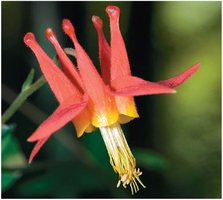
Pollen grains carry sperm-producing cells through the air. Fertilization leads to seed formation, with stored food and protective coat. Flowers are the reproductive centers of angiosperms, housing male and female structures.
Pollen: Sperm transport
Seeds: Embryo protection and dispersal
Flowers: Sites of pollination and fertilization
Fruit Structure and Seed Dispersal
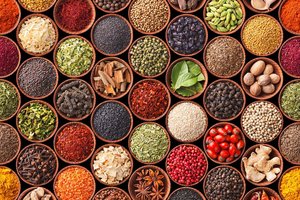
Fruits are ripened ovaries that aid in seed dispersal by wind, animals, or being edible. Angiosperms provide much of our food and spices.
Seed dispersal: Wind, animal transport, edible fruits
Food and spices: Grains, fruits, spices from angiosperms
Pollination and Angiosperm Evolution
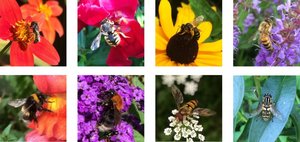
Animal pollinators are attracted by flower color and scent, receiving nectar and pollen as rewards. This mutualism has influenced angiosperm evolution.
Pollinators: Bees, birds, insects
Mutualism: Flowers provide rewards, pollinators aid reproduction
Plant Diversity and Food Supply
Loss of plant biodiversity threatens the world’s food supply. New crops may arise from locally used species, emphasizing the importance of conservation.
Major crops: Rice, wheat, corn, soybeans
Biodiversity: Essential for future food security
Diversity of Fungi
Fungal Nutrition and Structure
Fungi are heterotrophic eukaryotes that absorb nutrients after external digestion. Their bodies consist of hyphae, forming a mycelium. Mycorrhizae are symbiotic associations with plant roots, aiding nutrient absorption.
Hyphae: Threadlike filaments
Mycelium: Mass of hyphae
Mycorrhizae: Symbiosis with plant roots
Fungal Reproduction
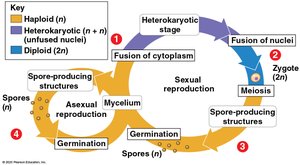
Fungi produce spores in both asexual and sexual cycles. Fusion of haploid hyphae leads to a heterokaryotic stage, followed by nuclear fusion and meiosis.
Asexual reproduction: Spore production and germination
Sexual reproduction: Fusion of cytoplasm and nuclei, meiosis
Fungal Classification and Ecological Roles
Fungi are classified into five groups: Zygomycetes, Glomeromycetes, Ascomycetes, Basidiomycetes, and Chytrids. They are essential decomposers and symbionts, supplying nutrients and breaking down organic matter.
Decomposers: Recycle nutrients
Symbionts: Mycorrhizae, lichens
Bioremediation: Digest petroleum products
Practical Uses and Harmful Effects of Fungi
Fungi are used in food production, antibiotics, and biotechnology. Some are parasitic, causing diseases in plants and animals.
Food: Mushrooms, cheeses, bread, alcohol
Antibiotics: Penicillin, streptomycin
Diseases: Ringworm, athlete’s foot, yeast infections
Lichens and Mycorrhizae
Lichens are symbiotic associations of fungi and photosynthetic organisms. Mycorrhizae may have helped plants colonize land, as evidenced by present-day relationships, fossils, and molecular genetics.
Lichens: Fungi + algae/cyanobacteria
Mycorrhizae: Fungi + plant roots
Additional info: These notes expand on brief points with academic context, definitions, and examples to provide a comprehensive study guide for General Biology students.
