 뒤로
뒤로Photosynthesis: Light-Dependent and Light-Independent Reactions
스터디 가이드 - 스마트 노트
 자료에 맞춘 맞춤형 노트, 핵심 정의, 예시, 맥락을 확장해 제공합니다.
Photosynthesis
Overview of Photosynthesis
Photosynthesis is a fundamental biological process by which plants, algae, and some bacteria convert light energy into chemical energy, producing food and oxygen essential for life. It consists of two main stages: the light-dependent reactions and the light-independent reactions (Calvin Cycle).
Photosynthesis occurs in the chloroplasts of plant cells.
It requires light energy from the sun, water from the soil, and carbon dioxide from the air.
The process produces glucose (food) and releases oxygen as a by-product.
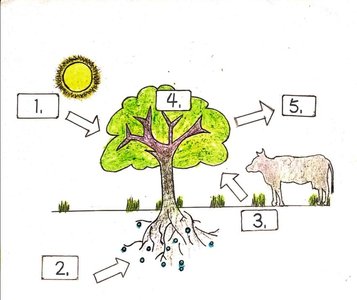
Heterotrophs vs. Autotrophs
Heterotrophs: Organisms that cannot make their own food and rely on other organisms for nutrition (e.g., humans, fungi).
Autotrophs: Organisms that produce their own food using light or chemical energy (e.g., plants, algae).
Photoautotrophs: Autotrophs that use light energy to synthesize organic substances.
Plant Cell Chloroplasts
Structure and Function of Chloroplasts
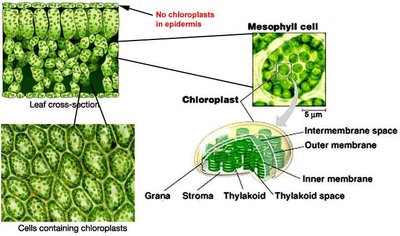
Chloroplasts are specialized organelles in plant cells responsible for photosynthesis. They contain the green pigment chlorophyll, which absorbs light energy.
Chloroplasts are found mainly in the mesophyll cells of leaves.
They have a double membrane: outer and inner.
The stroma is the fluid inside the inner membrane.
Thylakoids are disc-shaped sacs suspended in the stroma, organized into stacks called grana.
Chlorophyll and photosystems are embedded in the thylakoid membrane.
Light-Dependent Reactions
Mechanism and Events
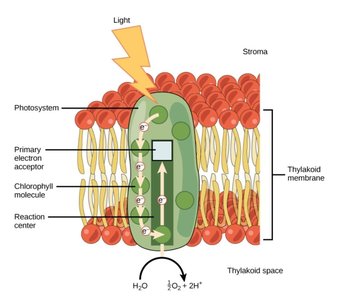
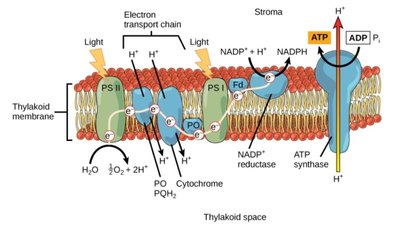
The light-dependent reactions occur in the thylakoid membranes and convert solar energy into chemical energy in the form of ATP and NADPH.
Light is absorbed by photosystem II, exciting electrons in chlorophyll.
Excited electrons are transferred through the electron transport chain.
Water is split, releasing electrons, protons (H+), and oxygen (O2).
Electrons are re-excited in photosystem I and transferred to NADP+ to form NADPH.
Hydrogen ions build up in the thylakoid space, creating a concentration gradient.
ATP is synthesized as H+ ions flow through ATP synthase (chemiosmosis).
Key Terms
Photosystem: A cluster of chlorophyll and proteins that absorb light.
Electron Transport Chain: Series of proteins that transfer electrons and pump H+ ions.
ATP Synthase: Enzyme that synthesizes ATP from ADP and inorganic phosphate.
NADPH: Electron carrier produced in light reactions.
Chemiosmosis: Movement of ions across a semipermeable membrane, generating ATP.
Summary Table: Main Steps of Light-Dependent Reactions
Step | Description |
|---|---|
1. Light Absorption | Photosystem II absorbs light, exciting electrons. |
2. Electron Transport | Electrons move through the electron transport chain. |
3. Water Splitting | Water is split, releasing O2, H+, and electrons. |
4. ATP Formation | H+ gradient powers ATP synthase. |
5. NADPH Formation | Electrons reduce NADP+ to NADPH. |
Calvin Cycle (Light-Independent Reactions)
Overview and Key Events
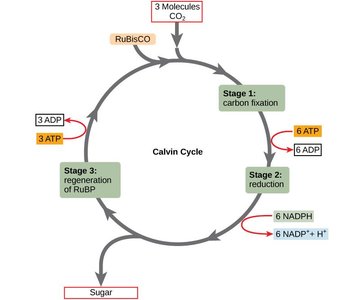
The Calvin Cycle takes place in the stroma of the chloroplast and uses ATP and NADPH from the light-dependent reactions to synthesize glucose from carbon dioxide.
The cycle is not directly dependent on light but requires products of the light-dependent reactions.
It consists of three main stages: carbon fixation, reduction, and regeneration of RuBP.
Key Terms
RuBisCO: Enzyme that catalyzes the fixation of CO2 to RuBP.
Ribulose bisphosphate (RuBP): Five-carbon molecule that reacts with CO2.
3-PGA: Three-carbon compound formed after CO2 fixation.
G3P: Three-carbon compound produced by reduction of 3-PGA.
Stages of the Calvin Cycle
Carbon Fixation:
Reduction: ATP and NADPH are used to convert 3-PGA into G3P.
Regeneration: Some G3P molecules are used to regenerate RuBP, enabling the cycle to continue.

Summary Table: Calvin Cycle Stages
Stage | Main Event | Key Molecules |
|---|---|---|
1. Carbon Fixation | CO2 fixed to RuBP | RuBisCO, RuBP, 3-PGA |
2. Reduction | 3-PGA converted to G3P | ATP, NADPH, G3P |
3. Regeneration | RuBP regenerated | ATP, G3P |
Importance of Photosynthesis
Photosynthesis provides food (glucose) for plants and oxygen for all aerobic organisms.
It is the foundation of energy flow in ecosystems.
Light-dependent reactions produce ATP and NADPH, which are essential for the Calvin Cycle.
The Calvin Cycle enables the conversion of inorganic carbon (CO2) into organic molecules (glucose).
Key Equations
Overall Photosynthesis Equation
ATP Formation (Chemiosmosis)
NADPH Formation
Conclusion
Photosynthesis is a complex but essential process for life on Earth. Understanding the light-dependent and light-independent reactions provides insight into how plants convert solar energy into chemical energy, supporting all living organisms.
References
Campbell, Neil A., Reece, Jane B., et al. Biology, 8th Edition. Pearson Education, Inc.: San Francisco, 2008
Morales-Ramos AC, Ramos JD. Exploring life through science series. Senior High School, General Biology I. Phoenix Publishing House: Quezon City, Metro Manila, 2017
Photosynthesis student worksheet. www.BioInteractive.org
The light-dependent reactions of photosynthesis. opentextbc.ca
ER Services Biology 1 The Calvin Cycle: https://courses.lumenlearning.com/suny-biology1/chapter/the-calvin-cycle/
