 뒤로
뒤로Photosynthesis: Structure, Function, and Mechanisms
스터디 가이드 - 스마트 노트
 자료에 맞춘 맞춤형 노트, 핵심 정의, 예시, 맥락을 확장해 제공합니다.
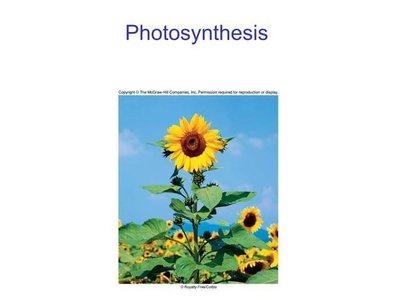
Photosynthesis
Introduction to Photosynthesis
Photosynthesis is the process by which energy from sunlight is captured and used to convert carbon dioxide and water into organic molecules, primarily glucose. This process is fundamental for life on Earth, as it provides the energy and organic matter required by most living organisms.
Photosynthesis Overview
General Equation and Organisms
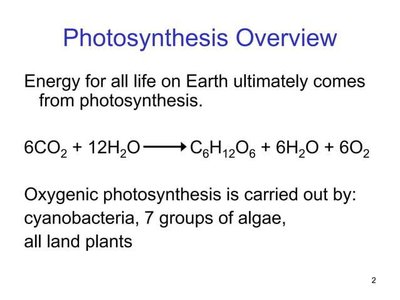
Energy Source: All life on Earth ultimately depends on the energy captured by photosynthesis.
Overall Equation:
Oxygenic Photosynthesis: Performed by cyanobacteria, seven groups of algae, and all land plants.
Major Stages of Photosynthesis
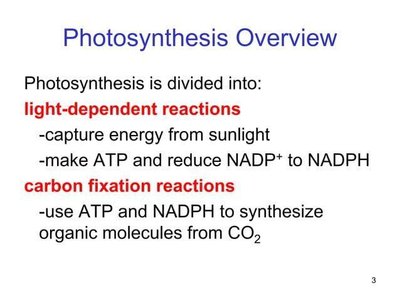
Light-dependent reactions: Capture energy from sunlight, produce ATP, and reduce NADP+ to NADPH.
Carbon fixation reactions (Calvin Cycle): Use ATP and NADPH to synthesize organic molecules from CO2.
Chloroplast Structure and Function
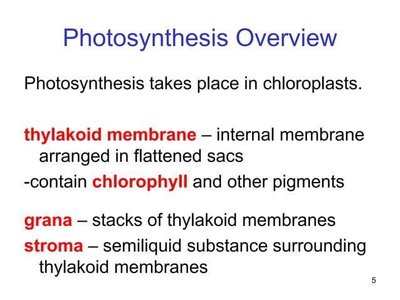
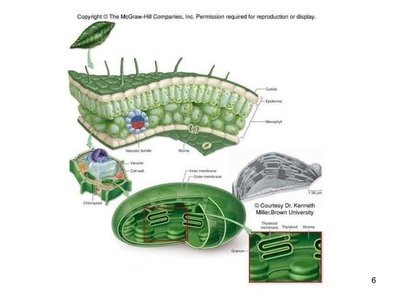
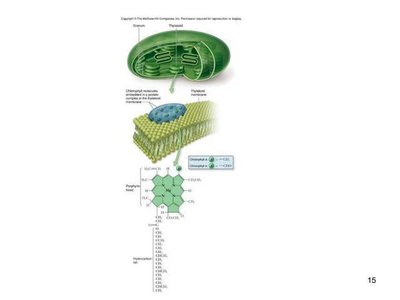
Photosynthesis occurs in chloroplasts, which contain specialized internal membranes and pigments.
Thylakoid membrane: Internal membrane arranged in flattened sacs; contains chlorophyll and other pigments.
Grana: Stacks of thylakoid membranes.
Stroma: Semiliquid substance surrounding thylakoid membranes.
Discovery of Photosynthesis
Key Historical Experiments
Jan Baptista van Helmont (1580–1644): Early studies on plant growth and water uptake.
Joseph Priestley (1733–1804): Discovered that plants restore air that has been "injured" by burning candles.
Jan Ingen-Housz (1730–1799): Showed that sunlight is essential for plants to purify air.
F. F. Blackman (1866–1947): Distinguished between light-dependent and light-independent reactions.
Further Advances
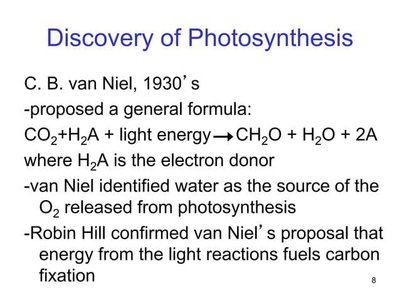
C. B. van Niel (1930s): Proposed a general formula for photosynthesis and identified water as the source of oxygen released.
General Formula:
Where H2A is the electron donor.
Robin Hill: Confirmed that energy from light reactions fuels carbon fixation.
Pigments and Light Absorption
Nature of Light and Pigments
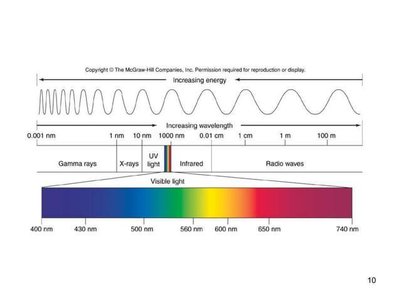
Photon: A particle of light, acts as a discrete bundle of energy. The energy content is inversely proportional to the wavelength.
Photoelectric effect: Removal of an electron from a molecule by light, transferring energy to electrons.
Pigments and Absorption Spectrum
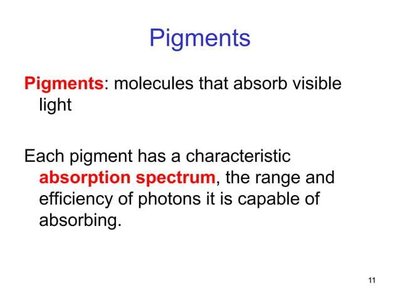
Pigments: Molecules that absorb visible light.
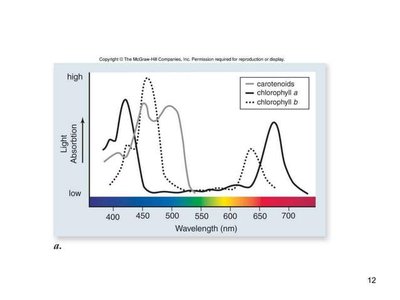
Each pigment has a characteristic absorption spectrum, the range and efficiency of photons it can absorb.
Types of Pigments
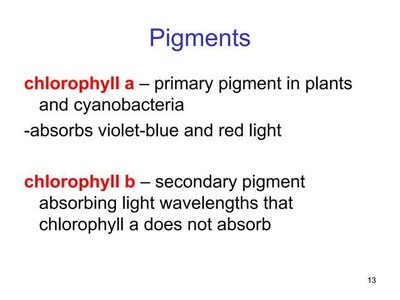
Chlorophyll a: Primary pigment in plants and cyanobacteria; absorbs violet-blue and red light.
Chlorophyll b: Secondary pigment; absorbs light wavelengths that chlorophyll a does not absorb.
Pigment Structure
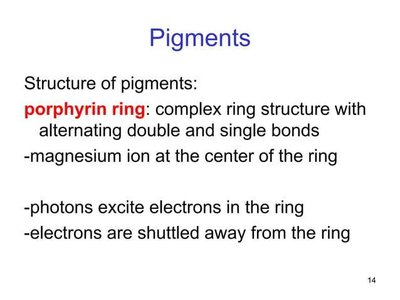
Porphyrin ring: Complex ring structure with alternating double and single bonds; contains a magnesium ion at the center.
Photons excite electrons in the ring, which are then shuttled away from the ring.
Accessory Pigments
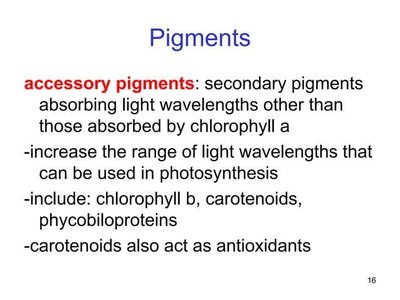
Accessory pigments: Secondary pigments that absorb light wavelengths not absorbed by chlorophyll a, increasing the range of usable light.
Include chlorophyll b, carotenoids, and phycobiloproteins.
Carotenoids also act as zantioxidants.
Carotenoids and Phycobiloproteins
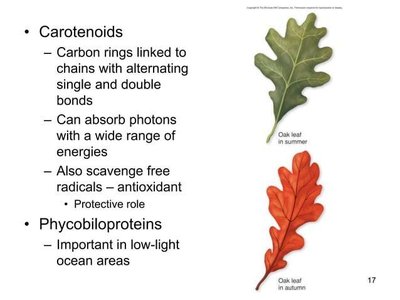
Carotenoids: Carbon rings linked to chains with alternating single and double bonds; absorb photons with a wide range of energies and scavenge free radicals (antioxidant role).
Phycobiloproteins: Important in low-light ocean areas.
Photosystem Organization
Structure and Function
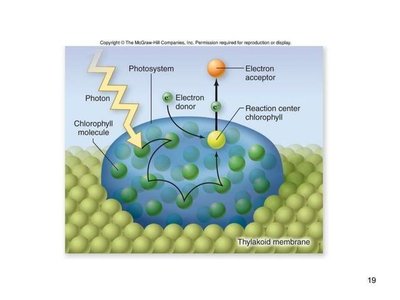
A photosystem consists of:
Antenna complex: Hundreds of accessory pigment molecules.
Reaction center: One or more chlorophyll a molecules.
Energy of electrons is transferred through the antenna complex to the reaction center.
Reaction Center Dynamics
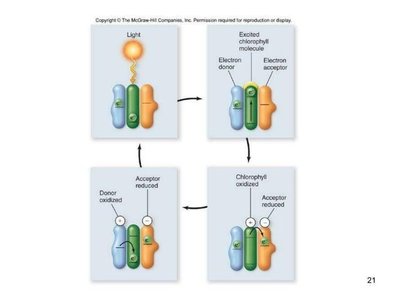
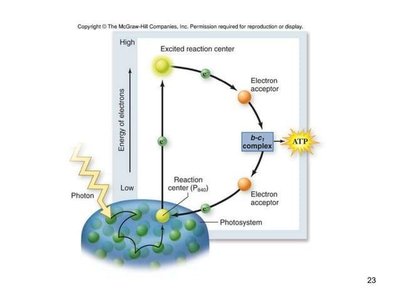
At the reaction center, energy from the antenna complex is transferred to chlorophyll a, exciting an electron.
The excited electron is transferred to an electron acceptor.
Water donates an electron to chlorophyll a to replace the excited electron.
Light-Dependent Reactions
Stages of Light-Dependent Reactions
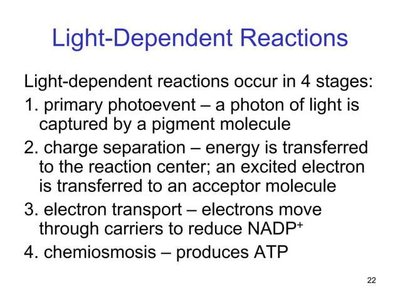
Occur in four stages:
Primary photoevent: Photon of light is captured by a pigment molecule.
Charge separation: Energy is transferred to the reaction center; an excited electron is transferred to an acceptor molecule.
Electron transport: Electrons move through carriers to reduce NADP+.
Chemiosmosis: Produces ATP.
Cyclic and Noncyclic Photophosphorylation
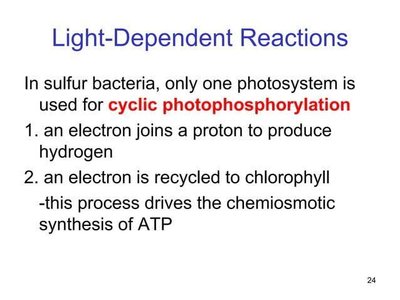
Cyclic photophosphorylation: In sulfur bacteria, only one photosystem is used; electrons are recycled to chlorophyll, driving ATP synthesis.
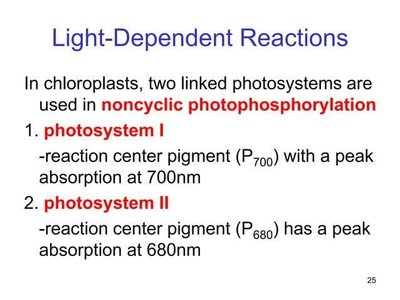
Noncyclic photophosphorylation: In chloroplasts, two linked photosystems are used:
Photosystem I: Reaction center pigment (P700) with peak absorption at 700 nm.
Photosystem II: Reaction center pigment (P680) with peak absorption at 680 nm.
Example: In green plants, both photosystems work together to maximize the efficiency of light energy conversion into chemical energy, producing both ATP and NADPH for the Calvin cycle.
