 뒤로
뒤로Phylogeny and the Tree of Life: Structured Study Notes
스터디 가이드 - 스마트 노트
 자료에 맞춘 맞춤형 노트, 핵심 정의, 예시, 맥락을 확장해 제공합니다.
Phylogeny and the Tree of Life
Investigating the Tree of Life
Phylogeny is the study of the evolutionary history and relationships among organisms. Systematics is the scientific discipline focused on classifying organisms and determining their evolutionary relationships. Together, these fields help scientists reconstruct the 'Tree of Life,' which illustrates how all living things are related through common ancestry.
Binomial Nomenclature
Binomial nomenclature is a formal system of naming species using two Latinized names: the genus and the species. This system, introduced by Linnaeus, provides a universal language for scientists and helps avoid confusion caused by local names.
Rules: The genus name is capitalized, the species name is lowercase, and both are italicized (e.g., Panthera pardus).
Usefulness: Ensures clarity and consistency in scientific communication.

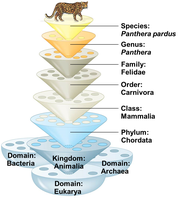
Hierarchical Classification
Linnaeus introduced a hierarchical system for grouping species into increasingly inclusive categories. This system organizes life from broad to specific levels: Domain, Kingdom, Phylum, Class, Order, Family, Genus, and Species.
Example: The classification of the leopard (Panthera pardus)
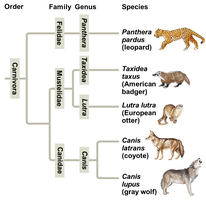
Linking Classification and Phylogeny
Linnaean classification can reflect the branching patterns of phylogenetic trees, but sometimes the two systems differ. Phylogenetic trees show evolutionary relationships, while classification groups organisms based on shared characteristics.
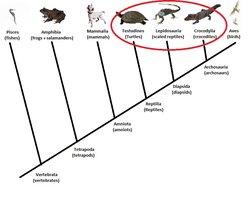
What We Can and Cannot Learn from Phylogenetic Trees
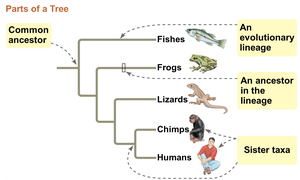
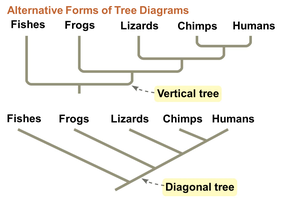
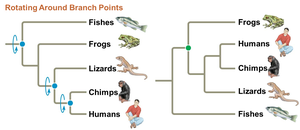
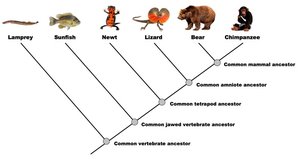
Phylogenetic trees are diagrams that represent evolutionary relationships. They can be drawn in various orientations (horizontal, vertical, diagonal) without changing the relationships depicted. Branches can be rotated around a branch point, and trees should be rooted to show the direction of evolution.
Phylogenetic trees do not indicate when species evolved or how much change occurred.
Basal taxon: A lineage that diverges early from the rest of the group.
How Do Systematists Make Phylogenies?
Systematists construct phylogenies by identifying homologies—similarities due to shared ancestry. They use morphological, molecular, and genetic data to infer relationships.
Evaluating Molecular Homologies
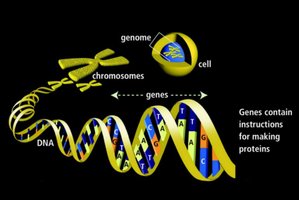
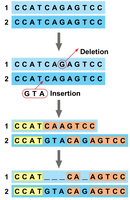
Systematists use computer programs and mathematical tools to compare DNA sequences and evaluate molecular homologies. These analyses help distinguish between homology (shared ancestry) and analogy (convergent evolution).
Sorting Homology from Analogy
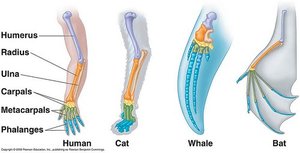
It is crucial to distinguish homology (similarity due to common ancestry) from analogy (similarity due to convergent evolution). Homologous structures have similar anatomy but may serve different functions, while analogous structures serve similar functions but have different evolutionary origins.
Cladistics
Cladistics is a method of systematics that groups organisms into clades based on common ancestry. A clade is a group of organisms that includes an ancestor and all its descendants.
Monophyletic group: Includes a common ancestor and all its descendants.
Paraphyletic group: Includes a common ancestor and some, but not all, descendants.
Polyphyletic group: Includes organisms from different ancestors.
Shared Ancestral and Shared Derived Characters
Organisms possess both shared ancestral characters (traits present in the ancestor) and shared derived characters (traits unique to a clade). Identifying these characters helps infer evolutionary relationships.
Inferring Phylogenies Using Derived Characters
Knowing when a shared derived character first appeared in a clade is useful for constructing phylogenies. Derived characters help define evolutionary branches.
Phylogenetic Trees with Proportional Branch Lengths
Branch length in phylogenetic trees can represent the number of genetic changes or the passage of time. This allows for a more quantitative understanding of evolutionary relationships.
Maximum Parsimony
The principle of maximum parsimony states that the simplest explanation, requiring the fewest evolutionary changes, is preferred when constructing phylogenetic trees.
Phylogenetic Trees as Hypotheses
Phylogenetic trees are hypotheses about evolutionary relationships. The best tree fits the most data, including morphological, molecular, and fossil evidence.
The Important Role of Horizontal Gene Transfer
Horizontal gene transfer is the movement of genes from one genome to another, often between different species. This process can complicate the reconstruction of evolutionary relationships, especially among prokaryotes.
Eukaryotes: Can acquire nuclear genes from bacteria and archaea.
Summary Table: Types of Groups in Cladistics
Group Type | Definition | Example |
|---|---|---|
Monophyletic | Includes ancestor and all descendants | Mammals |
Paraphyletic | Includes ancestor and some descendants | Reptiles (excluding birds) |
Polyphyletic | Includes organisms from different ancestors | Marine mammals (whales and seals) |
Key Terms and Concepts
Phylogeny: Evolutionary history of a species or group.
Systematics: Study of biological diversity and relationships.
Clade: Group of organisms with a common ancestor.
Homology: Similarity due to shared ancestry.
Analogy: Similarity due to convergent evolution.
Maximum Parsimony: Principle favoring the simplest explanation.
Horizontal Gene Transfer: Movement of genes between genomes.
Equations and Formulas
While phylogenetic analysis is often qualitative, molecular systematics uses mathematical models to compare DNA sequences. For example, sequence alignment algorithms calculate the minimum number of changes:
Example: Phylogenetic Tree Construction
Scientists use morphological and molecular data to construct phylogenetic trees, applying maximum parsimony and evaluating homologies to infer evolutionary relationships.
Application: Understanding the evolutionary history of vertebrates, plants, and other groups.
Additional info: Some images and content were inferred to provide a complete academic context for General Biology students.
