 뒤로
뒤로Population Ecology: Demographic Transitions and Control of Population Growth
스터디 가이드 - 스마트 노트
 자료에 맞춘 맞춤형 노트, 핵심 정의, 예시, 맥락을 확장해 제공합니다.
Population Ecology
Demographic Transition in Human Populations
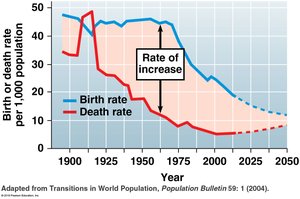
Demographic transition describes the shift in birth and death rates that typically occurs as a society industrializes and urbanizes. This process has significant effects on population growth rates over time.
Stable Population Size: When the rate of population change () is zero, births (B) balance deaths (D), and the population size remains stable.
Agrarian Populations: Traditionally, both birth and death rates are high in agrarian societies, resulting in slow population growth.
Transition Phase: Death rates often decline before birth rates due to improvements in healthcare, sanitation, and food supply, leading to a period of rapid population growth.
Urbanization: As societies become more urbanized, birth rates eventually decline, and population growth slows, returning to stability ().
Example: Many countries have experienced rapid population growth during the demographic transition, followed by stabilization as birth rates decrease.
Control of Population Growth
Factors Affecting Population Growth Rates
Population growth is regulated by a combination of density-dependent and density-independent factors. These factors determine how populations increase, stabilize, or decline over time.
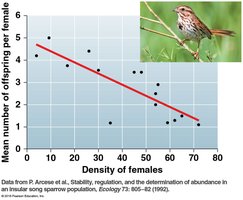
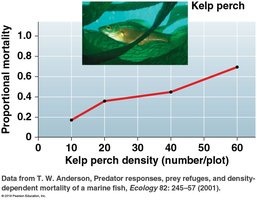
Density-Dependent Factors: These are biological factors whose effects intensify as population density increases. Examples include competition for resources, territoriality, disease, accumulation of toxic wastes, and intrinsic physiological or behavioral factors.
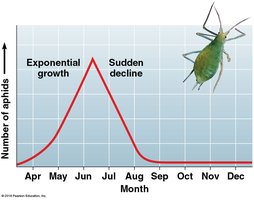
Density-Independent Factors: These are abiotic or external factors that affect population size regardless of density, such as weather events, natural disasters, or human activities.
Example: A sudden drought (density-independent) can reduce a population, while increased competition for food (density-dependent) can limit growth as numbers rise.
Density-Dependent Regulation: Examples
Competition for Resources: As population density increases, individuals compete more intensely for limited resources, reducing birth rates and/or increasing death rates.
Territoriality: Some species defend territories, limiting the number of individuals that can occupy a given area.
Disease: Pathogens spread more easily in dense populations, increasing mortality rates.
Toxic Wastes: Accumulation of waste products can inhibit survival and reproduction.
Intrinsic Factors: Internal physiological or behavioral changes can reduce reproductive rates at high densities.
Density-Independent Regulation: Example
Environmental Fluctuations: Weather, climate, and catastrophic events can cause sudden changes in population size, independent of density.
Population Cycles and Interactions
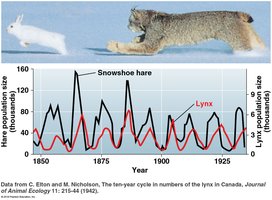
Some populations exhibit regular cycles of growth and decline, often driven by interactions with other species (e.g., predator-prey relationships).
Predator-Prey Dynamics: The population sizes of predators and their prey can oscillate in response to each other, as seen in the classic example of lynx and snowshoe hare populations.
Summary Table: Density-Dependent vs. Density-Independent Factors
Factor Type | Examples | Effect on Population |
|---|---|---|
Density-Dependent | Competition, Disease, Territoriality, Toxic Wastes, Intrinsic Factors | Regulates population size by increasing mortality or decreasing birth rates as density rises |
Density-Independent | Weather, Natural Disasters, Human Activities | Causes population changes regardless of density |
Key Equations
Population Growth Rate:
Logistic Growth Model (incorporating carrying capacity K):
Where: N = population size, r = intrinsic rate of increase, K = carrying capacity.
Additional info: The images provided illustrate key concepts such as demographic transition, density-dependent regulation, and population cycles, reinforcing the importance of both biotic and abiotic factors in population ecology.
