 뒤로
뒤로Principles of Biology: Chemistry of Life and Atomic Structure
스터디 가이드 - 스마트 노트
 자료에 맞춘 맞춤형 노트, 핵심 정의, 예시, 맥락을 확장해 제공합니다.
Introduction to Biology
What is Biology?
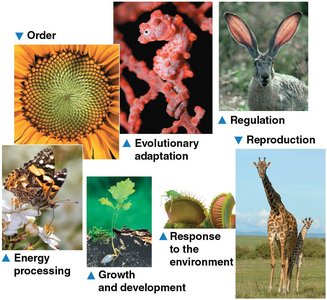
Biology is the scientific study of life, encompassing a vast scope of phenomena. Although life is difficult to define precisely, it is recognized by the activities and characteristics of living organisms. The study of life is organized around five broad themes: organization, information, energy and matter, interactions, and evolution.
Organization: Living things exhibit complex and ordered structures.
Information: Genetic information guides growth, development, and functioning.
Energy and Matter: Organisms require energy and matter for survival and reproduction.
Interactions: Organisms interact with their environment and other organisms.
Evolution: Life evolves through adaptation and natural selection.
Chemistry of Life
Elements, Compounds, and Chemical Bonding
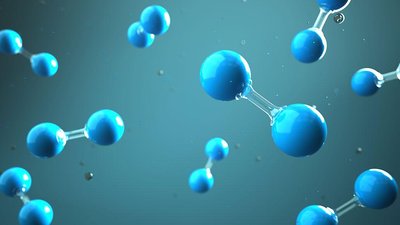
The foundation of biological processes lies in chemistry. Matter, which has mass and occupies space, is composed of elements. Elements are substances that cannot be chemically broken down into simpler substances and consist of only one type of atom. Compounds are substances formed from two or more elements in fixed ratios, possessing unique chemical properties.
Essential Elements: About 20-25% of the 92 natural elements are essential for life. Four elements—oxygen (O), carbon (C), hydrogen (H), and nitrogen (N)—make up 96% of living matter.
Trace Elements: Required in minute amounts, such as iron (Fe) and iodine (I).
Toxic Elements: Some elements, like arsenic, are toxic to organisms.
Atomic Structure
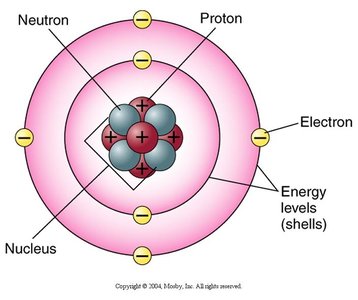
An atom is the smallest unit of matter that retains the properties of an element. Atoms are composed of three subatomic particles: protons (positively charged), neutrons (no charge), and electrons (negatively charged). Protons and neutrons reside in the nucleus, while electrons orbit the nucleus.
Atomic Number: The number of protons in the nucleus, unique to each element.
Mass Number: The sum of protons and neutrons in the nucleus.
Dalton: Unit of mass for subatomic particles; 1 Dalton = g.
Atomic Number and Atomic Mass
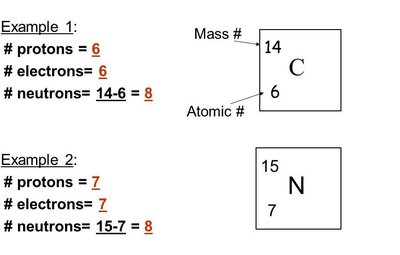
All atoms of a particular element have the same number of protons. The atomic number is written as a subscript to the left of the element symbol, while the mass number is written as a superscript.
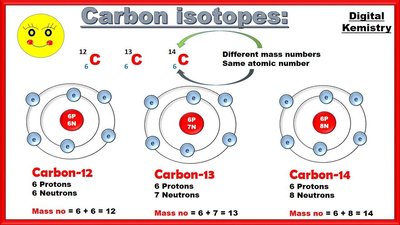
Example: Carbon-14 has 6 protons and 8 neutrons; Nitrogen-15 has 7 protons and 8 neutrons.
Isotopes
Isotopes are atoms of the same element with different numbers of neutrons, resulting in different mass numbers. For example, carbon has three isotopes: Carbon-12, Carbon-13, and Carbon-14.
Stable Isotopes: Maintain their subatomic composition over time.
Radioactive Isotopes: Decay spontaneously, emitting energy; used as tracers in biological research and for radiometric dating.
Half-life: The time required for half of the radioactive atoms to decay, unaffected by environmental conditions.
Application of Isotopes in Biology
Trophic Ecology: Ratios of stable carbon isotopes help establish feeding relationships.
Pharmaceutical Research: Radioactive isotopes trace drug pathways in organisms.
Radiometric Dating: Used to determine the age of fossils and rocks by measuring isotope ratios.
Energy Levels of Electrons
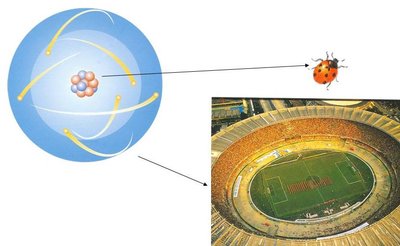
The nucleus is extremely small compared to the overall size of the atom. In chemical reactions, only electrons are involved, not the nucleus. Electrons possess kinetic and potential energy, with potential energy depending on their distance from the nucleus.
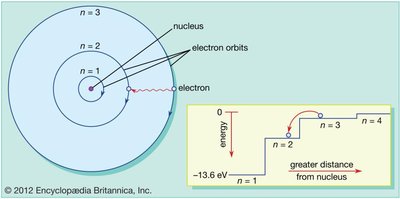
Electron Shells: Shells closer to the nucleus have lower potential energy; those farther away have higher potential energy.
Orbitals: Three-dimensional spaces where electrons are likely to be found; the first shell has one orbital (holds 2 electrons), subsequent shells have four orbitals (hold up to 8 electrons).
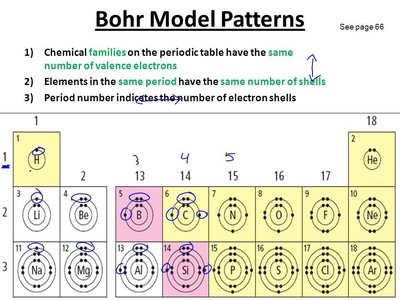
Valence Electrons: Electrons in the outermost shell determine chemical reactivity.
Electron Distribution and Chemical Properties
The arrangement of electrons in shells and orbitals determines an atom's chemical properties. Atoms with the same number of valence electrons exhibit similar chemical behavior. The periodic table arranges elements by increasing valence electrons and decreasing reactivity.
Unpaired Electrons: Atoms with unpaired electrons in valence orbitals are more reactive.
Chemical Bonds and Chemical Reactions
Types of Chemical Bonds
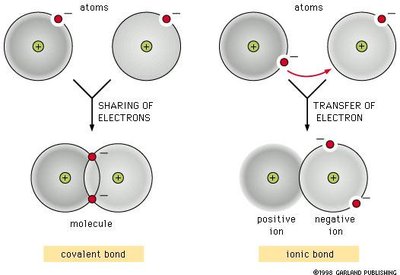
Atoms with incomplete valence shells interact to complete their shells by sharing or transferring electrons, forming chemical bonds. The strongest bonds are covalent and ionic bonds.
Covalent Bonds: Atoms share pairs of valence electrons, forming molecules with distinct 3D shapes.
Ionic Bonds: Atoms transfer electrons, resulting in oppositely charged ions (cations and anions) that attract each other.
Electronegativity and Bond Polarity
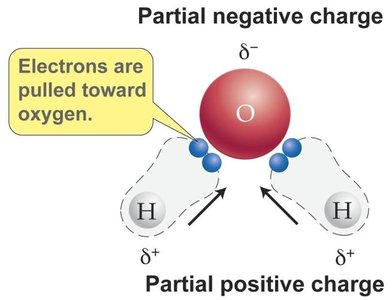
Electronegativity is the ability of an atom to attract electrons. Atoms with equal electronegativity form non-polar covalent bonds, while those with unequal electronegativity form polar covalent bonds. For example, water (H2O) has polar covalent bonds due to oxygen's higher electronegativity.
Non-polar Covalent Bonds: Electrons are shared equally.
Polar Covalent Bonds: Electrons are shared unequally, creating partial charges.
Ionic Bonds and Ionic Compounds
When the difference in electronegativity is large, one atom strips an electron from another, forming ions. Ionic compounds are formed from the attraction between cations and anions and do not have definite molecular sizes, only ratios of constituent ions.
Example: Sodium chloride (NaCl) is formed from Na+ and Cl- ions.
Weak Chemical Bonds
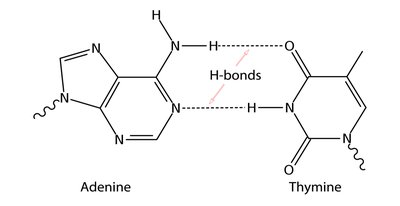
While covalent bonds are strong and essential for molecular structure, weak bonds such as hydrogen bonds and van der Waals forces are crucial for biological functions. Weak bonds allow molecules to interact temporarily, which is important for processes like enzyme activity and DNA structure.
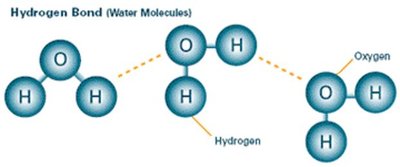
Hydrogen Bonds: Form between a hydrogen atom (partial positive charge) and a partially negative atom in another molecule.
Van der Waals Forces: Result from transient charge separations in non-polar molecules, allowing them to stick together.
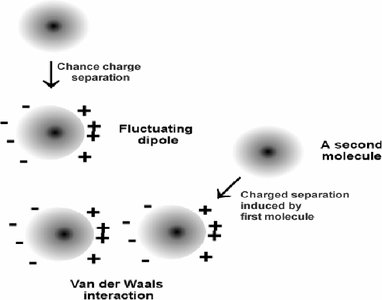
Summary Table: Types of Chemical Bonds
Bond Type | Mechanism | Strength | Example |
|---|---|---|---|
Covalent | Sharing of electrons | Strong | H2O, DNA backbone |
Ionic | Transfer of electrons | Strong (in dry compounds) | NaCl |
Hydrogen | Attraction between partial charges | Weak | DNA base pairs, water cohesion |
Van der Waals | Transient charge separation | Very weak (individually) | Protein folding |
Key Equations
Atomic Mass Calculation:
Dalton:
Conclusion
The chemistry of life is foundational to understanding biological processes. The structure and behavior of atoms, the formation of chemical bonds, and the role of isotopes are essential concepts for students of biology. Mastery of these topics enables deeper exploration of cellular structure, metabolism, and molecular biology.
