 뒤로
뒤로Principles of Biology: Diversity and Ecology – Study Guide (Themes, Scientific Inquiry, and Evolution)
스터디 가이드 - 스마트 노트
 자료에 맞춘 맞춤형 노트, 핵심 정의, 예시, 맥락을 확장해 제공합니다.
Course Overview and Structure
Introduction to Principles of Biology: Diversity and Ecology
This course provides an introduction to the major concepts of the life sciences, with a focus on botany, zoology, and ecology. It is designed for biology majors and minors, covering the diversity of life, plant and animal structure and function, development, behavior, and basic ecological principles. Laboratory activities complement lecture material to reinforce understanding.
Textbook: Biology by N. A. Campbell and J. B. Reece, 12th edition (Pearson)
Course Components: Lectures, online homework, laboratory sessions, exams, and recitation sessions
Grading: Exams (45%), Final Exam (20%), Homework (20%), Lab (15%)
Learning Objectives
Describe properties and organizational levels of life, from molecules to ecosystems
Distinguish major groups of living organisms (domains, kingdoms, phyla, etc.)
Demonstrate familiarity with anatomical and physiological adaptations and ecological roles
Course Schedule (Selected Topics)
Topic | Chapter |
|---|---|
Introduction/Themes in Biology | 1 |
Diversity of Life, Phylogeny & Taxonomy | 26 |
Bacteria & Archaea | 27 |
Protists | 28 |
Photosynthesis | 10 |
Plant Diversity & Structure | 29, 30, 35, 38, 39 |
Fungi | 31 |
Animal Diversity & Development | 32, 33, 34 |
Themes of Biology and Scientific Inquiry
What is Biology?
Biology is the scientific study of life. Biologists investigate how living things function, develop, interact, and evolve. The discipline is rooted in observation, experimentation, and the formulation of testable hypotheses.
Key Questions: How do organisms develop from single cells? How do they interact in communities? What processes govern life?
Properties of Life
Order: Living things exhibit complex but ordered organization.
Evolutionary Adaptation: Populations evolve over generations through adaptations.
Response to Environment: Organisms respond to environmental stimuli.
Reproduction: Living things reproduce their own kind.
Growth and Development: Inherited information controls growth and development.
Energy Processing: Organisms obtain and use energy to power activities.
Regulation: Homeostatic mechanisms maintain internal balance.
Themes in Biology
Biological Hierarchy: New properties emerge at each level of organization, from molecules to the biosphere.
Interaction with Environment: Organisms exchange matter and energy with their surroundings.
Structure and Function: Biological structures are closely related to their functions at all levels of organization.
Scientific Method and Inquiry
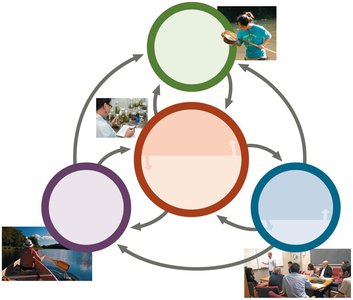
The Scientific Method
The scientific method is a systematic approach to understanding the natural world through observation and experimentation.
Ask a Question
Do Background Research
Construct a Hypothesis
Test with Experiment
Analyze Results/Draw Conclusions
Report Results
Types of Scientific Inquiry
Discovery Science: Describes natural structures and processes through observation and data analysis.
Hypothesis-Based Science: Involves formulating and testing hypotheses through experimentation.
Hypotheses and Theories
Hypothesis: A tentative, testable, and falsifiable explanation for an observation.
Theory: Broader in scope than a hypothesis, supported by a large body of evidence, and can generate new hypotheses.
Limitations of Science
Scientific explanations must be testable and repeatable.
Science cannot address supernatural explanations.
Core Theme: Evolution
Evolution as the Unifying Theme of Biology
Evolution is the process of change that has transformed life on Earth. It explains both the unity and diversity of life, connecting all living organisms through common ancestry.
Organisms are modified descendants of common ancestors.
Natural selection is the primary mechanism of evolution.
Darwin’s Theory of Evolution by Natural Selection
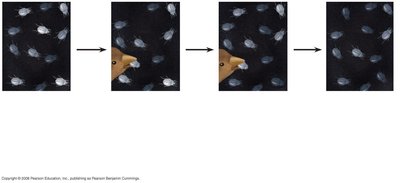
Individuals in a population vary in their traits, many of which are heritable.
More offspring are produced than can survive, leading to competition.
Individuals best suited to their environment are more likely to survive and reproduce (fitness).
Over generations, advantageous traits become more common in the population.
Speciation and Evolutionary Relationships
Natural selection can lead to the formation of new species (speciation).
Evolutionary relationships are often depicted as tree-like diagrams showing common ancestry.
Sources of Genetic Variation
Genetic Recombination: Occurs during sexual reproduction, shuffling alleles and creating new combinations.
Mutation: Random changes in DNA that can be neutral, harmful, or (rarely) beneficial.
Tips for Success in Biology
Study daily and actively engage with the material.
Read chapters before class, take notes, and review regularly.
Use flashcards, write practice questions, and sketch diagrams to reinforce learning.
Attend recitation sessions if needed and seek help early.
Academic Integrity and Policies
Exams must be taken at scheduled times; academic honesty is strictly enforced.
Artificial intelligence tools may be used only as permitted and must be cited appropriately.
University policies on accommodations, integrity, and conduct apply to all students.
