 뒤로
뒤로Principles of Biology I: Course Structure, Study Strategies, and Syllabus Overview
스터디 가이드 - 스마트 노트
 자료에 맞춘 맞춤형 노트, 핵심 정의, 예시, 맥락을 확장해 제공합니다.
Course Overview
Introduction to Principles of Biology I
This course provides a foundational understanding of biology, focusing on the structure, function, growth, evolution, and distribution of living organisms. It is designed for science majors and covers essential topics such as the scientific method, chemistry of life, biological macromolecules, cell structure, metabolism, and more. The course integrates lectures, laboratory experiences, and active learning strategies to develop scientific reasoning and critical thinking skills.
Course Structure and Grading
Grading Scale and Components
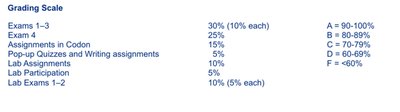
Exams 1–3: 30% (10% each)
Exam 4: 25%
Assignments in Codon: 15%
Pop-up Quizzes and Writing Assignments: 5%
Lab Assignments: 10%
Lab Participation: 5%
Lab Exams 1–2: 10% (5% each)
Grade | Percentage |
|---|---|
A | 90–100% |
B | 80–89% |
C | 70–79% |
D | 60–69% |
F | <60% |
Lecture and Lab Schedule
Weekly Topics and Assignments
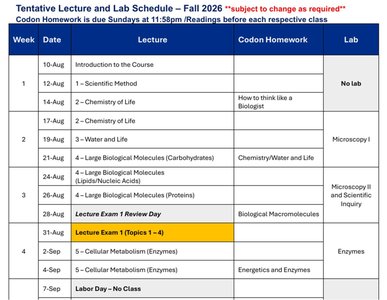
The course follows a structured weekly schedule, introducing foundational topics in biology and integrating laboratory experiences to reinforce lecture material. Assignments are managed through the Codon Learning platform, with homework due before each class.
Week | Date | Lecture Topic | Codon Homework | Lab |
|---|---|---|---|---|
1 | 10 Aug | Introduction to the Course | No lab | |
2 | 12 Aug | Scientific Method | How to think like a Biologist | |
3 | 14 Aug | Chemistry of Life | ||
4 | 19 Aug | Water and Life | Chemistry/Water and Life | Microscopy I |
5 | 24 Aug | Large Biological Molecules (Carbohydrates) | Microscopy II and Scientific Inquiry | |
6 | 26 Aug | Large Biological Molecules (Proteins) | Biological Macromolecules | |
7 | 28 Aug | Lecture Exam 1 Review Day | ||
8 | 31 Aug | Lecture Exam 1 (Topics 1–4) | Enzymes | |
9 | 2 Sep | Cellular Metabolism (Enzymes) | Energetics and Enzymes | |
10 | 4 Sep | Cellular Metabolism (Enzymes) | ||
11 | 7 Sep | Labor Day – No Class |
Study Strategies and Learning Tools
Metacognition and Self-Regulated Learning
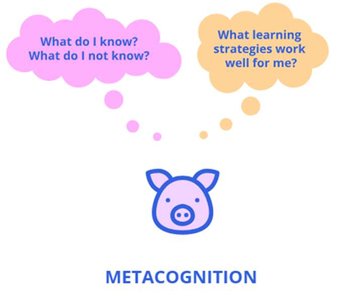
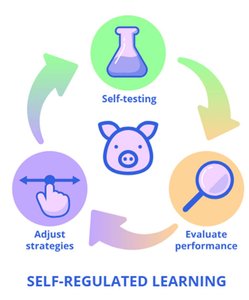
Effective learning in biology requires students to reflect on their understanding and adapt their study strategies. Metacognition involves thinking about one’s own thinking, identifying areas of strength and weakness, and selecting appropriate learning strategies. Self-regulated learning is a cyclical process of planning, self-testing, evaluating performance, and adjusting strategies to improve outcomes.
Metacognition: Ask yourself, "What do I know? What do I not know? What learning strategies work well for me?"
Self-Regulated Learning: Involves self-testing, evaluating performance, and adjusting strategies as needed.
Using Codon Learning Platform
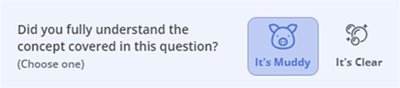
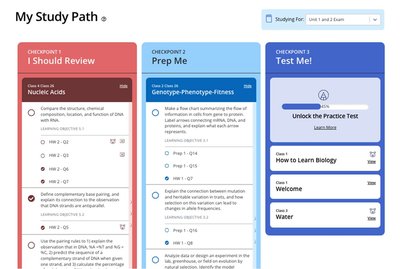
The Codon Learning platform is used for assignments, self-assessment, and tracking progress. It features checkpoints for reviewing material, prepping with new questions, and testing knowledge with practice exams. Students can mark questions as "Muddy" (unclear) or "Clear" (understood) to focus their study efforts efficiently.
Checkpoint 1: Review and retry questions from assignments.
Checkpoint 2: Additional self-testing with new questions.
Checkpoint 3: Practice test to assess overall understanding.
Recommended Textbooks and Resources
Textbook Editions
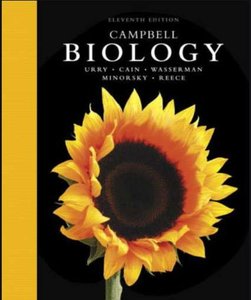
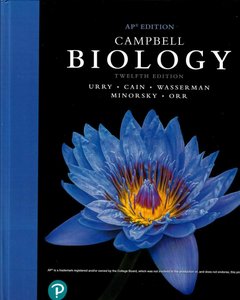
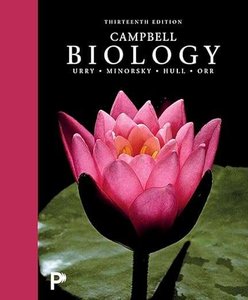
The recommended textbook for this course is Campbell Biology, with the 13th, 12th, and 11th editions all being acceptable. The 12th edition eText is available through FirstDay® inclusive access, but students may opt out if they prefer another source.
Campbell Biology, 13th Edition (2026)
Campbell Biology, 12th Edition (2020)
Campbell Biology, 11th Edition (2016)
Additional Study Tools
Mindmaps
Study timing
Khan Academy
Forest App (focus aid)
Course Learning Objectives
Key Questions Addressed
What are the unifying themes of biology?
How do scientists conduct scientific investigations and communicate findings?
How do cells and organisms obtain, use, and transfer energy and matter?
How is genetic information stored, transmitted, and expressed?
How do biological systems interact and evolve?
Additional info: These objectives align with the core chapters of a General Biology course, including evolution, cell structure, metabolism, genetics, and ecology.
Summary
This syllabus provides a comprehensive overview of the Principles of Biology I course, including its structure, grading, weekly topics, recommended resources, and strategies for effective learning. Students are encouraged to actively engage with the material, utilize the Codon Learning platform, and adopt metacognitive and self-regulated learning strategies to maximize their success in the course.
