 뒤로
뒤로Regulation of Gene Expression in Prokaryotes and Eukaryotes
스터디 가이드 - 스마트 노트
 자료에 맞춘 맞춤형 노트, 핵심 정의, 예시, 맥락을 확장해 제공합니다.
Regulation of Gene Expression
Gene Regulation in Prokaryotes
Prokaryotic cells, such as bacteria, regulate gene expression primarily at the level of transcription. This allows them to respond rapidly to environmental changes by turning genes on or off as needed.
Operons: An operon is a cluster of genes under the control of a single promoter and operator. It allows coordinated regulation of genes with related functions.
Repressible Operons: Usually active; can be turned off by a repressor. Example: trp operon, which is involved in tryptophan synthesis.
Inducible Operons: Usually inactive; can be turned on by an inducer. Example: lac operon, which is involved in lactose metabolism.
Negative Regulation: Both trp and lac operons are regulated by repressors that inhibit transcription.
Positive Regulation: Some operons are activated by stimulatory proteins, such as cyclic AMP receptor protein (CRP), which increases transcription when glucose is scarce.
Gene Regulation in Eukaryotes
Eukaryotic gene expression is regulated at multiple levels, including chromatin structure, transcription, RNA processing, translation, and protein degradation. This complexity allows for cell specialization and precise control of gene activity.
Differential Gene Expression: Although all cells contain the same genome, different cell types express different sets of genes.
Chromatin Structure: Genes in tightly packed heterochromatin are usually not expressed, while those in loosely packed euchromatin are accessible for transcription.
Histone Modifications: Chemical modifications such as acetylation and methylation of histone tails affect chromatin structure and gene expression.
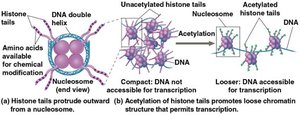
DNA Methylation: Addition of methyl groups to DNA bases reduces transcription and can cause long-term gene inactivation.
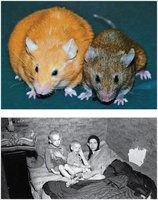
Epigenetic Inheritance: Chromatin modifications can be inherited without altering DNA sequence, explaining differences in gene expression among genetically identical individuals.
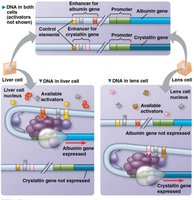
Transcription Initiation: Control elements and transcription factors regulate the initiation of transcription. Enhancers, which may be far from the gene, bind activators to stimulate transcription.
Combinatorial Control: The combination of control elements and activators determines which genes are expressed in each cell type.
Post-Transcriptional Regulation: Includes alternative RNA splicing, mRNA degradation, and regulation of translation initiation.
Protein Processing and Degradation: Proteins are modified and selectively degraded to regulate their activity and lifespan.
Noncoding RNAs and Gene Regulation
Noncoding RNAs (ncRNAs) play important roles in gene regulation, including microRNAs (miRNAs), small interfering RNAs (siRNAs), and piwi-interacting RNAs (piRNAs).
miRNAs: Bind to mRNA and cause degradation or block translation.
siRNAs: Similar to miRNAs; used in RNA interference (RNAi) to silence genes.
piRNAs: Induce formation of heterochromatin and block expression of transposons.
lncRNAs: Long noncoding RNAs can scaffold complexes and regulate gene expression.
Differential Gene Expression in Development
Embryonic Development and Cell Differentiation
During development, gene expression programs guide the formation of specialized cell types, tissues, and organs.
Cell Differentiation: Cells become specialized in structure and function through regulated gene expression.
Morphogenesis: Physical processes that shape the organism.
Cytoplasmic Determinants: Maternal substances in the egg influence early development and gene expression.
Inductive Signals: Signals from nearby cells induce differentiation of target cells.
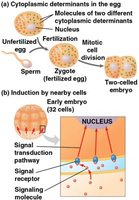
Determination: Irreversible commitment of a cell to a specific fate, followed by differentiation.
Cancer and Gene Regulation
Genetic Changes Leading to Cancer
Cancer arises from mutations that disrupt normal gene regulation, particularly those affecting cell cycle control.
Oncogenes: Mutated proto-oncogenes that promote excessive cell growth and division.
Tumor-Suppressor Genes: Normally inhibit cell division; mutations can lead to cancer.
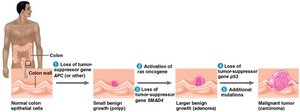
Common Mutations: Mutations in ras proto-oncogene and p53 tumor-suppressor gene are frequent in human cancers.
Multistep Model: Multiple mutations are required for cancer development, often involving both oncogenes and tumor-suppressor genes.
Inherited Predisposition: Individuals may inherit mutations that increase cancer risk, such as in BRCA1 or BRCA2 genes.
Environmental Factors: Environmental influences and viruses can contribute to cancer by affecting gene regulation.
