 뒤로
뒤로Regulation of Gene Expression: Operons and Eukaryotic Control
스터디 가이드 - 스마트 노트
 자료에 맞춘 맞춤형 노트, 핵심 정의, 예시, 맥락을 확장해 제공합니다.
Regulation of Gene Expression
Overview
Gene expression is the process by which information from a gene is used to synthesize functional gene products, such as proteins. Regulation of gene expression is essential for cell specialization, adaptation, and maintaining homeostasis. In prokaryotes and eukaryotes, gene expression is controlled at multiple stages, from DNA accessibility to protein degradation.
Operons: The Basic Concept
Structure and Function
Operons are clusters of functionally related genes that are coordinately controlled by a single "on-off" switch. This switch is a segment of DNA called the operator, usually positioned within the promoter. An operon includes the operator, promoter, and the genes they control. - Operator: DNA segment acting as a regulatory switch. - Promoter: DNA sequence where RNA polymerase binds to initiate transcription. - Regulatory gene: Encodes a repressor protein that can turn the operon off.
Repressor Proteins
The operon can be switched off by a repressor protein, which binds to the operator and blocks RNA polymerase. The repressor is the product of a separate regulatory gene. - Active repressor: Binds operator, prevents transcription. - Inactive repressor: Does not bind operator, allows transcription.
Regulation of the trp Operon
Repressible Operon
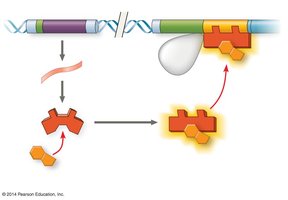
The trp operon is a repressible operon, usually on, and can be turned off when tryptophan is present. A corepressor (tryptophan) binds to the repressor, activating it and shutting off transcription. - When tryptophan is absent: Repressor is inactive, operon is on, enzymes for tryptophan synthesis are produced. - When tryptophan is present: Repressor is active, operon is off, no enzymes are produced. 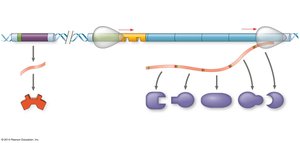
Regulation of the lac Operon
Inducible Operon
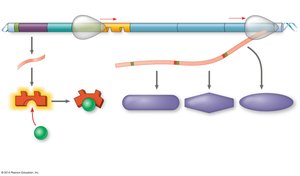
The lac operon is an inducible operon, usually off, and can be turned on in the presence of lactose. An inducer (allolactose) inactivates the repressor, allowing transcription. - When lactose is absent: Repressor is active, operon is off, no enzymes for lactose metabolism are produced. - When lactose is present: Repressor is inactive, operon is on, enzymes are produced. 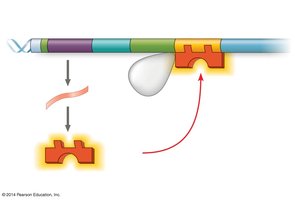
Repressible vs. Inducible Operons
- Repressible operons: Usually function in anabolic pathways; synthesis is repressed by high levels of end product (e.g., trp operon). - Inducible operons: Usually function in catabolic pathways; synthesis is induced by a chemical signal (e.g., lac operon).
Positive Gene Regulation
CAP and cAMP
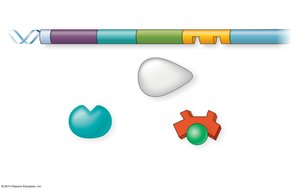
Some operons are subject to positive control by stimulatory proteins such as catabolite activator protein (CAP). When glucose is scarce, CAP is activated by binding with cyclic AMP (cAMP). Activated CAP increases RNA polymerase affinity for the promoter, accelerating transcription. - High cAMP (glucose scarce): CAP active, abundant lac mRNA synthesized. - Low cAMP (glucose present): CAP inactive, little lac mRNA synthesized. 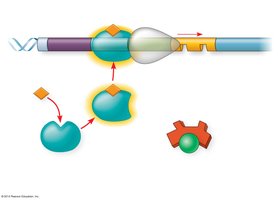
Eukaryotic Gene Expression Regulation
Stages of Regulation
Eukaryotic gene expression is regulated at many stages, allowing for cell specialization and adaptation. Differential gene expression leads to different cell types in multicellular organisms. 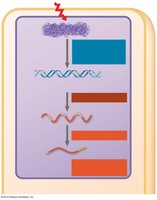
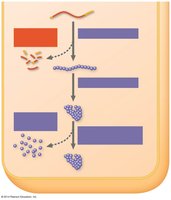
Key Stages:
Chromatin packing: DNA must be accessible for transcription.
Transcription initiation: Control of which genes are transcribed.
RNA processing: Modifications such as splicing, capping, and tailing.
mRNA transport: Movement of mRNA from nucleus to cytoplasm.
mRNA translation: Regulation of protein synthesis from mRNA.
Degradation of mRNA: Control of mRNA stability and lifespan.
Protein processing: Modifications after translation, such as folding and cleavage.
Degradation of protein: Control of protein stability and activity.
Differential Gene Expression
- Almost all cells in an organism are genetically identical. - Differences between cell types result from expression of different genes by cells with the same genome. - Abnormalities in gene expression can lead to diseases, including cancer.
Summary Table: Operon Types and Regulation
Operon Type | Pathway | Regulation Mechanism | Example |
|---|---|---|---|
Repressible | Anabolic | Repressed by end product | trp operon |
Inducible | Catabolic | Induced by substrate | lac operon |
Equations and Concepts
Gene Expression Regulation Equation
The rate of gene expression can be modeled as:
Feedback Inhibition
Feedback inhibition is a common regulatory mechanism:
Conclusion
Regulation of gene expression is a fundamental concept in biology, underlying cell specialization, adaptation, and response to environmental changes. Understanding operons and the stages of eukaryotic gene regulation is essential for comprehending how cells control their functions and maintain homeostasis.
