 뒤로
뒤로Sex-Linked Inheritance and Chromosomal Abnormalities
스터디 가이드 - 스마트 노트
 자료에 맞춘 맞춤형 노트, 핵심 정의, 예시, 맥락을 확장해 제공합니다.
Sex-Linked Inheritance
Introduction to Sex Chromosomes
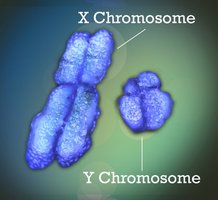
Sex chromosomes, X and Y, determine the biological sex of an individual and carry genes that influence various traits. These chromosomes are not homologous and differ significantly in size, gene content, and function.
X Chromosome: Contains approximately 1000 genes, including those necessary for female development and other traits not related to sex determination. Females have two X chromosomes (XX), providing a backup if one is defective.
Y Chromosome: Contains relatively few genes, primarily those required for male development (e.g., formation of male genitalia, sperm, and testosterone production). Males have one X and one Y chromosome (XY), so they lack a backup for X-linked genes.
Sex-Linked Inheritance Patterns
Sex-linked inheritance refers to the transmission of genes located on the sex chromosomes. These patterns differ from autosomal inheritance due to the unique pairing of sex chromosomes in males and females.
Y-linked inheritance: Genes found on the Y chromosome. Few examples exist, such as Y-linked infertility, since the Y chromosome mainly determines male traits.
X-linked inheritance: Genes found on the X chromosome. Many traits and disorders are X-linked because the X chromosome carries numerous genes unrelated to sex determination.
X-Linked Inheritance in Males and Females
The expression of X-linked traits differs between males and females due to their chromosomal composition:
Females (XX): X-linked traits behave like recessive autosomal traits. Two copies of the affected gene are required for the trait or disorder to be expressed.
Males (XY): Only one copy of the affected gene (from the mother) is needed for the trait or disorder to be expressed, as there is no second X chromosome to mask the effect.
Example: Hemophilia (X-Linked Recessive Disorder)
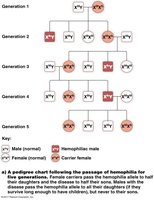
Hemophilia is a well-known X-linked recessive disorder, also called "bleeder's disease." Affected individuals lack a blood clotting factor, leading to excessive bleeding.
Inheritance: Females are rarely affected but can be carriers (heterozygous). Males are more likely to express the disorder since they inherit only one X chromosome.
Pedigree Analysis: Affected fathers cannot pass the trait to their sons but will pass the affected gene to all daughters, who may become carriers or be affected depending on the mother's genotype.
Sex-Influenced Traits
Some traits are influenced by the sex of the individual but are not located on the sex chromosomes. These are called sex-influenced traits.
Baldness: The gene is found on an autosome. The allele for baldness is recessive in females but can be dominant in males due to the influence of testosterone.
Expression: Men can develop baldness with either one or two copies of the allele (Bb or bb), while women require two copies (bb) and additional factors for expression.
Chromosome Abnormalities
Types of Chromosome Abnormalities
Chromosome abnormalities can occur during DNA replication, mitosis, or meiosis, leading to an abnormal number or structure of chromosomes in daughter cells.
Nondisjunction: Failure of homologous chromosomes or sister chromatids to separate properly during cell division, resulting in gametes or cells with too many or too few chromosomes.
Deletions: A piece of chromosome breaks off and is lost, often lethal to eggs and sperm but can occasionally result in live births (e.g., Cri-du-chat syndrome).
Translocations: A piece of chromosome breaks off and reattaches to a different location, potentially altering gene expression and increasing the risk of certain cancers.
Nondisjunction and Its Consequences
Nondisjunction can occur in mitosis or meiosis:
Mitosis: Usually results in cell death due to abnormal chromosome numbers.
Meiosis: More serious, as affected gametes can lead to organisms with chromosomal disorders. Most do not survive, but some result in live births.
Example: Down Syndrome (Trisomy 21)
Caused by nondisjunction during meiosis, resulting in three copies of chromosome 21.
Incidence increases with maternal age.
Genetic Disorders
Recessive Genetic Disorders
Recessive disorders are expressed only when an individual inherits two defective alleles (one from each parent). They are more common than dominant disorders.
Phenylketonuria (PKU): Mutation on chromosome 1 leads to accumulation of phenylalanine, causing intellectual disabilities if untreated.
Tay-Sachs Disease: Mutation on chromosome 15 causes lipid accumulation in the brain, leading to cerebral degeneration.
Cystic Fibrosis: Mutation on chromosome 7 results in defective chloride transport, causing thick mucus in lungs and pancreas.
Dominant Genetic Disorders
Dominant disorders require only one defective allele for expression and are less common due to their tendency to reduce reproductive fitness.
Huntington Disease: Progressive nerve degeneration caused by a dominant-lethal allele. Genetic testing is available for diagnosis.
