 뒤로
뒤로Speciation and the History of Life on Earth – Study Notes
스터디 가이드 - 스마트 노트
 자료에 맞춘 맞춤형 노트, 핵심 정의, 예시, 맥락을 확장해 제공합니다.
Speciation: The Origin of New Species
Introduction to Speciation
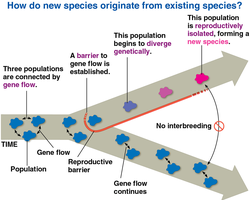
Speciation is the evolutionary process by which one species splits into two or more distinct species. This process is fundamental to understanding the diversity and unity of life, serving as a bridge between microevolution (small-scale changes within populations) and macroevolution (broad patterns of evolutionary change above the species level).
Microevolution: Changes in allele frequencies within a population over time.
Macroevolution: Large-scale evolutionary changes that occur above the species level, such as the emergence of new groups of organisms.
The Biological Species Concept
The biological species concept defines a species as a group of populations whose members have the potential to interbreed in nature and produce viable, fertile offspring, but do not produce viable, fertile offspring with members of other such groups. This concept emphasizes reproductive isolation rather than physical similarity.
Gene flow among populations maintains species integrity.
Reproductive isolation prevents gene flow between different species.
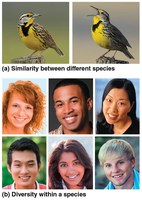
Alternative Species Concepts
Other species concepts are used in different contexts:
Morphological species concept: Distinguishes species by structural features; applicable to sexual and asexual species but can be subjective.
Ecological species concept: Defines species by their ecological niche; emphasizes the role of disruptive selection and applies to both sexual and asexual species.
More than 20 species definitions exist, each useful in specific research contexts.
Reproductive Isolation
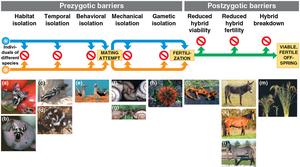
Reproductive isolation consists of biological barriers that prevent members of different species from interbreeding and producing viable, fertile offspring. These barriers can be classified as prezygotic (before fertilization) or postzygotic (after fertilization).
Prezygotic barriers: Block fertilization by impeding mating, preventing successful mating, or hindering fertilization if mating occurs.
Postzygotic barriers: Prevent hybrid zygotes from developing into viable, fertile adults (e.g., reduced hybrid viability, reduced hybrid fertility, hybrid breakdown).
Types of Prezygotic Barriers
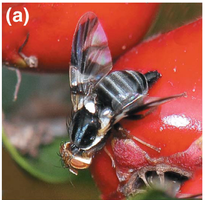
Habitat Isolation: Species occupy different habitats and rarely encounter each other (e.g., apple maggot flies vs. blueberry maggot flies).
Temporal Isolation: Species breed at different times (e.g., western vs. eastern spotted skunks).
Behavioral Isolation: Unique courtship rituals prevent mating (e.g., blue-footed boobies).
Mechanical Isolation: Morphological differences prevent successful mating (e.g., snails with incompatible shell spirals).
Gametic Isolation: Sperm of one species cannot fertilize eggs of another (e.g., sea urchin species with incompatible gamete proteins).
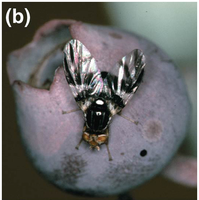
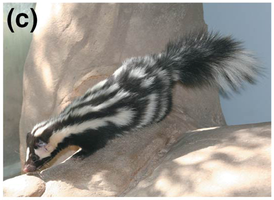
Types of Postzygotic Barriers
Reduced Hybrid Viability: Hybrid offspring have impaired development or survival (e.g., Ensatina salamander hybrids).
Reduced Hybrid Fertility: Hybrids are sterile due to chromosomal differences (e.g., mule offspring of horse and donkey).
Hybrid Breakdown: First-generation hybrids are viable and fertile, but their offspring are feeble or sterile (e.g., certain rice hybrids).
Limitations of the Biological Species Concept
Cannot be applied to fossils or asexual organisms (e.g., prokaryotes).
Gene flow can occur between distinct species (e.g., grizzly and polar bears producing “grolar bears”).
Modes of Speciation
Speciation can occur with or without geographic separation:
Allopatric speciation: Populations are geographically isolated, leading to divergence.
Sympatric speciation: Populations are not geographically isolated; speciation occurs due to polyploidy, sexual selection, or habitat differentiation.
Allopatric Speciation
Gene flow is interrupted when populations are divided by geographic barriers. Over time, genetic divergence leads to reproductive isolation. Allopatric speciation can also occur when individuals colonize remote areas (e.g., Galápagos cormorants).
Sympatric Speciation
Occurs in populations that share the same geographic area. Mechanisms include:
Polyploidy: Extra sets of chromosomes form new species rapidly, common in plants.
Sexual selection: Mate choice drives divergence (e.g., cichlids in Lake Victoria).
Habitat differentiation: Exploitation of new habitats/resources leads to reproductive isolation (e.g., apple maggot flies on different host plants).
Rates and Patterns of Speciation
Speciation can occur rapidly or gradually. The fossil record shows both punctuated equilibrium (periods of stasis punctuated by sudden change) and gradual change. Macroevolution results from the cumulative effects of many speciation and extinction events.
The History of Life on Earth
Major Events in the History of Life
The fossil record documents the history of life, showing macroevolutionary changes such as the emergence of terrestrial vertebrates, mass extinctions, and the origin of key adaptations (e.g., flight in birds).
Origin of Life
Life originated through a series of stages: abiotic synthesis of small organic molecules, formation of macromolecules, packaging into protocells, and the origin of self-replicating molecules (likely RNA).
Experiments (e.g., Miller-Urey) demonstrated that organic molecules could form under early Earth conditions.
The Fossil Record and Dating
Fossils are preserved in sedimentary rock layers (strata).
Relative dating uses the order of fossils in strata; radiometric dating uses decay of radioactive isotopes (e.g., Carbon-14) to estimate age.
The Geologic Record
Earth’s history is divided into four eons: Hadean, Archaean, Proterozoic, and Phanerozoic.
Major boundaries correspond to mass extinction events.
Major Evolutionary Events
First single-celled organisms: Prokaryotes (e.g., stromatolites) appeared ~3.5 bya.
Oxygen revolution: Photosynthetic prokaryotes increased atmospheric O2 ~2.7–2.4 bya.
First eukaryotes: Originated by endosymbiosis ~1.8 bya.
Multicellularity: Oldest multicellular eukaryotes ~1.2 bya; larger forms ~600 mya.
Cambrian explosion: Sudden appearance of many animal phyla ~535–525 mya.
Colonization of land: Plants, fungi, and animals colonized land ~500 mya.
Plate Tectonics, Mass Extinctions, and Adaptive Radiation
Plate tectonics: Movement of Earth’s crustal plates shapes continents and influences evolution (e.g., formation and breakup of Pangaea).
Mass extinctions: Five major events; e.g., Permian and Cretaceous extinctions drastically altered life on Earth.
Adaptive radiation: Rapid evolution of new species to fill ecological niches, often following mass extinctions or the evolution of novel traits.
Developmental Genes and Evolutionary Novelties
Heterochrony: Evolutionary change in the timing or rate of developmental events can alter body shape.
Homeotic genes (e.g., Hox genes): Control the placement and organization of body parts; changes can drive major evolutionary transitions.
Exaptations: Structures evolved for one function may be co-opted for another (e.g., feathers for insulation, later for flight).
Evolutionary Trends
The fossil record reveals evolutionary trends, but these can be misleading if intermediate species are missing. Trends often result from the differential survival and reproduction of species, not from an inherent drive toward a particular form.
