 뒤로
뒤로Systematics and the Classification of Life: Understanding Biological Diversity
스터디 가이드 - 스마트 노트
 자료에 맞춘 맞춤형 노트, 핵심 정의, 예시, 맥락을 확장해 제공합니다.
Systematics: Seeking Order Amid Diversity
Introduction to Systematics
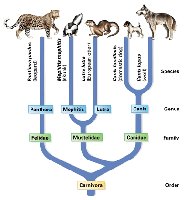
Systematics is the scientific discipline focused on classifying organisms and determining their evolutionary relationships. It helps biologists organize the vast diversity of life by constructing evolutionary trees, also known as phylogenies, which depict the relationships among species.
Systematics: The science of organizing the history of life, emphasizing biological diversity and evolutionary relationships.
Goal: To discover how organisms are related and organize this information using evolutionary trees.
The Importance of Organization in Biology
Humans naturally group and organize objects and information to save time, energy, and improve efficiency. In biology, organization is essential for understanding and communicating about the diversity of life.
Grouping organisms helps avoid confusion and allows for efficient study and communication.
Organization is crucial for scientific research, conservation, and education.

Taxonomy: Naming and Classifying Organisms
What is Taxonomy?
Taxonomy is the branch of biology concerned with naming and classifying organisms. It provides a universal system for identifying and grouping species based on shared characteristics.
Taxon (plural: taxa): A named group of organisms, such as a species or genus.
Modern taxonomy was established by Carl Linnaeus, who introduced the two-part scientific naming system (binomial nomenclature).
Binomial Nomenclature
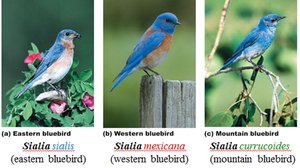
Each organism is given a unique two-part scientific name consisting of its genus and species. This system eliminates ambiguity and allows scientists worldwide to communicate clearly about organisms.
Genus: A group of closely related species.
Species: Populations of organisms that can potentially interbreed under natural conditions.
Scientific names are always italicized or underlined; the genus is capitalized, and the species is lowercase (e.g., Homo sapiens).
The Need for Scientific Names
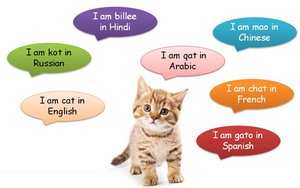
Common names for organisms vary by language and region, leading to confusion. Scientific names provide a universal standard recognized by scientists globally.
Example: The domestic cat is known as Felis catus worldwide, regardless of local language.
Scientific names prevent ambiguity (e.g., Gavia immer is known as the common loon in North America and the northern diver in Great Britain).
The Hierarchical Classification System
Linnaeus’s system organizes species into a nested hierarchy of increasingly inclusive categories, known as taxonomic ranks:
Domain (most inclusive)
Kingdom
Phylum
Class
Order
Family
Genus
Species (least inclusive)
The more categories two organisms share, the closer their evolutionary relationship.
Modern Systematics and Phylogeny
From Morphology to Molecular Data
Modern classification emphasizes evolutionary descent, using molecular data such as DNA sequences to reconstruct phylogenies. This approach has revolutionized our understanding of relationships among organisms.
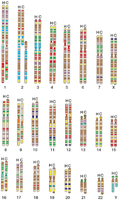
DNA and chromosome similarities provide evidence of common ancestry (e.g., humans and chimpanzees share highly similar DNA and chromosomes).
Clades and Monophyletic Groups
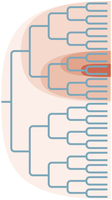
Systematists now focus on naming clades—groups of organisms that include an ancestor and all its descendants (monophyletic groups). Clades can be nested within larger clades, forming a hierarchy.
Clade: A group of species that includes an ancestor and all its descendants.
Paraphyletic group: Contains some, but not all, descendants of a common ancestor.
Synapomorphies: Shared, derived traits used to establish evolutionary relationships among taxa.
Taxonomic Ranks and Their Limitations
While taxonomic ranks add information about the size and inclusiveness of groups, their use is declining. Many systematists now prioritize constructing accurate evolutionary trees over assigning traditional ranks.
Ranks can sometimes misrepresent evolutionary history.
Clade names alone may not indicate the group’s size or scope without an evolutionary tree.
The Domains of Life
Historical Perspective: The Five-Kingdom System
Originally, all life was divided into five kingdoms, with all prokaryotes in one kingdom and eukaryotes divided into plants, animals, fungi, and protists. Advances in molecular biology led to a new understanding of life’s fundamental divisions.
The Three-Domain System
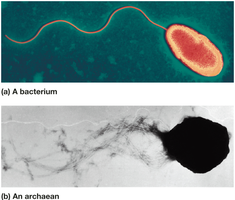
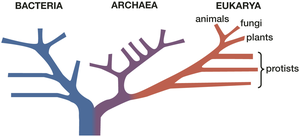
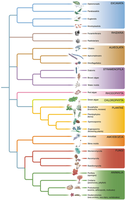
Carl Woese’s research on ribosomal RNA revealed that prokaryotes fall into two distinct groups: Bacteria and Archaea. Along with Eukarya, these form the three domains of life.
Bacteria: Prokaryotes with unique cell wall chemistry and RNA polymerase structure.
Archaea: Prokaryotes distinct from bacteria at the molecular level.
Eukarya: All organisms with eukaryotic cells, including plants, animals, fungi, and protists.
Why Do Classifications Change?
Revisions in Classification
Classification systems are hypotheses based on available data and are subject to change as new information emerges. Changes are more frequent at the species level, often due to new genetic evidence.
Example: African elephants were once considered a single species but are now recognized as two distinct species based on genetic analysis.
Challenges in Defining Species
The biological species concept, which defines species based on the ability to interbreed, is difficult to apply to asexual organisms. Alternative definitions, such as the phylogenetic species concept, have been proposed but are still debated.
Phylogenetic species concept: Defines a species as the smallest group sharing a common ancestor and unique characteristics.
Biodiversity: How Many Species Exist?
Estimating Earth’s Biodiversity
Scientists estimate that about 1.6 million species have been named, but the actual number may be as high as 8.7 million. Most new species are discovered in tropical regions, and many remain unknown, especially among prokaryotes and protists.
About 5% of named species are prokaryotes and protists, 20% are plants and fungi, and the rest are animals.
DNA analysis reveals vast undiscovered diversity, especially in bacteria.
The Importance of Conservation
Rapid destruction of habitats, such as tropical rain forests, leads to the loss of species before they are even discovered. This loss of biodiversity is a significant concern for conservation biology.
Summary Table: Major Taxonomic Ranks
Rank | Description | Example (Human) |
|---|---|---|
Domain | Largest, most inclusive group | Eukarya |
Kingdom | Major groups within domains | Animalia |
Phylum | Groups within kingdoms | Chordata |
Class | Groups within phyla | Mammalia |
Order | Groups within classes | Primates |
Family | Groups within orders | Hominidae |
Genus | Groups within families | Homo |
Species | Smallest, least inclusive group | Homo sapiens |
