 뒤로
뒤로The Characteristics and Organization of Life: An Introduction to Biology
스터디 가이드 - 스마트 노트
 자료에 맞춘 맞춤형 노트, 핵심 정의, 예시, 맥락을 확장해 제공합니다.
What is Life? The Six Major Components
Introduction to Life's Defining Features
Biologists define life by a set of core characteristics shared by all living things. These features distinguish living organisms from non-living matter and are foundational to the study of biology.
Actively maintain organized complexity
Acquire and use materials and energy
Sense and respond to stimuli
Growth and development
Reproduce
Evolve
Maintaining Organized Complexity
Internal Regulation and Homeostasis
Living organisms maintain a highly organized structure and internal environment, a process known as homeostasis. This regulation is essential for sustaining life and supporting the chemical reactions necessary for survival.
Equilibrium: A state where conditions are balanced, but living systems often maintain conditions away from equilibrium to support life processes.
Homeostasis: The active maintenance of a stable internal environment (e.g., temperature, pH, water balance).
Autopoiesis: The self-maintaining chemistry of life, where organisms produce the components needed to sustain themselves.
Example: Human bodies regulate temperature through sweating or shivering to maintain a constant internal temperature.
Acquiring and Using Materials and Energy
Metabolism and Energy Flow
All living things must obtain materials and energy from their environment to fuel cellular processes. The sum of all chemical reactions in an organism is called metabolism.
Metabolism: The total of all chemical activities in an organism, including breaking down nutrients and building cellular components.
Energy is required for growth, repair, movement, and reproduction.
Example: Plants capture solar energy through photosynthesis, while animals obtain energy by consuming other organisms.
Sensing and Responding to Stimuli
Behavior and Environmental Interaction
All organisms can perceive changes in their environment and respond to them. These responses can be behavioral, physiological, or developmental.
Stimuli include chemicals, heat, light, touch, gravity, and electromagnetic energy.
Responses can be instinctive (inborn) or learned (acquired through experience).
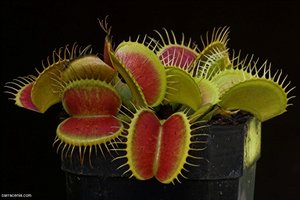
Example: The Venus flytrap closes its leaves when touched, demonstrating a behavioral response to physical stimuli.
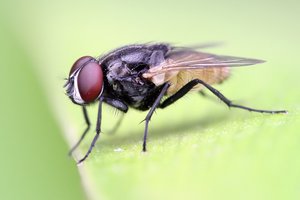
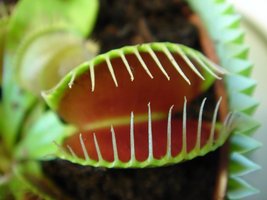
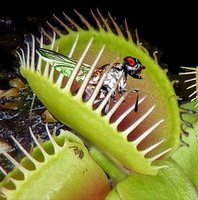
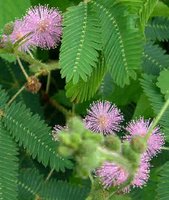
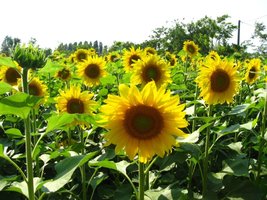
Plants also exhibit behaviors, such as sunflowers turning toward light (phototropism) or Mimosa pudica folding its leaves when touched.
Growth and Development
Cellular and Organismal Changes
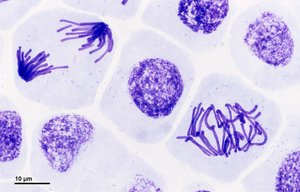
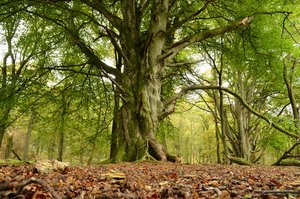
All living organisms grow and, in many cases, develop into more complex forms. Growth involves an increase in size or cell number, while development refers to the progression of changes that lead to an organism's mature form.
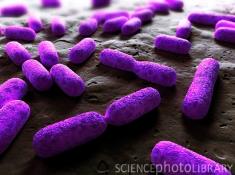
Bacteria grow by enlarging and dividing.
Plants and animals grow by increasing cell number through cell division.
Development involves differentiation into specialized tissues and organs.
Reproduction
Transmission of Life
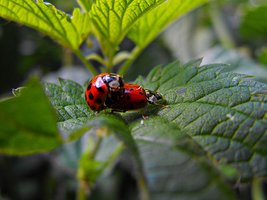
Reproduction is the process by which organisms produce new individuals. It ensures the continuation of a species and the transmission of genetic information.
Asexual reproduction: Offspring arise from a single parent (e.g., binary fission in bacteria).
Sexual reproduction: Involves two parents and the combination of genetic material (e.g., seed production in plants, live birth in animals).
Genetic Program: DNA and Genes
The Molecular Basis of Inheritance
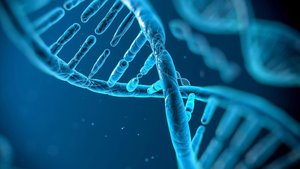
All living cells use DNA (deoxyribonucleic acid) as the hereditary material. DNA encodes genes, which are instructions for building and maintaining an organism.
DNA is composed of four nucleotide bases: Adenine (A), Thymine (T), Cytosine (C), and Guanine (G).
The sequence of these bases determines genetic information.
Genes are passed from parent to offspring, ensuring continuity of life.

Evolution
Change Over Time and the Unity of Life
Evolution is the process by which populations of organisms change over generations. It explains both the diversity and unity of life on Earth.
All living things share a common ancestry, as evidenced by similarities at the cellular and molecular levels.
Homeobox genes control the development of body plans in different organisms.
Natural selection is the primary mechanism driving evolution.
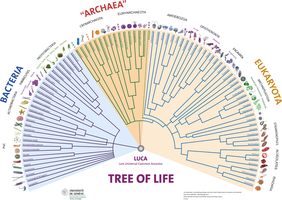
LUCA: The Last Universal Common Ancestor
All modern organisms are descended from a single ancestral cell known as LUCA. This concept is central to understanding evolutionary relationships.
Taxonomy and Phylogeny
Classifying and Understanding Relationships
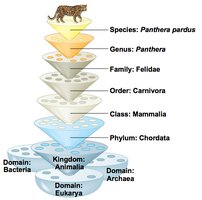
Taxonomy is the science of classifying organisms, while phylogeny studies their evolutionary relationships. Organisms are grouped based on shared characteristics and genetic similarities.
The Linnaean hierarchy organizes life into: Domain, Kingdom, Phylum, Class, Order, Family, Genus, Species.
There are three domains: Bacteria, Archaea, and Eukarya.
Cell types differ fundamentally: Prokaryotic cells (Bacteria, Archaea) lack a nucleus, while Eukaryotic cells (Eukarya) have a nucleus and complex structures.
Evolutionary Trees and Relatedness
Phylogenetic trees illustrate the evolutionary relationships among species. Closely related species share a more recent common ancestor.
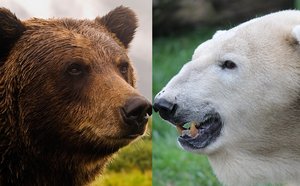
For example, grizzly bears and polar bears are more closely related to each other than to sloth bears.
Scientific Theories and Laws
The Nature of Scientific Knowledge
A scientific theory is a well-supported explanation of natural phenomena, based on evidence and repeated testing. Theories are broader than hypotheses and are accepted as factual within the scientific community.
Scientific laws describe predictable patterns, often mathematically, while theories explain why those patterns exist.
Evolution is a scientific theory, not a law, because it is not mathematically predictable but is supported by extensive evidence.
Summary Table: The Six Major Components of Life
Component | Description | Example |
|---|---|---|
Organized Complexity | Maintains internal structure and homeostasis | Cellular organization, temperature regulation |
Metabolism | Acquires and uses energy and materials | Photosynthesis, cellular respiration |
Response to Stimuli | Senses and reacts to environmental changes | Venus flytrap closing, animal movement |
Growth & Development | Increases in size and complexity | Cell division, tissue differentiation |
Reproduction | Produces new individuals | Binary fission, sexual reproduction |
Evolution | Populations change over generations | Natural selection, adaptation |
Conclusion
The study of life begins with understanding these six fundamental characteristics. Taxonomy and phylogeny help organize the diversity of life, while scientific theories like evolution provide a framework for understanding how life changes over time. These concepts form the foundation for all further study in biology.
