 뒤로
뒤로The Chemical Context of Life: Atoms, Molecules, and Bonds
스터디 가이드 - 스마트 노트
 자료에 맞춘 맞춤형 노트, 핵심 정의, 예시, 맥락을 확장해 제공합니다.
The Chemical Context of Life
Atoms, Elements, and Molecules
All living organisms are composed of chemicals, which are organized into atoms, elements, and molecules. Understanding the structure and properties of these basic units is essential for studying biology.
Atom: The smallest unit of matter that retains the properties of an element.
Element: A substance that cannot be broken down into other substances by chemical reactions. Examples include carbon, oxygen, hydrogen, and nitrogen.
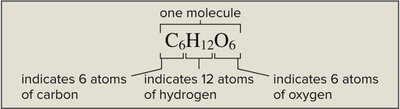
Molecule: Two or more atoms held together by chemical bonds.
Subatomic particles: Atoms are made of protons (+), neutrons (0), and electrons (-).
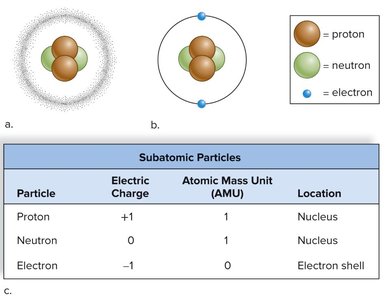
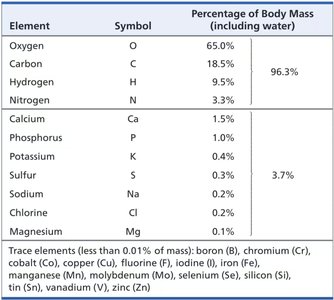
Major Elements in Biological Systems
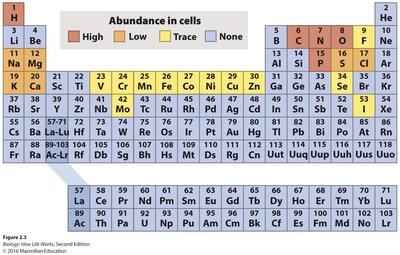
Four elements—oxygen, carbon, hydrogen, and nitrogen—make up about 96% of living matter. Other elements, such as calcium, phosphorus, potassium, and sulfur, are also essential in smaller amounts.
Trace elements: Required in minute quantities for proper biological function.
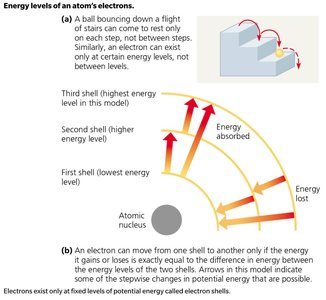
Atomic Structure and Electron Shells
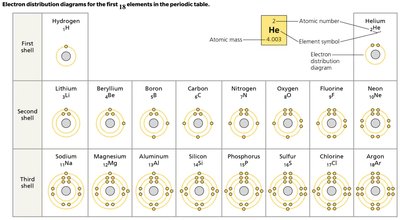
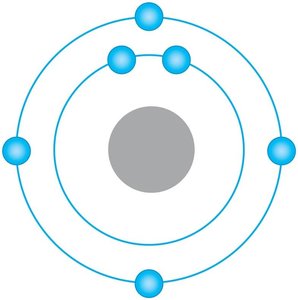
The chemical behavior of an atom is determined by the arrangement of electrons in its electron shells, especially the outermost shell (valence shell).
Valence electrons: Electrons in the outermost shell; determine chemical reactivity.
Stable atoms: Atoms are most stable when their valence shell is full (2 electrons for the first shell, 8 for the second and third).
Electron Distribution and the Periodic Table
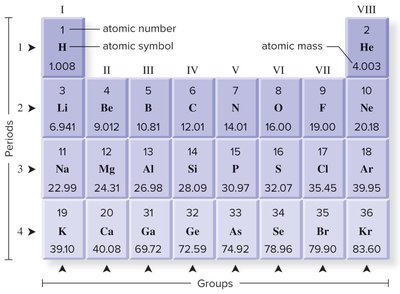
The periodic table organizes elements by their atomic number and electron configuration. Electron distribution diagrams help visualize how electrons fill shells.
Atomic number: Number of protons in the nucleus; defines the element.
Mass number: Sum of protons and neutrons.
Chemical Bonds and Interactions
Atoms interact to achieve stability by filling their valence shells, forming chemical bonds. The main types of bonds are ionic and covalent.
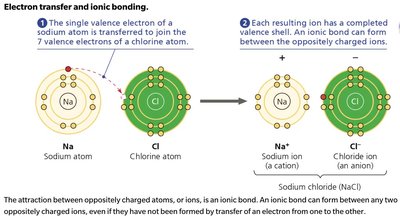
Ionic bonds: Formed when electrons are transferred from one atom to another, resulting in oppositely charged ions.
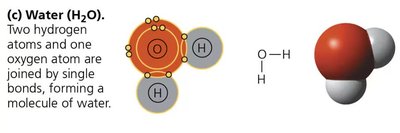
Covalent bonds: Formed when atoms share pairs of electrons. Can be polar (unequal sharing) or nonpolar (equal sharing).
Valence Electrons and Bond Formation
The number of valence electrons determines how many bonds an atom can form. Common elements in biology—hydrogen, oxygen, nitrogen, carbon, and phosphorus—have characteristic bonding patterns.
Hydrogen: 1 bond
Oxygen: 2 bonds
Nitrogen: 3 bonds
Carbon: 4 bonds
Phosphorus: 3 or 5 bonds (biologically relevant forms make 5 bonds)
Polarity and Electronegativity
Polarity arises when atoms in a covalent bond have different electronegativities, causing unequal sharing of electrons. This results in partial charges (δ+ and δ-) and is crucial for the structure and function of biomolecules.
Electronegativity: The ability of an atom to attract shared electrons.
Polar covalent bond: Unequal sharing, partial charges.
Nonpolar covalent bond: Equal sharing, no charge difference.
Ionic Bonds and Electron Transfer
Ionic bonds form when one atom donates an electron to another, resulting in charged ions that attract each other. This is common in salts such as sodium chloride (NaCl).
Oxidation: Loss of electrons.
Reduction: Gain of electrons.
Biological Molecules and Their Chemical Properties
Biomolecules such as lipids, proteins, and nucleic acids are composed of atoms bonded in specific ways. Their chemical properties, including polarity and bonding, determine their biological functions.
Lipids: Found in membranes and energy storage.
Proteins: Composed of amino acids; perform structural and functional roles.
Nucleic acids: DNA and RNA; store genetic information.
Summary Table: Elements and Their Biological Roles
Element | Symbol | Percentage of Body Mass | Role |
|---|---|---|---|
Oxygen | O | 65.0% | Water, cellular respiration |
Carbon | C | 18.5% | Organic molecules |
Hydrogen | H | 9.5% | Water, organic molecules |
Nitrogen | N | 3.3% | Amino acids, nucleic acids |
Calcium | Ca | 1.5% | Bone structure, signaling |
Phosphorus | P | 1.0% | DNA, ATP, membranes |
Potassium | K | 0.4% | Electrolyte balance |
Sulfur | S | 0.3% | Proteins |
Sodium | Na | 0.2% | Electrolyte balance |
Chlorine | Cl | 0.2% | Electrolyte balance |
Magnesium | Mg | 0.1% | Enzyme function |
Fundamental Concept
Atoms interact via bonds to form molecules. The structure and function of biomolecules depend on the types of bonds and the chemical properties of their constituent atoms. Polarity, electronegativity, and bonding patterns are central to understanding biological processes.
Additional info: Expanded explanations of atomic structure, bonding, and biological relevance were added for completeness and clarity.
