 뒤로
뒤로The Chemical Context of Life: Foundations for General Biology
스터디 가이드 - 스마트 노트
 자료에 맞춘 맞춤형 노트, 핵심 정의, 예시, 맥락을 확장해 제공합니다.
The Chemical Context of Life
Elements, Compounds, and Mixtures
All matter is composed of elements, compounds, and mixtures, each with distinct properties and biological significance.
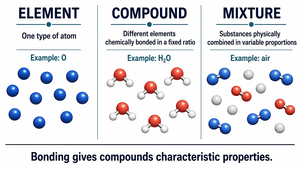
Element: A pure substance that cannot be broken down into other substances by chemical reactions. Each element consists of one type of atom.
Compound: A substance formed when two or more elements are chemically bonded in a fixed ratio, resulting in unique properties distinct from its constituent elements.
Mixture: A physical combination of substances where each retains its own properties and can be present in variable proportions.
Of the 90+ natural elements, about 20–25% are essential elements required for life and reproduction. Trace elements are needed only in minute quantities (e.g., iodine for thyroid function in vertebrates).
The Emergent Properties of Compounds
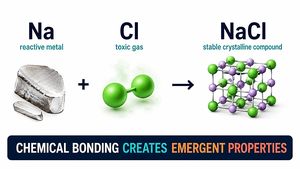
Chemical bonding between elements creates compounds with emergent properties that differ dramatically from those of their constituent elements.
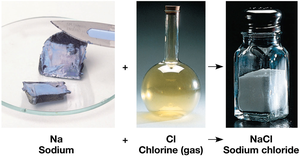
For example, reactive sodium (Na) and toxic chlorine (Cl) combine to form stable sodium chloride (NaCl), a table salt essential for life.
Major Elements in the Human Body
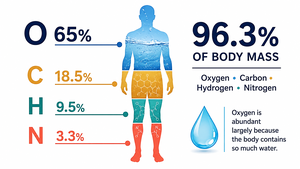
Four elements—oxygen, carbon, hydrogen, and nitrogen—make up approximately 96.3% of human body mass. Their abundance reflects their central roles in biological molecules and processes.
Oxygen (O): 65% of body mass, largely due to water content.
Carbon (C): 18.5% of body mass, the backbone of organic molecules.
Hydrogen (H): 9.5% of body mass, present in water and organic compounds.
Nitrogen (N): 3.3% of body mass, found in proteins and nucleic acids.
Atomic Structure and Subatomic Particles
The properties of elements depend on the structure of their atoms, which are composed of subatomic particles.
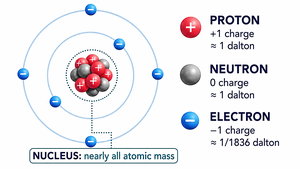
Protons: Positively charged particles found in the nucleus; determine the atomic number.
Neutrons: Electrically neutral particles in the nucleus; contribute to atomic mass.
Electrons: Negatively charged particles orbiting the nucleus; involved in chemical bonding.
The nucleus contains nearly all the atomic mass.
Atomic Number, Mass Number, and Isotopes
Atoms of the same element can differ in the number of neutrons, resulting in isotopes.
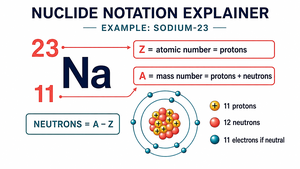
Atomic number (Z): Number of protons in the nucleus; defines the element.
Mass number (A): Sum of protons and neutrons.
Isotopes: Atoms with the same number of protons but different numbers of neutrons.
Radioactive isotopes: Unstable isotopes that decay, emitting particles and energy.
Electron Arrangement and Chemical Behavior
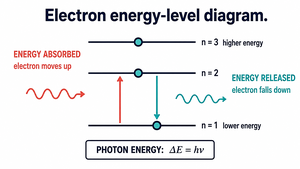
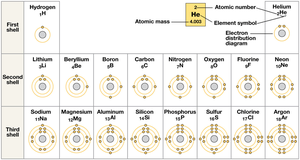
The chemical behavior of an atom is determined by the arrangement of electrons in electron shells. The periodic table organizes elements by their electron configurations.
Electrons can absorb energy to move to higher shells and release energy as photons when returning to lower shells.
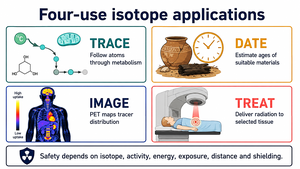
Applications of Isotopes
Isotopes have important applications in biology and medicine.
Tracing: Following atoms through metabolic pathways.
Dating: Estimating the age of materials (e.g., carbon dating).
Imaging: Medical imaging (e.g., PET scans).
Treatment: Targeted radiation therapy for diseases.
Chemical Bonds and Molecular Shape
Chemical bonds form between atoms to create molecules with specific shapes and properties.
Covalent bonds: Sharing of electron pairs between atoms. Can be nonpolar (equal sharing) or polar (unequal sharing).
Ionic bonds: Complete transfer of electrons from one atom to another, resulting in charged ions.
Molecular shape: Determines polarity and function. For example, water (bent shape) is polar, while carbon dioxide (linear) is nonpolar.
Ligand-Protein Binding and Molecular Function
Biological function often depends on the three-dimensional shape of molecules, such as the fit between a ligand and a protein receptor. Weak interactions drive conformational changes that can activate or inhibit cellular responses.
Chemical Reactions and Equilibrium
Chemical reactions rearrange atoms but conserve their total number. Reactions reach dynamic equilibrium when the rates of the forward and reverse reactions are equal, and concentrations remain constant. Catalysts speed up the attainment of equilibrium without altering the final concentrations.
Hydrogen Bonds and Water's Emergent Properties
The polarity of water molecules allows them to form hydrogen bonds, resulting in unique properties essential for life:
Cohesion: Water molecules stick together, aiding transport in plants.
Temperature regulation: High specific heat and evaporative cooling stabilize temperatures.
Ice floats: Solid water is less dense than liquid, insulating aquatic life.
Solvent properties: Water dissolves and transports many substances.
Temperature, Heat, and Phase Change
Water's high heat capacity and heat of vaporization moderate Earth's climate and support life by buffering temperature changes.
Moles, Molecular Mass, and Molarity
Chemical quantities are measured in moles, with molecular mass (in daltons or grams per mole) and molarity (moles of solute per liter of solution) used to prepare and describe solutions.
Acids, Bases, pH, and Buffers
Acids and bases alter the concentration of hydrogen ions in solution, measured on the logarithmic pH scale (0–14). Each pH unit represents a tenfold change in acidity. Acid strength (degree of ionization) is distinct from acid concentration (amount present).
pH equation:
Biological Buffers and pH Control
Buffers, such as the carbonic acid-bicarbonate system, maintain stable pH in biological fluids by reversible binding and release of hydrogen ions. This system is crucial for maintaining blood pH near 7.4.
Ocean Acidification
Increased atmospheric CO2 from human activities dissolves in seawater, forming carbonic acid and lowering ocean pH. This process reduces carbonate ion availability, impairing calcification in marine organisms and threatening biodiversity.
