 뒤로
뒤로The Chemical Context of Life, Water, and Carbon: Foundations for General Biology
스터디 가이드 - 스마트 노트
 자료에 맞춘 맞춤형 노트, 핵심 정의, 예시, 맥락을 확장해 제공합니다.
Chapter 2: The Chemical Context of Life
Concept 2.1: Matter, Elements, and Compounds
Matter is anything that has mass and occupies space. All living organisms are composed of matter, which is made up of chemical elements. Elements are substances that cannot be broken down into other substances by chemical reactions. Compounds are substances consisting of two or more elements combined in a fixed ratio.
Element: A pure substance consisting of only one type of atom.
Compound: A substance formed from two or more elements in a fixed ratio (e.g., H2O, NaCl).
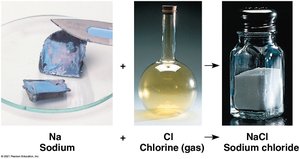
Example: Sodium (Na) and chlorine (Cl) combine to form sodium chloride (NaCl), a common table salt.
Chemical Composition of the Human Body
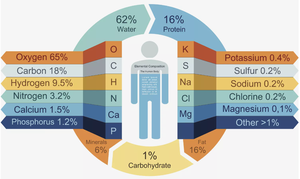
The human body is primarily composed of a few key elements. These elements are essential for life and are found in varying proportions.
Major elements: Oxygen (O), Carbon (C), Hydrogen (H), Nitrogen (N), Calcium (Ca), and Phosphorus (P) make up about 99% of living matter.
Trace elements: Elements required in minute quantities, such as iron (Fe), iodine (I), and zinc (Zn).
Concept 2.2: Atomic Structure and Properties
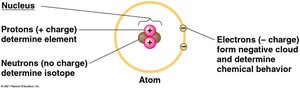
An atom is the smallest unit of matter that retains the properties of an element. Atoms are composed of subatomic particles: protons, neutrons, and electrons.
Protons: Positively charged particles found in the nucleus; determine the element.
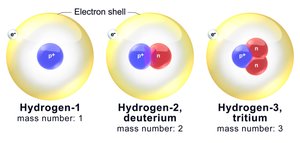
Neutrons: Neutral particles found in the nucleus; determine the isotope.
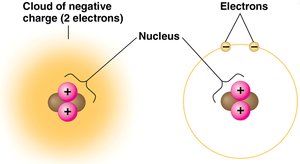
Electrons: Negatively charged particles orbiting the nucleus; determine chemical behavior.
Neutrons and protons have nearly identical masses, measured in daltons. Electrons are much smaller and their mass is often ignored in atomic mass calculations.
Atomic Number, Mass Number, and Isotopes
Atomic number: Number of protons in the nucleus (defines the element).
Mass number: Sum of protons and neutrons in the nucleus.
Atomic mass: Average mass of all isotopes of an element, weighted by natural abundance.
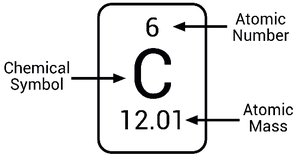
Isotopes are atoms of the same element with different numbers of neutrons. Some isotopes are radioactive and decay spontaneously, emitting particles and energy.
Energy Levels and Electron Shells
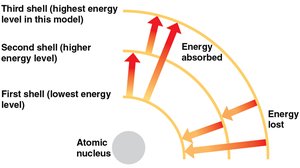
Electrons have potential energy based on their position relative to the nucleus. They occupy electron shells, with each shell holding a specific maximum number of electrons.
1st shell: up to 2 electrons
2nd and 3rd shells: up to 8 electrons each
4th shell: up to 18 electrons
Electron Distribution and the Periodic Table
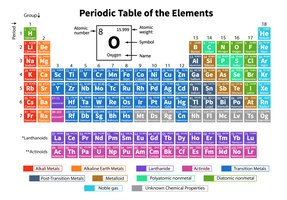
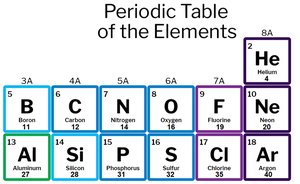
The chemical behavior of an atom is determined by the distribution of electrons, especially those in the outermost shell (valence electrons). Elements with full valence shells are chemically inert (noble gases).
Electron Orbitals
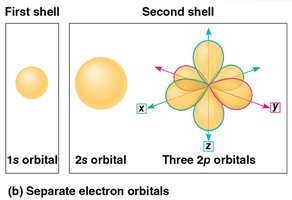
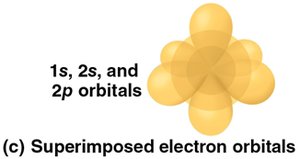
Orbitals are three-dimensional spaces where electrons are found 90% of the time. Each shell contains a specific number of orbitals, and each orbital can hold up to two electrons.
Concept 2.3: Chemical Bonds and Molecular Structure
Atoms with incomplete valence shells can share or transfer electrons, forming chemical bonds. The main types of bonds are covalent, ionic, and hydrogen bonds.
Covalent Bonds
Covalent bond: Sharing of a pair of valence electrons between two atoms.
Single bond: Sharing of one pair of electrons (e.g., H—H).
Double bond: Sharing of two pairs of electrons (e.g., O═O).
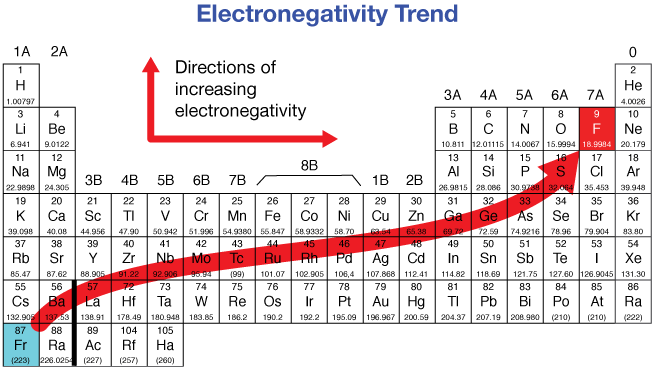
Electronegativity: The attraction of an atom for electrons in a covalent bond. Higher electronegativity means stronger attraction.

Ionic Bonds
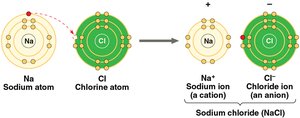
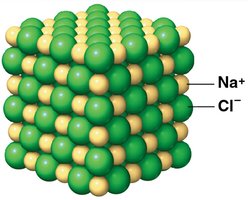
Ionic bonds form when electrons are transferred from one atom to another, resulting in oppositely charged ions (cations and anions) that attract each other. Ionic compounds, or salts, are often crystalline solids.
Cation: Positively charged ion (e.g., Na+).
Anion: Negatively charged ion (e.g., Cl–).
Weak Chemical Interactions
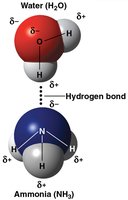
Hydrogen bonds: Attraction between a hydrogen atom covalently bonded to an electronegative atom (usually O or N) and another electronegative atom.
Van der Waals interactions: Weak attractions due to transient local partial charges.

Molecular Shape and Function
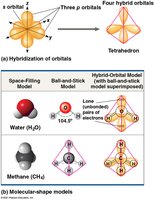
The shape of a molecule is determined by the positions of its atoms’ orbitals and is crucial for its function. Molecules with similar shapes can have similar biological effects.
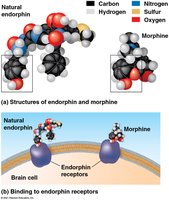
Concept 2.4: Chemical Reactions
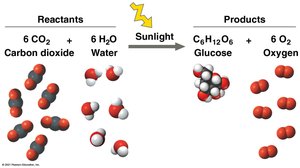
Chemical reactions involve the making and breaking of chemical bonds. Reactants are the starting materials, and products are the resulting substances. All chemical reactions are reversible, and equilibrium is reached when the forward and reverse reactions occur at the same rate.
Example: Photosynthesis:
Chapter 3: Water and Life
Concept 3.1: Polar Covalent Bonds and Hydrogen Bonding in Water
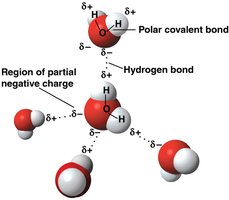
Water molecules are polar, with the oxygen atom having a partial negative charge and the hydrogen atoms having partial positive charges. This polarity allows water molecules to form hydrogen bonds with each other.
Concept 3.2: Four Emergent Properties of Water
Water’s unique properties make it essential for life on Earth. These properties arise from hydrogen bonding.
1. Cohesion and Adhesion
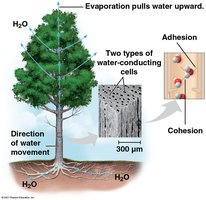
Cohesion: Water molecules stick together due to hydrogen bonding, resulting in high surface tension.
Adhesion: Water molecules can also stick to other substances, aiding in the transport of water in plants.
2. Moderation of Temperature
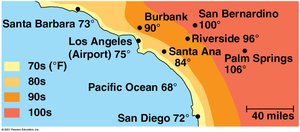
High specific heat: Water can absorb or release large amounts of heat with little temperature change, stabilizing environments.
Evaporative cooling: As water evaporates, it cools the surface, helping organisms regulate temperature.
3. Floating of Ice on Liquid Water
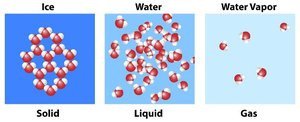
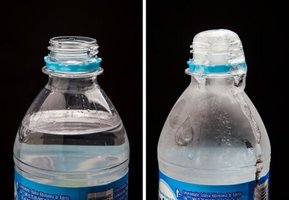
Ice is less dense than liquid water because hydrogen bonds keep water molecules further apart in the solid state.
This property insulates bodies of water, protecting aquatic life in cold climates.
4. Water as the Solvent of Life
Solution: Homogeneous mixture of two or more substances.
Solvent: The dissolving agent (water in aqueous solutions).
Solute: The substance dissolved (e.g., salt in saltwater).
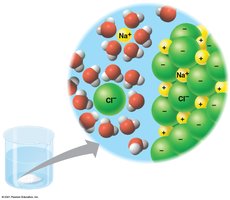
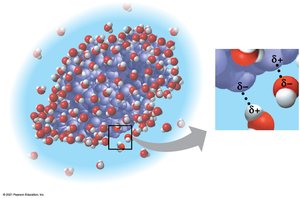
Water’s polarity allows it to dissolve many substances, forming hydration shells around ions and polar molecules.
Hydrophilic and Hydrophobic Substances
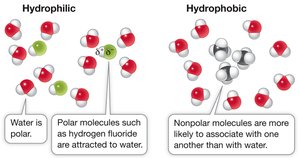
Hydrophilic: Substances with an affinity for water (e.g., salts, sugars).
Hydrophobic: Substances that do not interact with water (e.g., oils, fats).
Solute Concentration and Molarity
Molecular mass: Sum of the masses of all atoms in a molecule.
Mole (mol): 6.02 × 10²³ molecules (Avogadro’s number).
Molarity (M): Number of moles of solute per liter of solution.
Concept 3.3: Acids, Bases, and pH
Water can dissociate into hydrogen ions (H+) and hydroxide ions (OH–). The concentration of these ions determines the acidity or basicity of a solution.
Acid: Increases H+ concentration in solution.
Base: Reduces H+ concentration (often by increasing OH–).
pH scale: Measures H+ concentration; pH = –log[H+].
Neutral solution: pH = 7; Acidic: pH < 7; Basic: pH > 7.
Buffers are substances that minimize changes in pH by accepting or donating H+ ions as needed. They are crucial for maintaining stable conditions in biological systems.
Chapter 4: Carbon and the Molecular Diversity of Life
Concept 4.1: Organic Chemistry and the Origin of Life
Organic chemistry is the study of carbon-containing compounds. Carbon’s ability to form four covalent bonds makes it uniquely suited to form a wide variety of complex molecules essential for life.
Experiments, such as Stanley Miller’s, support the idea that organic molecules could have formed abiotically on early Earth.
Concept 4.2: Carbon’s Bonding Versatility
Carbon atoms can form diverse molecules by bonding to four other atoms, including other carbon atoms. This allows for the formation of chains, rings, and complex branching structures.
Hydrocarbons: Molecules consisting only of carbon and hydrogen; important as energy sources.
Isomers: Compounds with the same molecular formula but different structures and properties (structural, cis-trans, and enantiomers).
Concept 4.3: Functional Groups and Molecular Function
The chemical properties of organic molecules are largely determined by the functional groups attached to the carbon skeleton. Seven key functional groups are important in biological molecules:
Hydroxyl (–OH)
Carbonyl (–CO)
Carboxyl (–COOH)
Amino (–NH2)
Sulfhydryl (–SH)
Phosphate (–OPO3)
Methyl (–CH3)
Functional groups confer specific chemical reactivity and properties to molecules, influencing their roles in biological systems.
ATP: The Energy Currency of the Cell
Adenosine triphosphate (ATP) is an important organic phosphate that stores and releases energy for cellular processes through hydrolysis of its phosphate bonds.
