 뒤로
뒤로The Structure and Function of Large Biological Molecules
스터디 가이드 - 스마트 노트
 자료에 맞춘 맞춤형 노트, 핵심 정의, 예시, 맥락을 확장해 제공합니다.
Overview: The Molecules of Life
All living organisms are composed of four major classes of large biological molecules: carbohydrates, lipids, proteins, and nucleic acids. These macromolecules are essential for structure, function, and regulation of the body's cells, tissues, and organs. The structure of these molecules is closely related to their function.

Macromolecules: Polymers and Monomers
Polymers and Monomers
Most macromolecules are polymers, long chains made up of repeating units called monomers. Carbohydrates, proteins, and nucleic acids are all polymers, while lipids are not true polymers.
Polymer: A long molecule consisting of many similar or identical building blocks linked by covalent bonds.
Monomer: The repeating unit that serves as the building block of a polymer.
Synthesis and Breakdown of Polymers
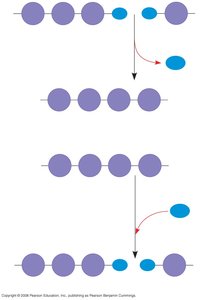
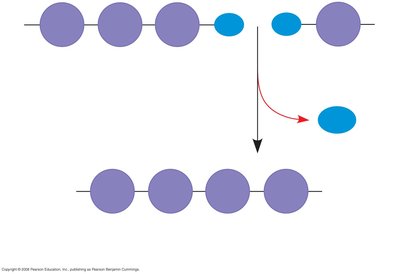
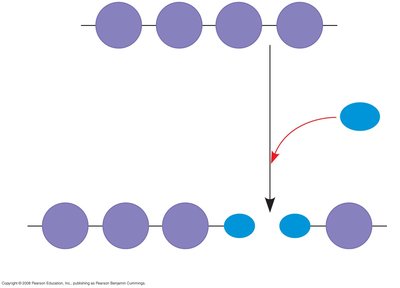
Dehydration Reaction: Monomers are joined together by covalent bonds through the loss of a water molecule. This process is catalyzed by enzymes.
Hydrolysis: Polymers are disassembled into monomers by the addition of a water molecule, breaking the covalent bond.
Carbohydrates: Fuel and Building Material
Monosaccharides
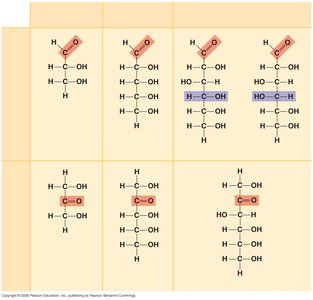
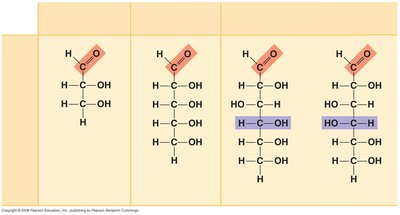
Carbohydrates include sugars and their polymers. The simplest carbohydrates are monosaccharides (single sugars), which generally have molecular formulas that are multiples of CH2O. Glucose (C6H12O6) is the most common monosaccharide.
Classified by the location of the carbonyl group (aldose or ketose) and the number of carbons in the skeleton (triose, pentose, hexose).
Ring Structures
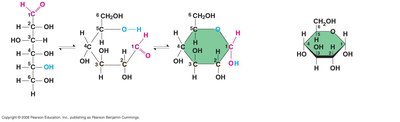
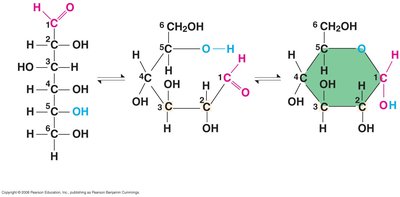
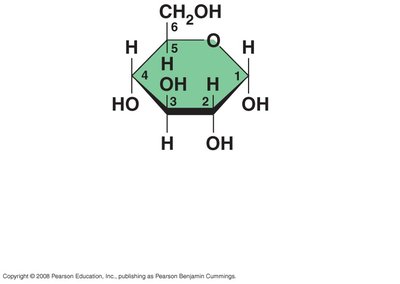
In aqueous solutions, many monosaccharides form ring structures, which are more stable than linear forms.
Disaccharides and Glycosidic Linkages
A disaccharide is formed when two monosaccharides are joined by a dehydration reaction, creating a glycosidic linkage (covalent bond).
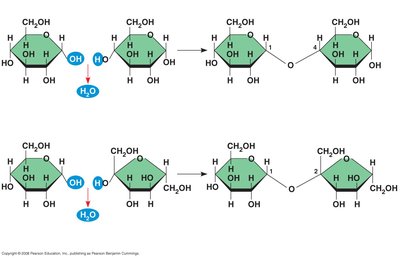
Polysaccharides
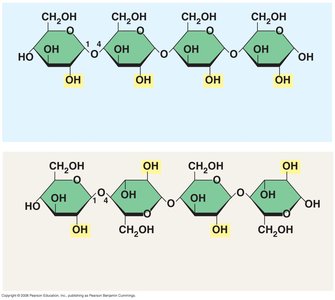
Polysaccharides are polymers of sugars and serve storage or structural roles. Their function is determined by the types of monomers and the positions of glycosidic linkages.
Starch: Storage polysaccharide in plants, composed of glucose monomers.
Glycogen: Storage polysaccharide in animals, mainly in liver and muscle cells.
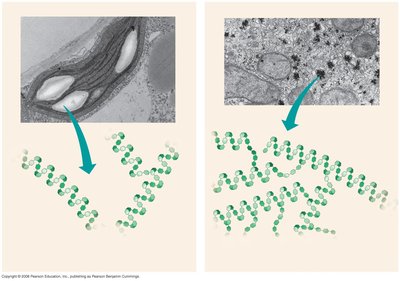
Structural Polysaccharides
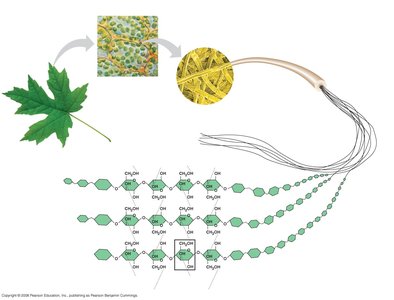
Cellulose: Major component of plant cell walls; differs from starch in the type of glycosidic linkage (beta vs. alpha).
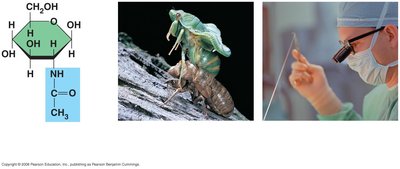
Chitin: Found in the exoskeleton of arthropods and cell walls of fungi.
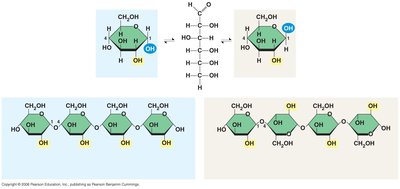
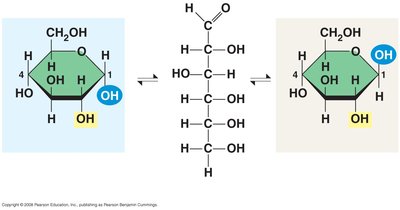
Lipids: Hydrophobic Molecules
General Properties
Lipids are a diverse group of hydrophobic molecules that do not form true polymers. They are mainly composed of hydrocarbons and are insoluble in water. The most important lipids are fats, phospholipids, and steroids.
Fats
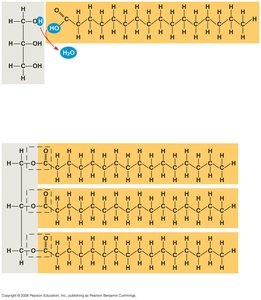
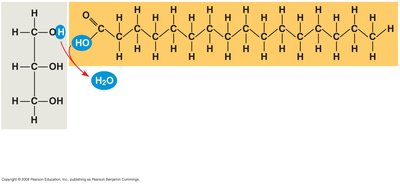
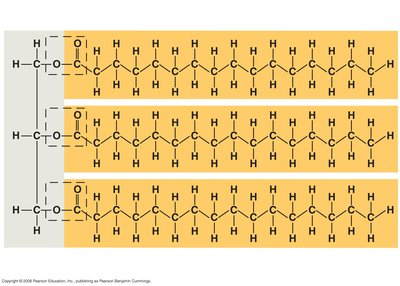
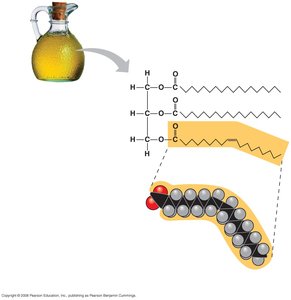
Constructed from glycerol (a three-carbon alcohol) and fatty acids (hydrocarbon chains with a carboxyl group).
Three fatty acids join to glycerol by ester linkages to form a triacylglycerol (triglyceride).
Saturated vs. Unsaturated Fats
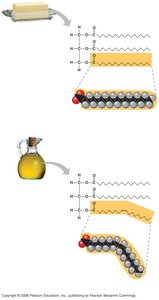
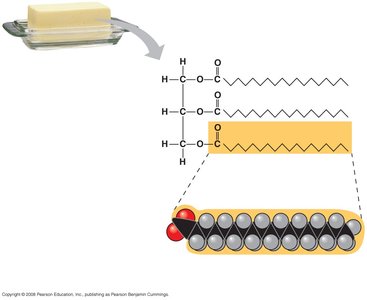
Saturated fatty acids: No double bonds, solid at room temperature (e.g., animal fats).
Unsaturated fatty acids: One or more double bonds, liquid at room temperature (e.g., plant and fish oils).
Trans fats: Produced by hydrogenating unsaturated fats; associated with health risks.
Phospholipids
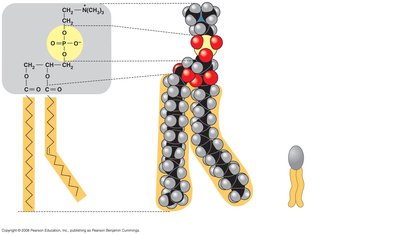
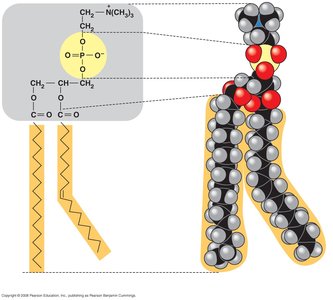
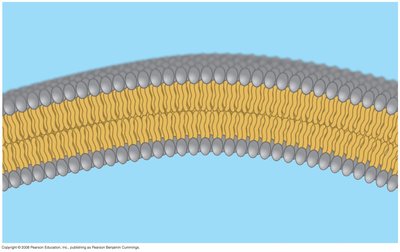
Phospholipids consist of two fatty acids and a phosphate group attached to glycerol. The fatty acid tails are hydrophobic, while the phosphate group forms a hydrophilic head. In water, phospholipids self-assemble into bilayers, forming the basis of cell membranes.
Steroids
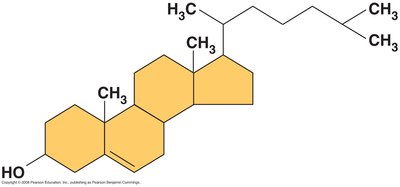
Steroids are lipids with a carbon skeleton consisting of four fused rings. Cholesterol is an important steroid in animal cell membranes but can contribute to cardiovascular disease at high levels.
Proteins: Structure and Function
Functions of Proteins
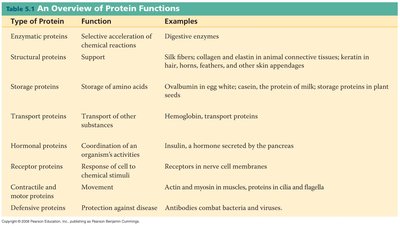
Proteins are the most diverse macromolecules, accounting for more than 50% of the dry mass of most cells. They serve as enzymes, structural components, storage, transport, hormones, receptors, contractile elements, and defense molecules.
Type of Protein | Function | Examples |
|---|---|---|
Enzymatic | Selective acceleration of chemical reactions | Digestive enzymes |
Structural | Support | Collagen, keratin |
Storage | Storage of amino acids | Ovalbumin, casein |
Transport | Transport of substances | Hemoglobin |
Hormonal | Coordination of activities | Insulin |
Receptor | Response to chemical stimuli | Nerve cell receptors |
Contractile and Motor | Movement | Actin, myosin |
Defensive | Protection against disease | Antibodies |
Amino Acids and Polypeptides
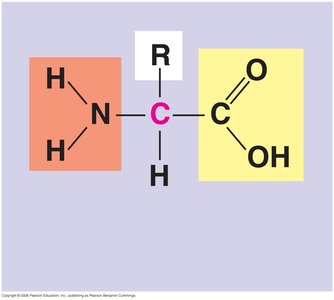
Amino acids: Organic molecules with amino and carboxyl groups, differing in their side chains (R groups).
Polypeptide: A polymer of amino acids linked by peptide bonds.
Protein: One or more polypeptides folded into a specific 3D structure.
Levels of Protein Structure
Primary structure: Unique sequence of amino acids.
Secondary structure: Coils and folds (alpha helix, beta pleated sheet) due to hydrogen bonding.
Tertiary structure: Overall 3D shape due to interactions among R groups.
Quaternary structure: Association of multiple polypeptide chains.
Protein Folding and Function
The function of a protein depends on its specific structure. Changes in primary structure can affect function, as seen in sickle-cell disease. Environmental factors (pH, temperature, salt) can denature proteins, causing loss of function. Chaperonins assist in proper protein folding.
Nucleic Acids: Information Storage and Transmission
DNA and RNA
Nucleic acids store and transmit hereditary information. The two types are DNA (deoxyribonucleic acid) and RNA (ribonucleic acid). DNA directs its own replication and the synthesis of RNA, which in turn directs protein synthesis.
Nucleotide: Monomer of nucleic acids, consisting of a nitrogenous base, a pentose sugar, and a phosphate group.
Polynucleotide: Polymer of nucleotides.
Base pairing: In DNA, adenine pairs with thymine, and guanine pairs with cytosine.
Structure of DNA
DNA consists of two antiparallel strands forming a double helix. The sequence of bases encodes genetic information, which is passed from parent to offspring and can be used to assess evolutionary relationships.
Summary Table: Major Classes of Biological Molecules
Class | Monomer | Polymer | Bond Type | Function |
|---|---|---|---|---|
Carbohydrates | Monosaccharide | Polysaccharide | Glycosidic linkage | Energy, structure |
Lipids | Fatty acids, glycerol | Not true polymers | Ester linkage | Energy storage, membranes |
Proteins | Amino acid | Polypeptide | Peptide bond | Catalysis, structure, transport, etc. |
Nucleic Acids | Nucleotide | Polynucleotide | Phosphodiester bond | Genetic information |
